Learn the seven signs it may be time to replace your siding, including cracking, warping, fading, moisture damage, loose panels, rising energy bills, and outdated curb appeal.
Siding Replacement Guide
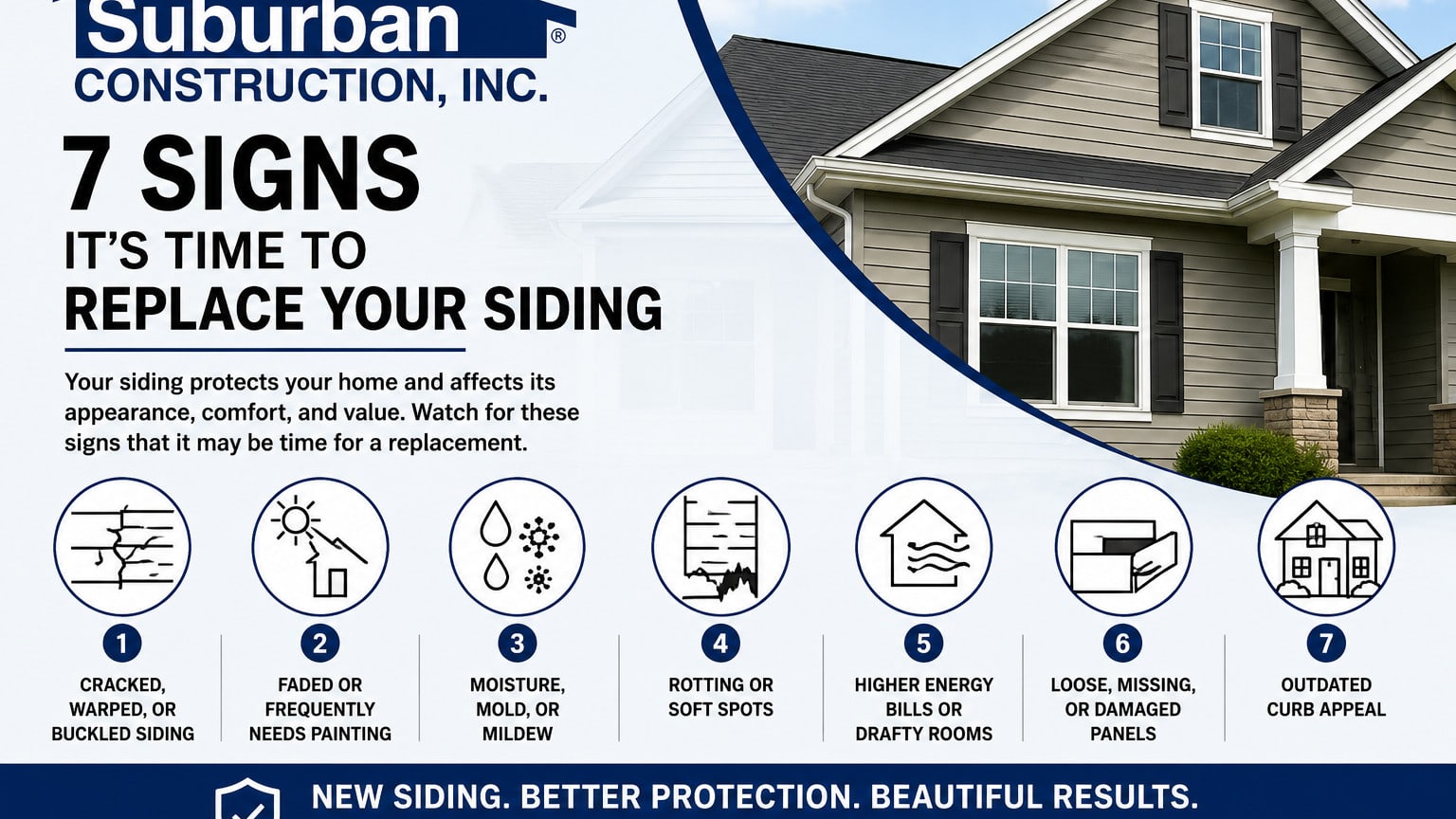
7 Signs It’s Time to Replace Your Siding
Your siding does more than shape the look of your home. It helps protect the structure from weather, moisture, pests, and everyday wear. When siding begins to fail, the warning signs can start small—but ignoring them may lead to bigger and more expensive problems.
If your home’s exterior is starting to look worn, damaged, or difficult to maintain, here are seven signs it may be time to replace your siding.
Quick Signs Your Siding May Need Replacement
- Cracked, warped, or buckled siding
- Frequent painting or fading
- Moisture, mold, or mildew problems
- Rotting or soft spots
- Higher energy bills or drafty rooms
- Loose or missing siding panels
- Outdated curb appeal
1. Your Siding Is Cracked, Warped, or Buckled
Cracks, warping, and buckling are some of the clearest signs that siding is no longer performing as it should. These issues can happen from age, heat exposure, poor installation, moisture damage, or repeated weather stress.
A small damaged section may be repairable. But if the problem appears in several areas, replacement may be the smarter long-term solution.
2. Your Siding Is Faded or Needs Frequent Painting
Fading is normal over time, especially on sides of the home that receive strong sunlight. But severe fading can be a sign that the siding’s protective finish is wearing down.
If your siding needs constant repainting, staining, or touch-ups, replacement may save you time and maintenance costs in the long run.
3. You Notice Moisture, Mold, or Mildew
Mold or mildew on the surface does not always mean the siding has failed. Sometimes it is simply caused by shade, humidity, or poor airflow.
However, recurring moisture issues, staining, or growth near seams and joints may point to water getting behind the siding. That should be taken seriously.
- Look for dark streaks or staining.
- Check areas around windows, doors, and corners.
- Pay attention to siding near gutters and rooflines.
- Watch for moisture problems that keep coming back after cleaning.
4. There Are Soft Spots, Rot, or Damage Behind the Siding
If siding feels soft, spongy, or unstable when touched, there may be damage behind the exterior surface. Wood rot, deteriorated sheathing, and long-term moisture exposure can compromise the wall system.
This is not something to cover up with a quick cosmetic repair. The underlying issue should be inspected and corrected before new siding is installed.
5. Your Energy Bills Are Increasing
Siding is not the only factor that affects energy efficiency, but a failing exterior can contribute to drafts, air leaks, and poor home comfort.
If certain rooms feel colder in winter or hotter in summer, your siding system, insulation, or weather barrier may not be performing well.
Replacing siding can also be a good opportunity to evaluate insulation, house wrap, and other exterior improvements that support better energy performance.
6. Panels Are Loose, Missing, or Pulling Away
Loose or missing siding panels leave your home more vulnerable to wind, rain, pests, and moisture intrusion. If panels are repeatedly coming loose, there may be a problem with the installation, fasteners, or age of the siding.
A few isolated repairs may be possible. But widespread loose siding often points to a system that is nearing the end of its useful life.
7. Your Home Looks Outdated
Sometimes siding replacement is not only about damage. It is also about curb appeal. Older siding colors, dated profiles, and worn trim can make a home look older than it really is.
New siding can dramatically refresh the exterior and help your home feel cleaner, newer, and better cared for.
- Modern siding colors can improve curb appeal.
- Updated profiles can give the home a cleaner look.
- New trim details can help highlight architectural features.
- A full siding replacement can improve the overall first impression of your home.
Repair or Replace: How Do You Decide?
Not every siding issue requires full replacement. Small damage in one area may be repairable, especially if the siding is newer and matching materials are available.
Replacement is usually worth considering when damage is widespread, the siding is aging, maintenance is becoming frequent, or the home’s exterior no longer provides the protection and appearance you want.
Final Thoughts
Your siding is one of the most important protective layers on your home. When it begins to crack, warp, fade, loosen, or show signs of moisture damage, it may be time to think beyond small repairs.
Replacing your siding can improve curb appeal, protect your home, reduce maintenance, and give you more confidence in the condition of your exterior.
Share This Post
Share it on Facebook or X, or send it through your device share sheet for Instagram.