Can you replace one side of your house siding? Learn when it makes sense, the risks of mismatching, and what Quad Cities homeowners should consider.
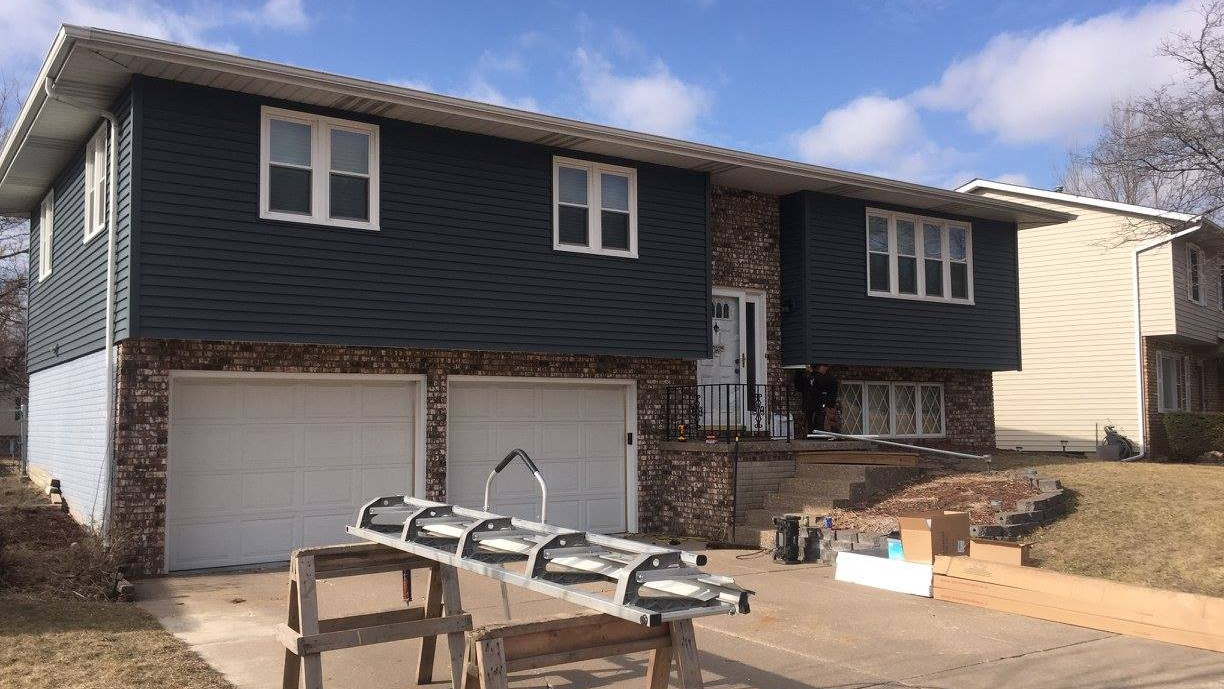
Siding Planning & Design
Can One Side of the House Be Replaced, or Should All Siding Match?
By JR Girskis
5 minute read
Yes—you can replace one side of your house. But in most cases, it’s not the best long-term decision.
In the Quad Cities, siding isn’t just about appearance—it’s about how your home handles wind, moisture, and temperature swings. Replacing only one side can work in specific situations, but it often creates tradeoffs in durability, appearance, and resale that homeowners don’t fully consider upfront.
The better question isn’t “can you?”—it’s whether the compromise is worth living with for the next 20–30 years.
When Replacing One Side Makes Sense
There are situations where partial replacement is practical—especially when the problem is isolated.
It can make sense when:
- Storm or hail damage is limited to one elevation
- Budget constraints prevent a full replacement
- The existing siding is relatively new and still available
- You’re planning a full replacement in the near future
In these cases, a targeted approach can restore protection without committing to a full project right away.
The Biggest Problem: Matching Siding Later
This is where most partial replacements fall apart.
Matching issues include:
- Color fading from sun exposure (new vs. old won’t match)
- Discontinued product lines or profile changes
- Differences in texture, sheen, or thickness
Even if you buy the “same” siding, it rarely looks the same once installed.
The result is a home that looks patched instead of finished—something buyers notice immediately.
Performance Risks in Quad Cities Weather
Appearance is one issue—performance is another.
In a climate with heavy rain, humidity, and freeze-thaw cycles, siding works as a system—not separate pieces.
Partial replacements can create:
- Breaks in house wrap and moisture barriers
- Inconsistent flashing between old and new sections
- Weak transition points where water can get in
- Different performance levels across the home
These seams are where problems show up first—often years later.
Why Full Replacement Usually Wins Long-Term
In the Quad Cities market, full siding replacements consistently deliver better results—for a reason.
Full Replacement
- Consistent color and appearance
- Continuous moisture barrier
- Uniform installation quality
- Stronger resale value
Partial Replacement
- Matching challenges
- Potential performance gaps
- Visible transitions
- Short-term solution
When everything is done at once, the system works together—and looks like it belongs together.
Using HOVER 3D to Plan the Right Approach
One of the biggest challenges with siding decisions is visualizing the outcome—especially when considering partial vs. full replacement.
That’s where HOVER comes in. It’s a 3D rendering tool that allows you to see your actual home with different siding options before making a decision.
With HOVER, you can:
- Compare full replacement vs. partial updates visually
- Test color matching scenarios before committing
- Explore siding, trim, and accent combinations
- Make decisions based on your actual home—not samples
This eliminates guesswork—and helps avoid the “patched” look that many partial projects end up with.
The Bottom Line
Yes, you can replace one side of your house—but in most cases, it comes with tradeoffs in appearance, performance, and long-term value.
In Quad Cities weather, siding works as a system. Breaking that system into phases can create weak points and mismatched results that show up over time.
If the goal is a clean, durable, and high-value exterior, full replacement usually delivers the better outcome. If you do go partial, it needs to be planned carefully—not pieced together later. The smartest decisions come from seeing the full picture first—and tools like HOVER help you get there before the work even begins.
Share This Post
Share it on Facebook or X, or send it through your device share sheet for Instagram.
More Siding Guides
From the Siding Learning Center — Common Questions