Yes, poor siding installation can void your warranty. Learn what manufacturers cover, what they don’t, and what to verify before hiring a contractor.
Siding Warranties & Installation Quality
Can Poor Siding Installation Void the Manufacturer Warranty?
By JR Girskis
5 minute read
Yes—poor installation can absolutely void or limit your siding manufacturer warranty.
Most vinyl siding products come with long warranties, but those warranties are not unconditional. They are based on one critical assumption: the siding was installed according to manufacturer specifications and Vinyl Siding Institute (VSI) guidelines.
If installation doesn’t meet those standards, the manufacturer can deny coverage—even if the product itself is fine.
Why Installation Matters to Warranty Coverage
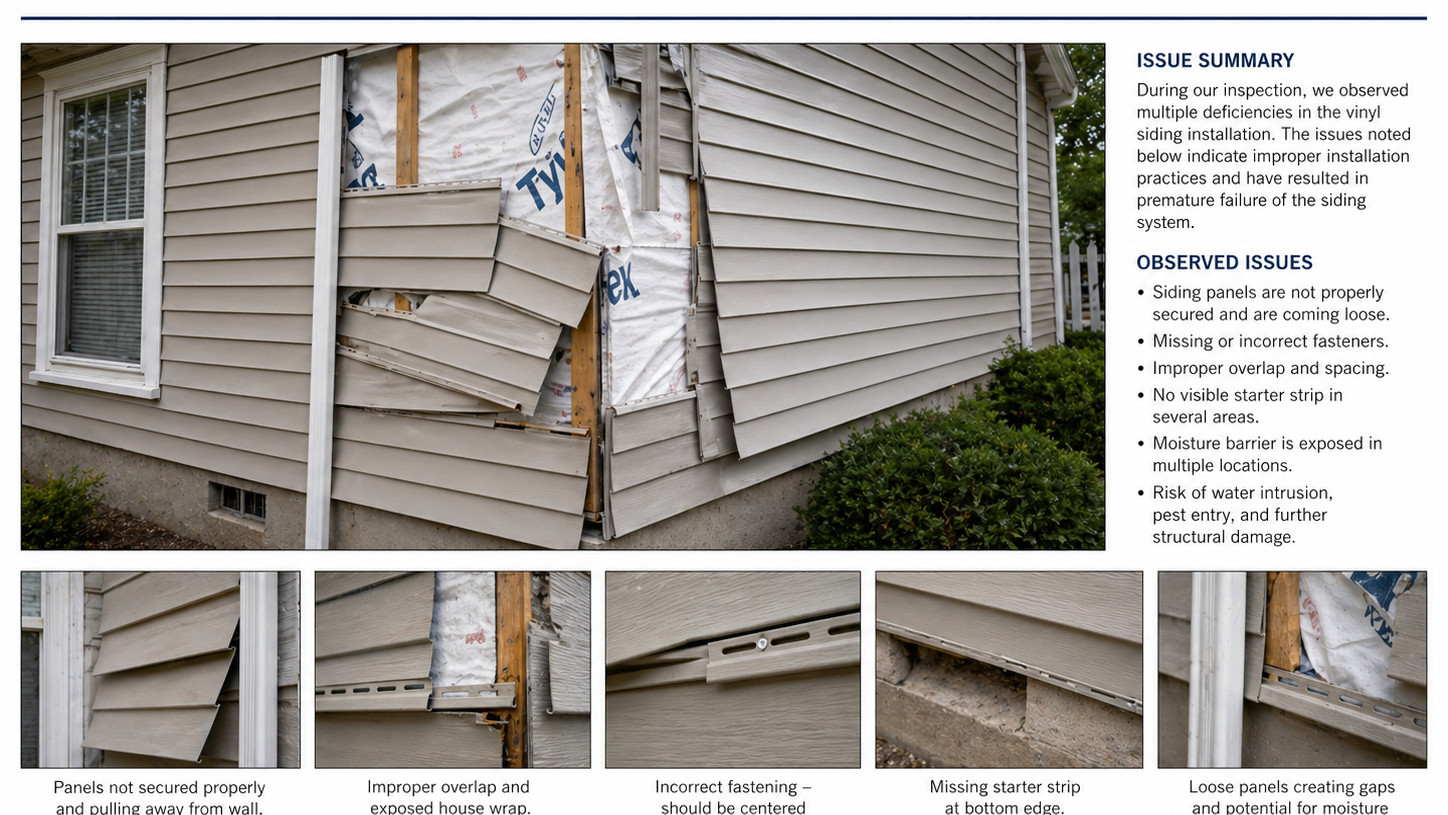
Vinyl siding is engineered to perform in a specific way. According to VSI guidelines, it must be installed to allow movement, manage water, and function as part of a complete exterior system.
Key installation requirements include:
- Nails centered in slots—not driven tight
- Panels allowed to expand and contract freely
- Proper overlap and locking between panels
- Installation over a weather-resistant barrier
- Correct flashing around openings and transitions
If these basics aren’t followed, issues like warping, buckling, or water intrusion can occur—and manufacturers typically classify those as installation errors, not product defects.
What Most Manufacturer Warranties Actually Cover
Many homeowners assume a “lifetime warranty” covers everything. It doesn’t.
Typically Covered
- Manufacturing defects
- Material failure under normal conditions
- Limited fade protection (within defined ranges)
Often NOT Covered
- Improper installation
- Labor costs for removal/reinstallation
- Extreme weather damage (like hail, depending on policy)
- Color variation outside warranty limits
The key takeaway: product warranties protect the material—not the workmanship.
The Critical Difference: Product vs. Workmanship Warranty
This is where most homeowners get exposed.
- Manufacturer warranty: Covers defects in the siding itself
- Contractor workmanship warranty: Covers how the siding was installed
If installation is poor and no workmanship warranty exists—or it’s weak—you’re responsible for fixing the problem.
That’s why installation quality matters just as much as product choice.
What to Verify Before You Sign a Contract
In the Quad Cities, where siding has to handle real weather, the details matter more than the sales pitch.
You should ask for:
- Written manufacturer warranty (not just a brochure)
- Clear explanation of transfer rules (important for resale)
- Details on fade, hail, and weather exclusions
- Written workmanship warranty from the contractor
- Clarification on what labor is covered—and for how long
If those aren’t clearly defined, you’re taking on risk you won’t see until something fails.
Installation Details That Protect Your Warranty (and Your Home)
This is where trust is built—and where good contractors separate themselves.
Prep & Tear-Off
- Full removal of existing siding
- Inspection for rot or structural issues
- Wall prep for a flat, stable surface
Moisture Protection
- House wrap installation (required by VSI)
- Proper flashing at windows and doors
- Sealing of all penetrations
Trim & Installation
- Correct starter strips and locking systems
- Panels installed with room for movement
- Clean, aligned trim transitions
Jobsite & Cleanup
- Protection of landscaping and property
- Debris and nail cleanup
- Final inspection and finishing details
These aren’t “extras”—they’re what ensure the siding performs and stays covered under warranty.
The Bottom Line
Yes, poor siding installation can void your manufacturer warranty—and in many cases, that’s exactly what happens when problems show up.
Warranties protect products, not shortcuts. If the installation doesn’t follow VSI standards and manufacturer guidelines, coverage can be denied—leaving you responsible for the cost.
The smart move is to verify both warranties before you sign: the product warranty and the contractor’s workmanship warranty. In the Quad Cities, where siding has to perform under real weather conditions, the difference between a protected investment and an expensive mistake comes down to how the system is built—not just what it’s made of.
Share This Post
Share it on Facebook or X, or send it through your device share sheet for Instagram.
More Siding Guides
From the Siding Learning Center — Installation