Learn whether vinyl siding can be painted, when painting makes sense, when replacement is better, and what homeowners should know before choosing a new siding color.
Vinyl Siding Guide
Can Vinyl Siding Be Painted?
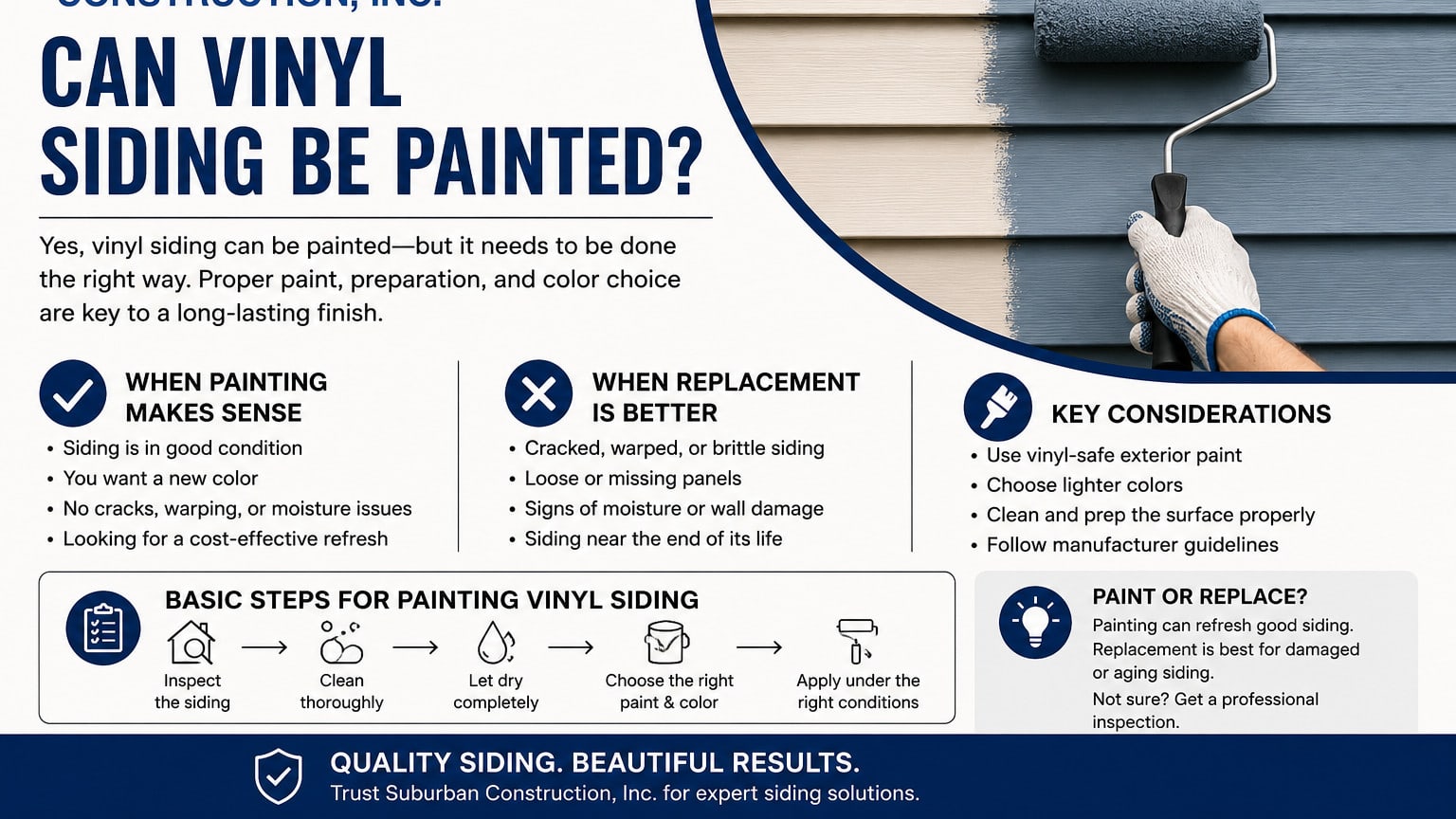
Yes, vinyl siding can be painted—but it needs to be done carefully. Painting vinyl siding is not the same as painting wood, fiber cement, or aluminum. The right paint, color choice, surface preparation, and application process all matter if you want the finish to look good and last.
For some homes, painting vinyl siding can be a practical way to refresh curb appeal. For others, full siding replacement may be the better long-term investment.
Quick Answer: Should You Paint Vinyl Siding?
Painting vinyl siding can make sense if the siding is still in good condition and you simply want a new color. However, if the siding is cracked, warped, buckled, brittle, loose, or showing signs of moisture problems, painting will not fix the underlying issue.
- Paint may refresh the appearance of older siding.
- Paint will not repair damaged or failing siding.
- The siding must be cleaned and prepared properly.
- The paint must be compatible with vinyl.
- Very dark colors can cause heat-related problems if not chosen carefully.
When Painting Vinyl Siding Makes Sense
Painting can be a reasonable option when the siding is structurally sound but cosmetically outdated. If the panels are still flat, secure, and free of major damage, a quality paint job can help the home look cleaner and more current.
Painting may be worth considering if:
- Your siding is faded but still in good condition.
- You want to update the color without replacing the siding.
- The siding is not cracked, warped, or brittle.
- There are no signs of moisture damage behind the siding.
- You are comfortable with future repainting and maintenance.
When Painting Is Not the Best Choice
Painting vinyl siding is not a cure for failing siding. If the siding is already damaged, paint may temporarily improve appearance, but it will not restore performance.
Replacement may be the better option if you notice:
- Cracked or broken panels
- Buckled or warped siding
- Loose or missing sections
- Soft spots or wall damage behind the siding
- Recurring mold, mildew, or moisture issues
- Siding that feels brittle or weak
- Poor installation problems that affect performance
If the siding is near the end of its useful life, spending money on paint may only delay a replacement project that is already needed.
Why Paint Choice Matters
Vinyl siding expands and contracts with temperature changes. Because of that movement, the paint must be flexible enough to bond properly and move with the siding.
A paint designed for vinyl siding is important because standard exterior paint may not perform well on the surface. The wrong paint can peel, crack, fade, or fail prematurely.
The color also matters. Darker colors absorb more heat, which can increase the risk of warping or distortion. Many paint manufacturers offer vinyl-safe colors designed to reduce that risk.
Basic Steps for Painting Vinyl Siding
A successful vinyl siding paint job depends heavily on preparation. Skipping the prep work is one of the fastest ways to get poor results.
- Inspect the siding for cracks, warping, loose panels, and moisture issues.
- Clean the siding thoroughly to remove dirt, chalking, mildew, and debris.
- Allow the surface to dry completely.
- Choose a vinyl-safe exterior paint.
- Select a color that is appropriate for vinyl siding.
- Apply paint under the right weather conditions.
- Use proper application techniques for an even finish.
Pros of Painting Vinyl Siding
- Can improve curb appeal without full replacement
- Allows you to update the color of your home
- May cost less upfront than new siding
- Can extend the appearance of siding that is still in good condition
- Offers a cleaner, refreshed exterior look
Cons of Painting Vinyl Siding
- Does not fix damaged siding
- May require future repainting
- Improper paint or dark colors can create heat issues
- Poor preparation can lead to peeling or uneven results
- May affect product warranties depending on the siding and paint used
- Can be a short-term solution if replacement is already needed
Paint or Replace: How Do You Decide?
The best decision depends on the condition of your siding and your long-term goals. If your siding is only faded, painting may be enough. If the siding is damaged, aging, or failing, replacement is usually the smarter choice.
| Choose Painting If... | Choose Replacement If... |
|---|---|
| The siding is faded but still solid | The siding is cracked, warped, or buckled |
| You want a lower upfront refresh | You want a longer-term exterior upgrade |
| Panels are secure and properly installed | Panels are loose, brittle, or missing |
| There are no moisture concerns | There may be wall damage behind the siding |
Final Thoughts
Vinyl siding can be painted, but it should be done with care. The siding needs to be in good condition, the surface must be prepared correctly, and the paint must be suitable for vinyl.
If your goal is a simple color refresh, painting may be a practical option. If your siding is damaged, outdated, or no longer protecting your home properly, replacement may deliver better long-term value.
Share This Post
Share it on Facebook or X, or send it through your device share sheet for Instagram.