Do you need a permit for siding replacement in the Quad Cities? Learn local requirements, when permits apply, and how contractors handle the process.
Siding Planning & Local Regulations
Do I Need Permits to Replace Siding in the Quad Cities Area?
By JR Girskis
5 minute read
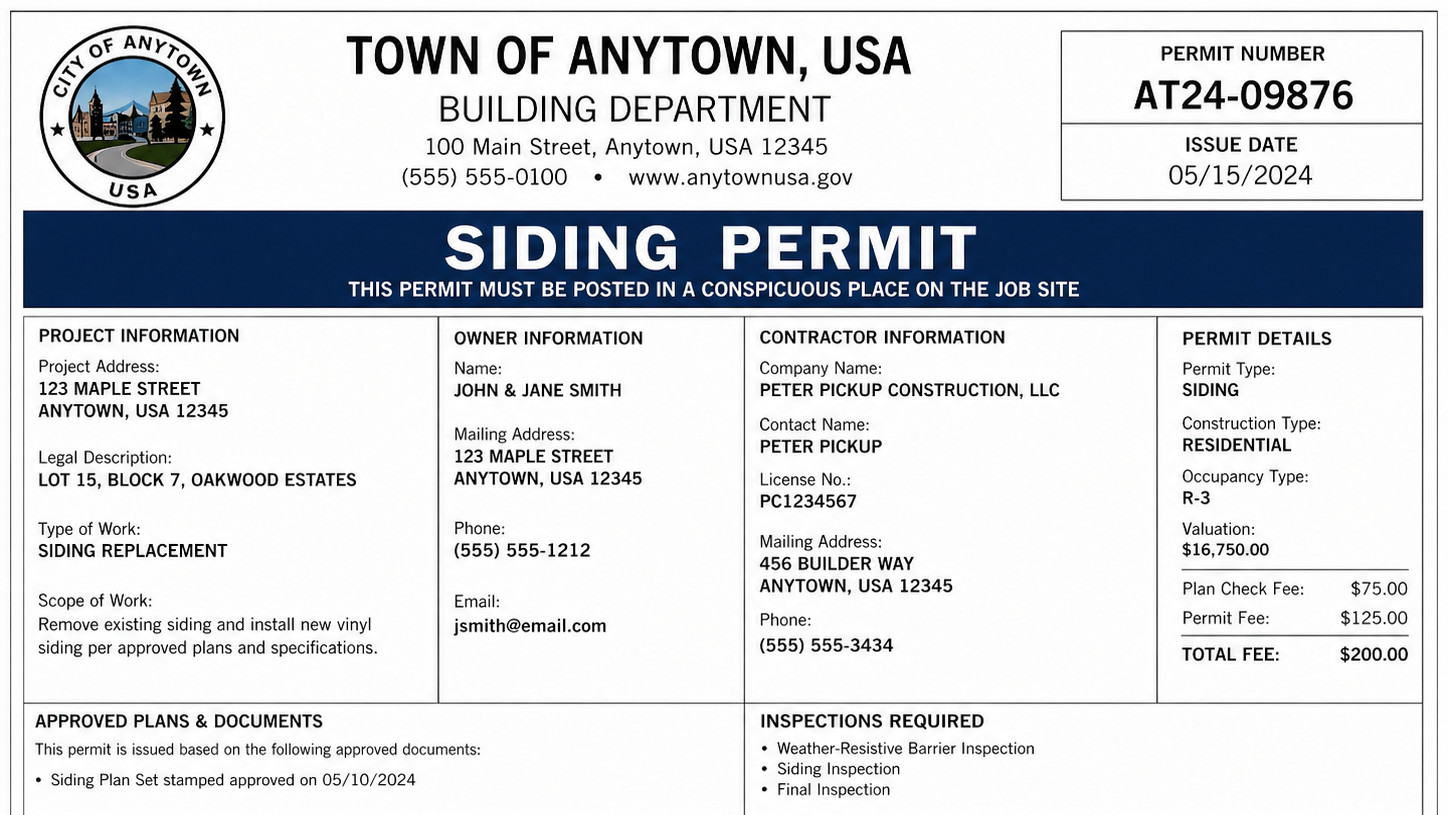
Sometimes yes, sometimes no—and assuming you don’t need one is where homeowners get into trouble.
In the Quad Cities—Davenport, Bettendorf, Rock Island, Moline, East Moline, and surrounding areas—permit requirements vary by municipality. Some cities require permits for siding replacement, while others may not for straightforward projects. The key is simple:
Don’t guess. Verify before the project starts.
Why Permit Rules Aren’t the Same Everywhere
Each city and county sets its own building requirements. What’s allowed in Davenport may not match Bettendorf or Moline. That’s because local codes are influenced by:
- Wind and weather exposure requirements
- Inspection policies and enforcement standards
- Scope of work (repair vs. full replacement)
- Structural or exterior system changes
Even if two homes look similar, the permit requirement can differ based on how the project is defined.
When a Permit Is More Likely Required
While rules vary, permits are more commonly required when the project goes beyond simple panel replacement.
You may need a permit if the project includes:
- Full tear-off and replacement of existing siding
- Structural repairs to sheathing or framing
- Changes to exterior insulation or wall assembly
- Updates to soffit, fascia, or ventilation systems
- Work that affects energy code compliance
These aren’t just cosmetic updates—they affect how your home performs, which is why cities may require oversight.
When a Permit May Not Be Required
In some municipalities, minor siding work may not require a permit.
Examples may include:
- Small repairs or patchwork
- Replacing a limited section of siding
- Projects that don’t alter structure or wall systems
But again—this depends entirely on your city. What’s exempt in one area may require a permit in another.
Why Permits Actually Matter
Many homeowners view permits as a hassle. In reality, they serve a purpose—especially in Midwest conditions where siding systems are exposed to real stress.
Permits help ensure:
- Work meets local building codes
- Proper installation methods are followed
- Structural and moisture issues are addressed
- Your project is documented for resale and insurance
Skipping a required permit can lead to fines, delays, or complications when selling your home later.
The Contractor’s Role in Permit Handling
This is where a reliable contractor separates from the rest.
They Know Local Requirements
Experienced contractors understand permit rules across Davenport, Bettendorf, and surrounding cities.
They Handle the Process
Permits should be included in the project plan—not left for the homeowner to figure out.
They Build to Code
Proper prep, house wrap, flashing, and installation details align with both manufacturer standards and local codes.
If a contractor tells you permits “aren’t necessary” without checking, that’s a red flag.
How This Ties Into Project Quality
Permits aren’t just paperwork—they’re tied to how the job is done.
A properly permitted project typically includes:
- Full tear-off and inspection of underlying structure
- Correct house wrap and moisture barrier installation
- Proper flashing around windows, doors, and penetrations
- Code-compliant fastening and ventilation details
These are the same details that determine whether your siding lasts 30 years—or starts failing early.
The Bottom Line
You may or may not need a permit to replace siding in the Quad Cities—it depends on your city and the scope of work.
The mistake isn’t needing a permit. It’s assuming you don’t.
Verify requirements upfront, work with a contractor who understands local codes, and make sure permit handling is part of the plan. That’s how you avoid delays, protect your investment, and ensure your siding performs the way it should.
Share This Post
Share it on Facebook or X, or send it through your device share sheet for Instagram.
More Siding Guides
From the Siding Learning Center — Common Questions