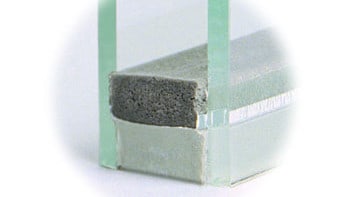
How Important Are Spacers and Warm-Edge Technology?
When homeowners shop for replacement windows, they usually compare glass packages, frame colors, or operating styles. One component that's rarely discussed—but has a significant impact on comfort and efficiency—is the spacer system between the panes of glass.
Although it's hidden inside the insulated glass unit, the spacer helps determine how well your window resists heat transfer, controls condensation, and performs over the long term. Premium replacement windows often feature warm-edge spacer technology because it contributes to better overall energy performance than many traditional metal spacer systems.
You may never notice the spacer inside your window, but you'll appreciate what it does every day—improving comfort, efficiency, and long-term performance.
What Is a Window Spacer?
A spacer is the component that separates the panes of glass inside an insulated glass unit. It creates the sealed airspace that holds insulating gases such as argon or krypton while helping maintain the structural integrity of the glass package.
Because the spacer sits around the perimeter of the glass, it plays an important role in the thermal performance of the entire window system.
What Is Warm-Edge Technology?
Warm-edge spacers are manufactured from materials with lower thermal conductivity than traditional aluminum spacers. By reducing the transfer of heat through the edge of the insulated glass unit, they help keep the interior glass surface warmer during cold weather.
This seemingly small improvement can make a noticeable difference in both comfort and energy efficiency, especially during the cold winters experienced throughout eastern Iowa and western Illinois.
- Reduce heat transfer around the edge of the glass.
- Improve whole-window thermal performance.
- Help maintain warmer interior glass surfaces.
- Support better year-round comfort.
Warm-Edge Spacers Help Reduce Condensation
One of the biggest benefits of warm-edge technology is improved resistance to interior condensation. During winter, the edge of the glass is often the coldest part of a window. By keeping that area warmer, warm-edge spacers help reduce the chance that moisture from indoor air will condense along the perimeter of the glass.
While indoor humidity still plays an important role, improved spacer technology can help reduce the conditions that lead to condensation and frost around the glass edge.
Spacers Work Together with the Entire Glass Package
A spacer should never be evaluated by itself. Premium replacement windows combine warm-edge spacers with other high-performance components to create a complete insulated glass system.
- Low-E glass coatings.
- Argon or optional krypton gas fills.
- Double- or triple-pane insulated glass.
- Premium edge seals.
- Energy-efficient vinyl frames.
Each component contributes to the overall comfort and efficiency of the finished window.
When Comparing Replacement Windows, Ask About:
- The window manufacturer and product line.
- The spacer system used in the insulated glass unit.
- Frame design and internal chamber construction.
- Structural reinforcement.
- Low-E glass package.
- Argon or krypton gas options.
- NFRC performance ratings.
- Operating hardware quality.
- Manufacturer's warranty.
- Written workmanship warranty.
Installation Is Just as Important as the Spacer
Even the best insulated glass unit won't perform properly if the window is installed incorrectly. Professional installation includes measuring the opening accurately, inspecting for hidden moisture damage, installing the window square and level, insulating the gap around the frame, and sealing the opening to help resist air and water infiltration.
Proper installation allows the entire window system—including the spacer technology—to perform as designed while improving comfort and long-term durability.
Look Beyond What You Can See
Many buying mistakes happen because shoppers focus on visible features such as frame color or grille patterns while overlooking the engineering hidden inside the window. Spacer technology, operating hardware, weatherstripping, air-sealing methods, and installation quality all contribute to how the window performs years after it's installed.
Comparing complete window systems—not just appearance—helps homeowners make a more informed investment.
Trusted Advice from Quad Cities Window Professionals
For more than 40 years, Darin Wilson and JR Girskis have helped homeowners throughout Davenport, Bettendorf, Moline, Rock Island, Eldridge, Le Claire, and neighboring Quad Cities communities understand the details that separate an average window from a premium window system. They explain frame construction, reinforcement, warm-edge spacer technology, Low-E glass packages, NFRC ratings, operating hardware, warranty coverage, and installation methods so customers can compare lasting value—not just initial price.
Their goal is to help homeowners invest in replacement windows that deliver dependable comfort, energy savings, and smooth operation for decades, rather than focusing on features that are easy to see but less important over the long term.
Small Components Can Make a Big Difference
Since 1985, Suburban Construction has installed thousands of premium replacement windows throughout the Quad Cities. We've learned that long-term performance comes from the complete window system—not one individual feature. Warm-edge spacers, advanced glass packages, well-engineered frames, quality hardware, professional installation, and a written workmanship warranty all work together to create windows that are more comfortable, more energy efficient, and built to perform through every Midwest season.
Share This Post
Share it on Facebook or X, or send it through your device share sheet for Instagram.
More Window Guides
From the Windows Learning Center — Common Questions