How many siding quotes should you get? Learn why 2–3 detailed estimates are best and what Quad Cities homeowners should compare beyond price.
Siding Planning & Hiring
How Many Quotes Should I Get for a Siding Project?
By JR Girskis
5 minute read
Most homeowners should get 2 to 3 detailed siding quotes—not 5, not 10.
More quotes don’t necessarily give you better information. They usually create confusion—because most estimates aren’t structured the same way. In the Quad Cities, where siding has to handle real weather, the goal isn’t collecting numbers. It’s understanding what’s actually included.
The right number of quotes gives you clarity. Too many just creates noise.
Why 2–3 Quotes Is the Sweet Spot
Two to three quotes gives you enough range to compare approaches—without overwhelming yourself with inconsistent information.
1 Quote
No comparison → blind decision
2–3 Quotes
Clear comparison → smart decision
4+ Quotes
Confusion → inconsistent scope
The key is not quantity—it’s quality. Two detailed, transparent estimates are more valuable than five vague ones.
What a Strong Siding Estimate Should Include
This is where most homeowners either make a smart decision—or a costly mistake.
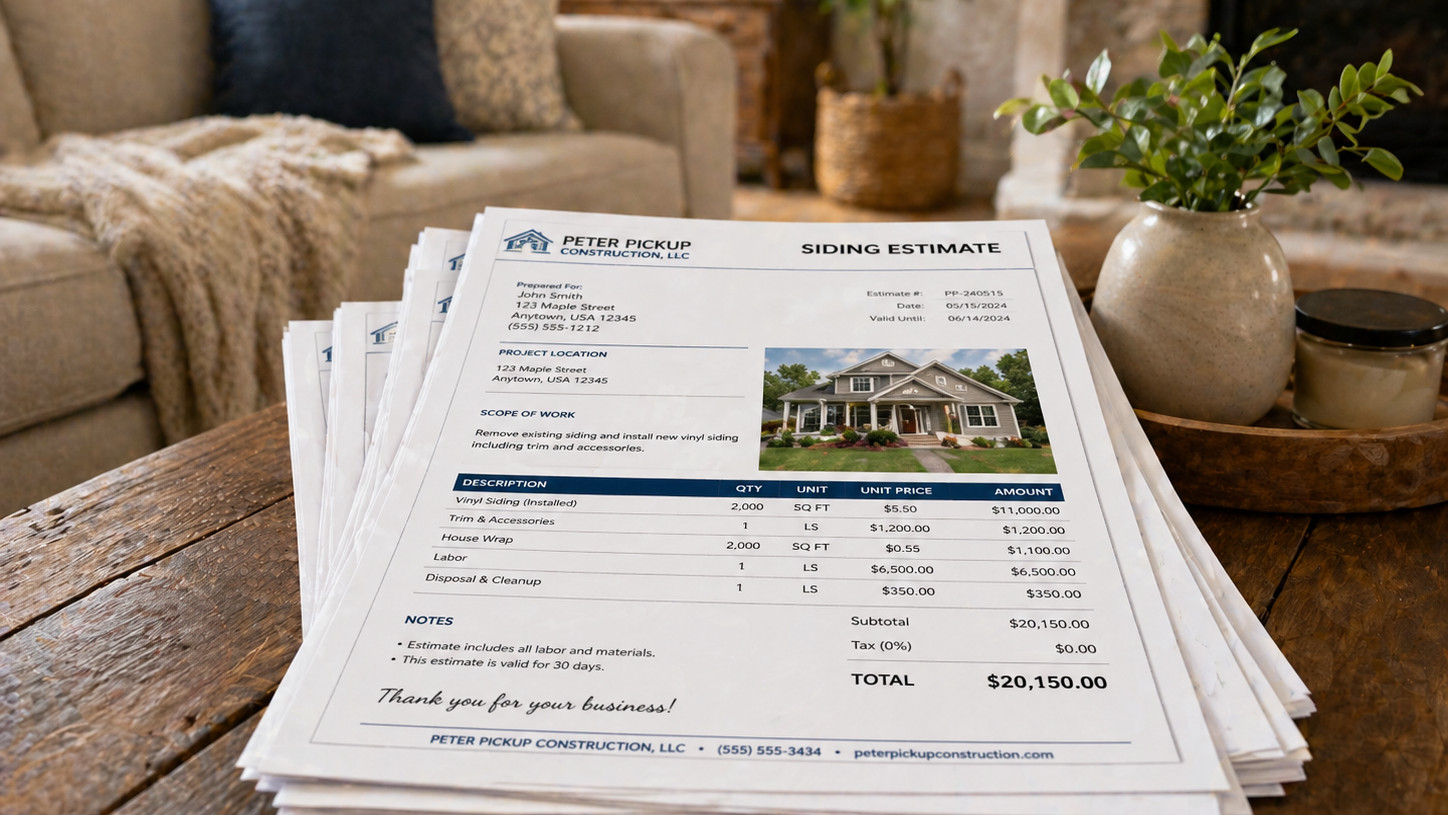
A complete estimate should clearly spell out:
- Siding material, thickness, and profile (e.g., .046 vs builder-grade)
- Insulation options (if included)
- Starter strips, corners, and full trim package
- House wrap (weather barrier)
- Flashing around windows, doors, and transitions
- Rotten wood repair allowances
- Tear-off, disposal, and cleanup
- Permit handling (if required)
- Workmanship warranty (separate from manufacturer warranty)
If these items aren’t clearly defined, you’re not comparing full systems—you’re comparing partial scopes.
Why the Cheapest Quote Is Often Misleading
In the Midwest, siding isn’t just about panels—it’s about water management and durability.
Lower quotes often exclude:
- Proper house wrap installation
- Detailed flashing work
- Full trim systems
- Wall prep and structural repair
These are the exact details that protect your home from moisture, air leaks, and long-term damage—especially in Quad Cities weather.
The cheapest quote usually isn’t cheaper—it’s just missing the work that matters most.
What Smart Homeowners Actually Compare
Instead of focusing on price alone, the best decisions come from comparing scope and execution.
Key comparison factors:
- Product line and siding thickness
- Wind rating and durability
- Insulation and energy considerations
- Trim package and finishing details
- Installation method and fastening approach
- Cleanup standards and jobsite management
- Warranty language (product vs labor)
- Local references and past projects
Most problems happen when homeowners compare only price and color—then realize later the systems weren’t equivalent.
Using HOVER 3D to Compare Design, Not Just Price
One of the biggest challenges with multiple quotes is visualizing the final result—especially when different contractors suggest different styles.
That’s where HOVER comes in. It’s a 3D rendering tool that allows you to see your actual home with different siding colors, profiles, and trim combinations before making a decision.
With HOVER, you can:
- Compare design options across different contractor proposals
- See full siding systems—not just small samples
- Align style with your home’s architecture
- Make confident decisions before installation begins
This shifts the conversation from “which quote is cheaper?” to “which approach actually works best for my home?”
The Bottom Line
Get 2–3 siding quotes—but make sure they’re detailed, transparent, and comparable.
In the Quad Cities, where weather exposes every shortcut, the difference between quotes isn’t just price—it’s what’s included behind the siding.
The smartest homeowners don’t chase the lowest number. They compare systems, installation quality, and long-term performance—because that’s what determines whether your siding lasts decades or starts costing you sooner than it should.
Share This Post
Share it on Facebook or X, or send it through your device share sheet for Instagram.
More Siding Guides
From the Siding Learning Center — Common Questions