Vinyl siding can withstand strong winds when it is properly installed, with many standard products rated around 110 mph and premium siding systems rated higher depending on the product.
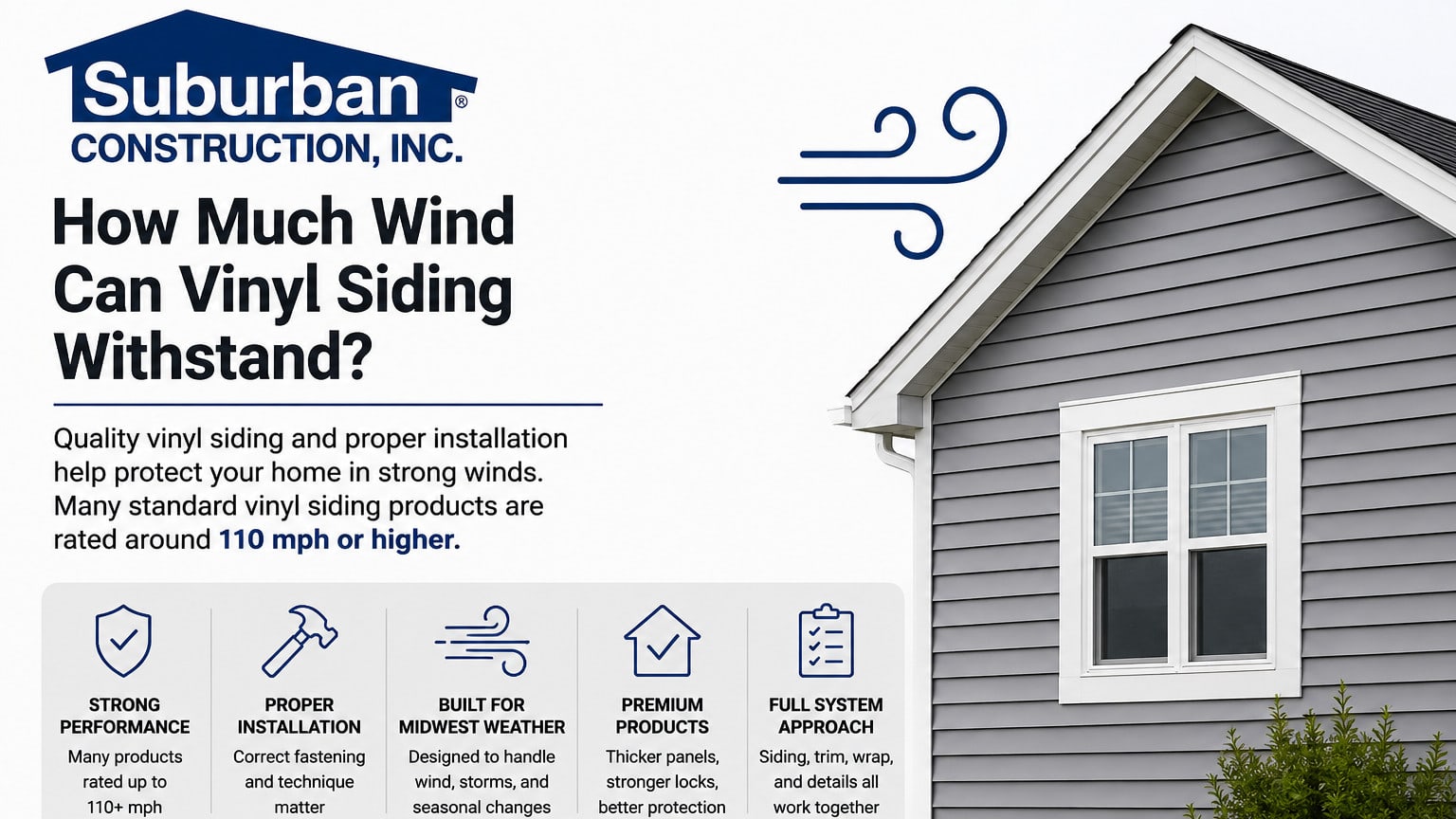
Vinyl Siding Wind Resistance Guide
How Much Wind Can Vinyl Siding Withstand?
Vinyl siding can withstand strong winds when it is a quality product and installed correctly. Many standard vinyl siding products are rated around 110 mph, while premium siding systems may be rated significantly higher depending on the profile, locking system, fastening method, and manufacturer testing.
Wind performance is not just about the siding panel. It depends on the full siding system: product quality, wall preparation, starter strips, trim, fasteners, corners, house wrap, and whether the siding was installed with room to expand and contract. A strong panel installed poorly can fail sooner than a good panel installed correctly.
Typical Vinyl Siding Wind Ratings
- Basic vinyl siding: often rated around 90–110 mph.
- Standard quality vinyl siding: commonly rated around 110–150 mph.
- Premium vinyl siding: may be rated 150 mph or higher, depending on the product.
- Special high-wind profiles: can exceed standard ratings when installed to manufacturer specifications.
What Makes Vinyl Siding Better in High Wind?
Vinyl siding performs better in wind when the panel is stronger, the lock is tighter, and the installer follows the exact fastening requirements. ASTM D5206 is the standard test method used to evaluate wind-load resistance for rigid plastic siding when fastened according to product standards or manufacturer instructions.
- Panel thickness: thicker panels usually provide better rigidity.
- Locking system: stronger locks help panels stay connected during gusts.
- Nailing hem design: reinforced hems improve wall attachment.
- Proper fastening: siding should be secure but not nailed too tightly.
- Trim and corners: weak trim details can become failure points in high wind.
Why Installation Matters So Much
Wind damage often starts where the siding system is weakest: loose starter strips, poor corners, bad trim transitions, or panels that were fastened incorrectly. Vinyl siding needs to move slightly with temperature changes. If it is nailed too tight, it can buckle. If it is nailed too loose, wind can pull it away from the wall.
A wind-ready siding installation should include:
- Correct starter strip alignment
- Proper fastener spacing
- Panels locked fully into place
- Clean corners, J-channel, and trim details
- Proper clearance for expansion and contraction
- Manufacturer-approved installation methods
What About Midwest Storms?
In Iowa and Illinois, siding has to handle straight-line winds, thunderstorm gusts, winter storms, and changing temperatures. A premium vinyl siding system is usually the better choice for homeowners who want stronger wind performance and better long-term curb appeal.
Products like Gentek Sequoia Select are designed as premium vinyl siding options, with heavy-duty construction, .046 thickness, and profile-dependent wind-load performance. Gentek notes that wind-load performance can vary by profile design, which is exactly why product selection and installation details matter.
Signs Wind May Have Damaged Your Siding
- Loose, rattling, or missing panels
- Siding pulled out of the lock
- Open gaps near corners or trim
- Panels bowed, buckled, or waving after a storm
- Damage around windows, doors, gables, or rooflines
- Water stains or moisture concerns after wind-driven rain
The Bottom Line
Most vinyl siding can handle normal wind well, but severe Midwest storms demand better products and better installation. If wind resistance matters, choose a premium siding system, confirm the product rating, and work with a contractor who installs the full exterior system correctly.
Need Wind-Resistant Vinyl Siding?
Suburban Construction helps Iowa and Illinois homeowners compare vinyl siding options built for Midwest wind, hail, humidity, and long-term curb appeal. A stronger siding project starts with the right product and the right installation.
Share This Post
Share it on Facebook or X, or send it through your device share sheet for Instagram.
More Siding Guides
From the Siding Learning Center — Materials & Products