Internal blinds can reduce cleaning and protect window treatments from pets, children, and daily use, but their enclosed mechanisms may require specialized repairs. Learn the advantages, drawbacks, and warranty questions Quad Cities homeowners should consider.
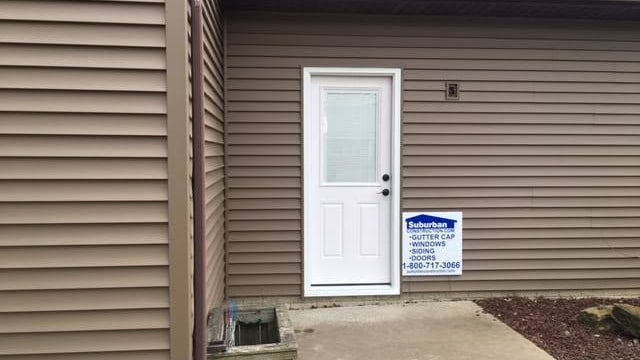
Entry Door Glass and Blind Options
Do Internal Blinds Reduce Maintenance or Create Repair Issues?
Internal blinds can make an entry door easier to clean and more convenient to use, but they also introduce moving components that may eventually require service. For most homeowners, the right choice depends on how often the blinds will be used, the quality of the glass unit, the available warranty, and whether privacy and low-maintenance operation are priorities.
What Are Internal Blinds?
Internal blinds, sometimes called enclosed blinds or blinds-between-the-glass, are installed inside a sealed glass unit. Instead of hanging on the interior surface of the door, the blinds sit between panes of glass and are operated by a slider, magnet, or control mounted along the edge of the glass.
Depending on the system, homeowners may be able to raise, lower, tilt, or fully close the blinds without directly touching the slats.
Internal blinds are commonly available in:
- Full-view entry door glass
- Half-lite and three-quarter-lite doors
- Patio doors and sliding glass doors
- Entry door sidelights
- French and hinged patio door systems
How Internal Blinds Reduce Routine Maintenance
One of the biggest advantages of internal blinds is that the slats are protected from dust, fingerprints, grease, pet hair, and everyday household activity. Traditional blinds can be difficult to clean because each slat must be wiped individually. Enclosed blinds eliminate much of that routine work.
Because the blinds are protected by glass, they are also less likely to become bent, tangled, or damaged by children and pets. There are no hanging cords, and the blinds do not swing when the door opens or closes.
Maintenance benefits may include:
- No exposed slats to dust or wipe individually
- No hanging cords that can tangle or become damaged
- Fewer fingerprints and smudges on the blinds
- Protection from pets, children, furniture, and daily traffic
- No blind or curtain moving against the door when it opens
- A cleaner, less cluttered appearance around the entry
Homeowners still need to clean the interior and exterior surfaces of the glass, but the blind itself generally remains protected inside the sealed unit.
Can Internal Blinds Create Repair Problems?
Internal blinds can reduce cleaning, but they are not completely maintenance-free. The system includes moving parts, and any moving component has the potential to wear, disconnect, stick, or stop operating correctly.
A traditional exposed blind can often be repaired or replaced without changing the door glass. With internal blinds, the operating mechanism is part of the glass assembly. Depending on the door design and manufacturer, repairing a failed system may require replacing the complete insulated glass unit.
The tradeoff is simple:
Internal blinds reduce everyday cleaning and accidental damage, but a mechanical failure may be more involved and expensive to correct than replacing an ordinary household blind.
Common Internal-Blind Concerns
Quality internal-blind systems are designed for repeated use, but homeowners should understand the potential problems before selecting one.
- The blinds may stop raising or lowering evenly
- A magnetic operator may become disconnected
- The slats may tilt unevenly
- The operating slider may become difficult to move
- The blinds may become stuck in one position
- A failed glass seal may cause fogging or condensation between the panes
- Repair may require replacement of the complete glass insert
Some apparent failures may be corrected by reconnecting or resetting the magnetic operator. Others may require professional service. Homeowners should avoid forcing a control that feels stuck, as excessive pressure can damage the operating mechanism.
How Long Do Internal Blinds Last?
There is no single lifespan that applies to every internal-blind system. Durability depends on the manufacturer, glass construction, operating mechanism, frequency of use, exposure to temperature changes, and installation quality.
A blind that is adjusted occasionally for privacy may experience less wear than one that is raised and lowered several times every day. Homeowners who frequently operate the system should prioritize a proven manufacturer, strong warranty coverage, and access to replacement glass or service.
Before purchasing, ask whether replacement parts are available separately or whether the entire glass unit must be replaced if the blind mechanism fails.
Why the Warranty Matters
Warranty terms are particularly important with blinds-between-the-glass because the blind mechanism and insulated glass seal may have different coverage periods.
A product may include a long warranty on the door slab but shorter coverage on glass, internal blinds, hardware, finishes, or labor. Homeowners should request the warranty details in writing and understand who is responsible for diagnosing and completing future service.
Questions to ask about warranty coverage include:
- How long is the internal-blind mechanism covered?
- Is glass seal failure covered separately?
- Does the warranty include replacement parts or the entire glass unit?
- Is labor included, or is only the replacement material covered?
- Who handles the warranty claim?
- Will a local service technician complete the repair?
- Is the warranty transferable to a future homeowner?
Privacy and Light Control
Internal blinds provide flexible privacy without permanently blocking natural light. A homeowner can open the blinds during the day, tilt the slats to reduce direct visibility, or fully close them at night.
This flexibility can be especially helpful for homes located close to a sidewalk, street, neighboring property, or shared driveway. The blinds can provide privacy when needed while preserving a bright and welcoming entry at other times.
Homeowners should test how completely the blinds close. Small gaps between slats may still allow limited visibility, particularly at night when interior lights are brighter than the exterior.
Are Internal Blinds Safer for Children and Pets?
Enclosed blinds eliminate exposed cords and loose slats around the entry door. This can be helpful in homes with young children or active pets.
Dogs cannot push between the slats to look outside, cats cannot bend or climb the blind, and children cannot pull on hanging cords. The protected design can also help the entry maintain a cleaner appearance in a busy household.
Internal blinds may also be useful in mudrooms and high-traffic entrances where ordinary window treatments would regularly come into contact with coats, bags, shoes, and door hardware.
Do Internal Blinds Affect Energy Efficiency?
The energy performance of an entry door depends on the complete system, including the door material, insulated core, glass area, number of panes, glass coatings, spacers, frame, weatherstripping, threshold, and installation.
Internal blinds may help manage glare and direct sunlight, but homeowners should not assume that the blinds alone make the door highly energy efficient. The specifications of the insulated glass unit matter more than the presence of the blind.
Ask about the door system's energy-performance ratings and whether the glass includes features such as Low-E coatings or insulating gas. Larger areas of glass may provide more natural light but may perform differently than a mostly solid insulated door.
Quad Cities Weather and Internal Blinds
Entry doors in the Quad Cities experience wide seasonal temperature changes, summer humidity, winter cold, strong winds, and wind-driven rain. These conditions make the quality of the complete glass and door system especially important.
Repeated heating and cooling can stress insulated glass seals over time. A failed seal may allow moisture or fogging to appear between the panes, where it cannot be cleaned from either side.
The orientation of the door also matters. A west-facing entry may receive intense afternoon sunlight, while an unprotected north-facing door may experience more winter exposure. A covered porch can reduce direct weather exposure, but it does not eliminate the need for a properly designed and installed door system.
Why Installation Quality Still Matters
A high-quality door with internal blinds can still perform poorly if the frame is not installed correctly. The opening must be inspected, prepared, squared, shimmed, fastened, insulated, sealed, and adjusted as a complete system.
Improper installation can place stress on the door, create uneven gaps, interfere with locking, and allow air or water to enter around the frame. These problems may be mistakenly blamed on the glass or blinds when the real issue is the installation.
A professional entry door installation should include:
- Inspection of the existing frame and surrounding structure
- Removal of damaged or deteriorated materials when necessary
- Proper leveling, squaring, shimming, and fastening
- Insulation and air sealing around the opening
- Weather-resistant sealing at the sill and exterior perimeter
- Careful adjustment of hinges, weatherstripping, and lock hardware
- Interior and exterior trim completion
- Final testing of the door, glass, blinds, and locking system
Internal Blinds and Front-Door Curb Appeal
The front door is one of the most noticeable parts of the home's exterior. Internal blinds can create a clean, finished appearance because no separate curtain rod, shade, or exposed blind is needed.
When opened, the glass can brighten the entrance and make the foyer feel more inviting. When closed, the blinds provide a uniform background that can help the door color, glass proportions, and hardware stand out.
The size of the glass should remain proportional to the door and the home. A full-view glass panel may work beautifully on one house but feel too exposed or visually dominant on another. The door should coordinate with the siding, windows, roof color, trim, and architectural age of the property.
Internal Blinds vs. Textured Privacy Glass
Internal blinds are not the only way to create privacy. Textured or decorative privacy glass may be a better choice for homeowners who want natural light without moving parts.
Internal blinds
Provide adjustable privacy and light control but include an operating mechanism that may eventually require service.
Textured privacy glass
Provides consistent privacy and natural light without moving parts, although the level of privacy cannot be adjusted.
Clear glass with a separate window treatment
May be easier to repair or update but requires more cleaning and can create exposed cords, moving fabric, or blind damage around the door.
Who Is a Good Candidate for Internal Blinds?
Internal blinds may be a strong choice for homeowners who value convenience, adjustable privacy, and a clean entryway.
- Families with young children or pets
- Homes located close to the street or neighboring properties
- Busy entrances where exposed blinds could be damaged
- Homeowners who dislike cleaning individual blind slats
- People who want adjustable privacy without curtains
- Homes with full-view or partially glazed entry doors
They may be less appealing to homeowners who want the simplest possible door glass, prefer a permanent privacy pattern, or are concerned about replacing a complete glass unit if the mechanism eventually fails.
Questions to Ask Before Ordering Internal Blinds
- Can the blinds be raised, lowered, and tilted?
- How does the operating mechanism work?
- Can the magnetic operator be reset if it disconnects?
- What happens if the blinds become stuck?
- Can the mechanism be repaired separately?
- Would the entire glass unit need to be replaced?
- How long are the blinds and insulated glass covered?
- Does the warranty include service labor?
- Who will handle repairs after installation?
- Are replacement glass units likely to remain available?
- What energy-efficient glass features are included?
- Can I operate a full-size display before ordering?
Are Internal Blinds Worth It?
Internal blinds can be worth the additional cost for homeowners who want adjustable privacy, less routine cleaning, and protection from children, pets, and daily traffic. Their greatest benefit is convenience.
Their primary drawback is repairability. If an exposed blind fails, it can usually be replaced independently. If an enclosed system fails, the repair may involve the glass unit and require professional service.
The strongest choice is not automatically the door with the most features. It is the system that fits the homeowner's daily routine, privacy needs, budget, architectural style, and comfort with possible future repairs.
Entry Doors with Internal Blinds in the Quad Cities
Suburban Construction helps homeowners in Davenport, Bettendorf, Eldridge, Le Claire, Moline, Rock Island, East Moline, and surrounding Quad Cities communities compare complete entry door systems.
Homeowners can review door materials, glass sizes, privacy options, internal blinds, decorative glass, sidelights, colors, hardware, weather protection, installation details, and warranty coverage before making a final decision.
A good entry door should do more than look attractive in a brochure. It should operate smoothly, seal correctly, provide the desired privacy, withstand local weather, and create a strong first impression every time someone approaches the home.
Compare Entry Door Glass and Blind Options
Internal blinds reduce everyday cleaning and protect the blind from damage, but homeowners should also consider warranty coverage and the potential cost of future glass-unit repairs.
Contact Suburban Construction to compare internal blinds, textured privacy glass, decorative glass, and other entry door options for your Quad Cities home.
Share This Post
Share it on Facebook or X, or send it through your device share sheet for Instagram.
More Door Guides
From the Doors Learning Center — Common Questions