Should you replace downspouts during siding installation? Learn how bundling exterior work improves durability and water management.
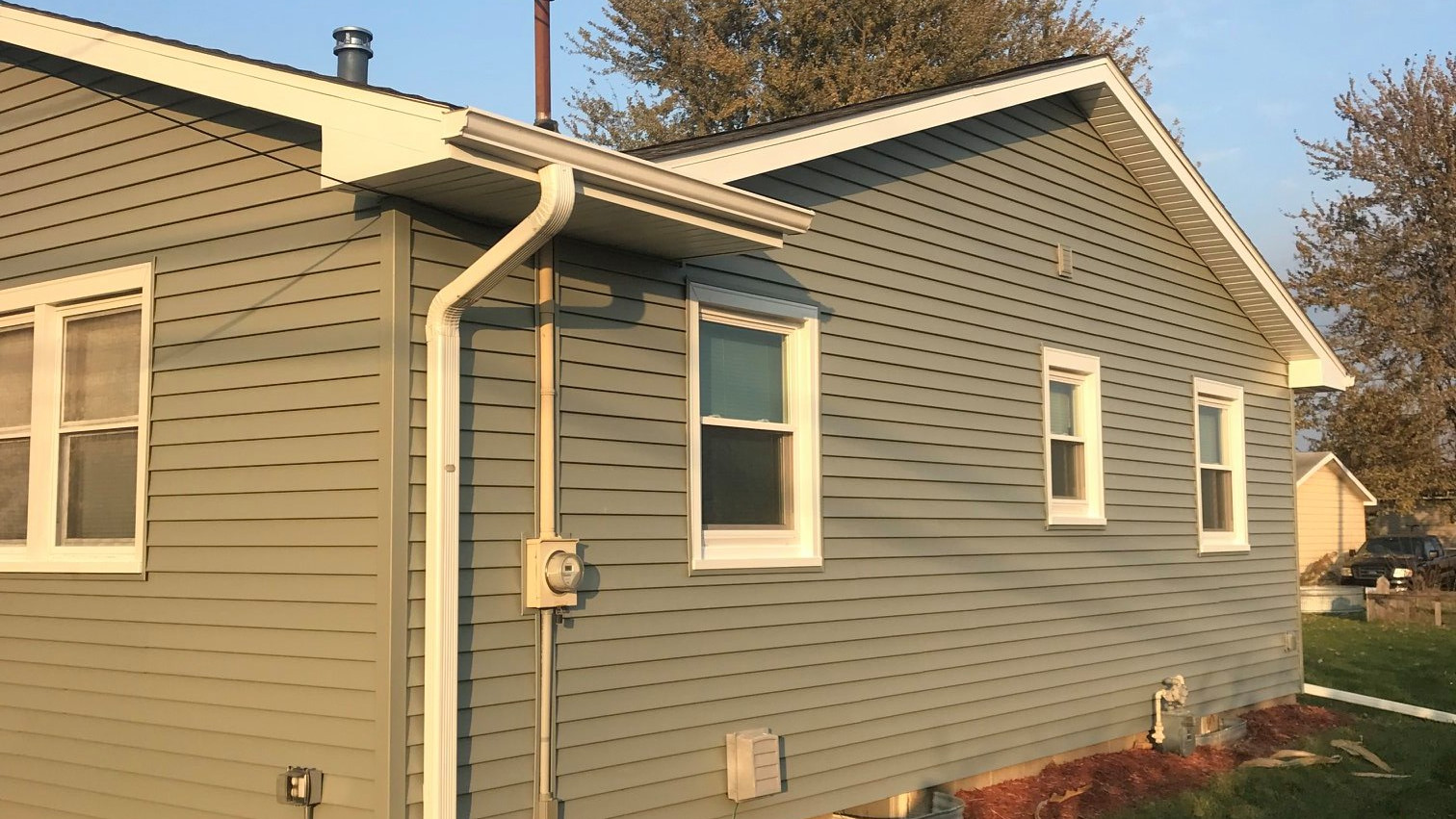
Exterior System Planning
Should I Replace Downspouts During a Siding Project?
By JR Girskis
4–5 minute read
Short answer: not always—but in many cases, it’s the smarter move when you’re already replacing siding.
Downspouts are easy to overlook because they seem separate from siding. In reality, they’re part of the same system—controlling how water moves off your roof and away from your walls. When siding comes off, that system gets exposed, and that’s where the decision becomes clearer.
Why Downspouts Matter More Than They Seem
Downspouts don’t just carry water—they protect your siding, foundation, and structure.
When they’re working correctly, they:
- Direct water away from the home
- Prevent staining and streaking on siding
- Reduce moisture buildup near the foundation
- Limit water intrusion at seams and joints
When they’re not, water ends up exactly where you don’t want it—against your new siding.
What Siding Projects Reveal
Once old siding is removed, hidden issues often show up around gutter and downspout areas.
Common discoveries include:
- Water staining or rot behind downspouts
- Improper fastening or loose brackets
- Gaps or poor sealing where downspouts meet the wall
- Outdated or mismatched components
These aren’t cosmetic issues—they’re signs that water management hasn’t been working properly.
Why Bundling Work Usually Produces Better Results
Treating siding as a standalone project is where homeowners run into problems later.
When downspouts are replaced or adjusted during the siding project, everything can be built as one system:
- Clean integration with new siding and trim
- Proper alignment with gutters and fascia
- Correct sealing at attachment points
- Consistent appearance across the exterior
It’s easier, cleaner, and more durable when it’s done all at once.
When You Should Strongly Consider Replacing Downspouts
Not every home needs new downspouts—but many benefit from it.
Replacement makes sense if:
- Downspouts are dented, rusted, or aging
- They’re poorly aligned or undersized
- There are signs of water damage behind them
- You’re already replacing gutters or fascia
If they’re near the end of their lifespan, this is the most efficient time to upgrade.
When You Might Keep Existing Downspouts
There are situations where keeping them is reasonable.
- They’re relatively new and in good condition
- They drain properly and direct water away from the home
- They can be cleanly reinstalled with the new siding system
But even then, they should be evaluated—not assumed to be fine.
The Bigger Picture: Exterior Systems Work Together
This ties into a larger principle most homeowners miss: your exterior doesn’t function in pieces.
Siding projects are the ideal time to evaluate and bundle related work:
- Gutters and downspouts
- Soffit and fascia
- Trim and flashing upgrades
- Repair of any rotten or damaged wood
When these elements are handled together, the result is more cohesive—and far more durable.
The Bottom Line
You don’t always have to replace downspouts during a siding project—but in many cases, it’s the right call.
Siding replacement exposes how water is actually moving around your home. Ignoring that moment often means revisiting the same issues later.
If the goal is a clean, long-lasting exterior, treating siding, gutters, and downspouts as one system—not separate pieces—is what delivers the best result.
Share This Post
Share it on Facebook or X, or send it through your device share sheet for Instagram.
More Siding Guides
From the Siding Learning Center — Installation