Learn what insulation R-value means, how it is measured, why it matters for energy efficiency, and how insulated vinyl siding R-value is tested.
Home Insulation Guide
What Is Insulation R-Value? Definition, Applications, and Testing
Insulation helps make a home more energy-efficient, reduce utility costs, and create a more comfortable indoor environment. But how do you know which insulation product is right for a specific application? That is where R-value comes in.
What Is Insulation R-Value?
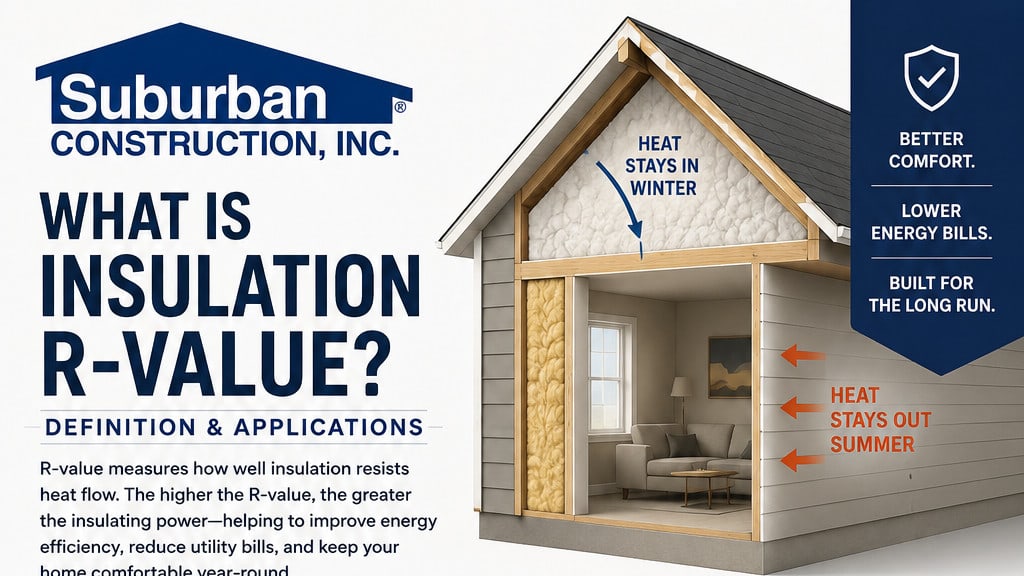
R-value measures how well an insulating material resists heat flow. The higher the R-value, the greater the insulating power.
In simple terms, insulation products with higher R-values are better at slowing the movement of heat. This can help keep warm air inside during the winter and reduce unwanted heat gain during the summer.
In This Article, We’ll Cover:
- How insulation works
- How insulation R-value is determined
- Common insulation applications and recommendations
- How insulated vinyl siding R-value is tested
How Insulation Works
In physics, the second law of thermodynamics explains that heat naturally moves toward cold until there is no longer a temperature difference. This heat transfer happens in three main ways: conduction, convection, and radiation.
Conduction
Conduction is the transfer of heat through materials that are touching each other, such as a skillet heating up on a stove.
Convection
Convection is the way heat moves through liquids and gases, such as warm air circulating around food in an oven.
Radiation
Radiation is heat energy that moves from a source and warms nearby objects, such as the heat felt from a campfire.
Most insulation products used in remodeling and new construction are designed to reduce heat transfer through conduction.
What Is Thermal Bridging?
Thermal bridging happens when heat moves through a material that is more conductive than the surrounding materials. In a typical wall, fiberglass batt insulation may fill the wall cavities, but the wood studs themselves often have a lower R-value.
Those studs can act as a bridge for heat to travel through the wall. In the summer, heat may move toward the cooler, air-conditioned interior. In the winter, indoor heat may move toward the colder exterior.
This is one reason continuous insulation and properly designed exterior wall systems can make a meaningful difference in overall home performance.
How R-Value Is Determined
R-value is based on a mathematical measurement known as R-factor. It represents the ability of an insulation material to restrict heat flow.
To determine R-value, test specimens are placed between two plates in a laboratory apparatus. Heat flow through the insulation is then measured. A typical test specimen is one square foot of material, one inch thick, with a temperature difference of one degree Fahrenheit across its surfaces.
The thermal conductivity of a material is expressed as the rate of heat flow in BTUs per hour. Simply put, the greater the R-value, the better the insulation resists heat movement.
R-Value and Insulation Marketing Claims
Home insulation marketing claims are regulated, including claims about the thermal insulation value provided by a product or material. These rules help ensure that stated R-values are based on proper testing methods.
Rated R-values must be supported by testing conducted according to approved methods, so homeowners and contractors can compare insulation products more accurately.
Insulated Vinyl Siding R-Value Testing
Some rigid insulation products are contoured, which means they cannot always be accurately tested using the standard hot plate method. Insulated vinyl siding is one example.
For products such as insulated siding, a more appropriate test method is the hot box apparatus test. This test evaluates the thermal performance of building materials and wall assemblies under controlled conditions.
In a hot box test, a wall assembly with insulated siding is placed between two instrumented chambers: a climatic chamber and a metering chamber. The chambers are maintained at a specific temperature difference to represent real-world conditions.
- The climatic chamber is usually cooler, representing outdoor winter conditions.
- The metering chamber represents the warmer interior side of the wall.
- Wind may be directed at the material to simulate outdoor exposure.
- Energy use is measured to determine how much heat moves through the assembly.
The R-value of insulated siding is determined by subtracting the measured R-value of the base wall from the measured R-value of the entire wall assembly. This helps show the actual insulation value the siding product adds to the home.
Why R-Value Matters for Homeowners
Understanding R-value helps homeowners make better decisions when comparing insulation products, siding systems, and exterior remodeling upgrades.
A higher R-value can help improve comfort, reduce heating and cooling demand, and support better overall energy efficiency. The right product depends on the application, the home’s construction, and the performance goals of the project.
Share This Post
Share it on Facebook or X, or send it through your device share sheet for Instagram.
More Siding Guides
From the Siding Learning Center — Common Questions