Learn the difference between whole-window ratings and center-of-glass claims when comparing replacement windows. Discover why whole-window performance gives homeowners a more accurate picture of comfort and energy efficiency.
When homeowners start comparing replacement windows, one of the most confusing topics is the difference between whole-window ratings and center-of-glass claims. Many window advertisements highlight impressive glass performance numbers, but those numbers often only apply to the very center of the glass pane — not the entire window unit that gets installed in your home.
Whole-window ratings are usually the better way to compare products because they include the entire window system: the glass, frame, spacers, sash, and edges of the unit. This gives homeowners a more realistic understanding of how the window will actually perform in everyday conditions. Two windows may use similar glass packages but perform very differently once the frame and construction are included in the calculation.
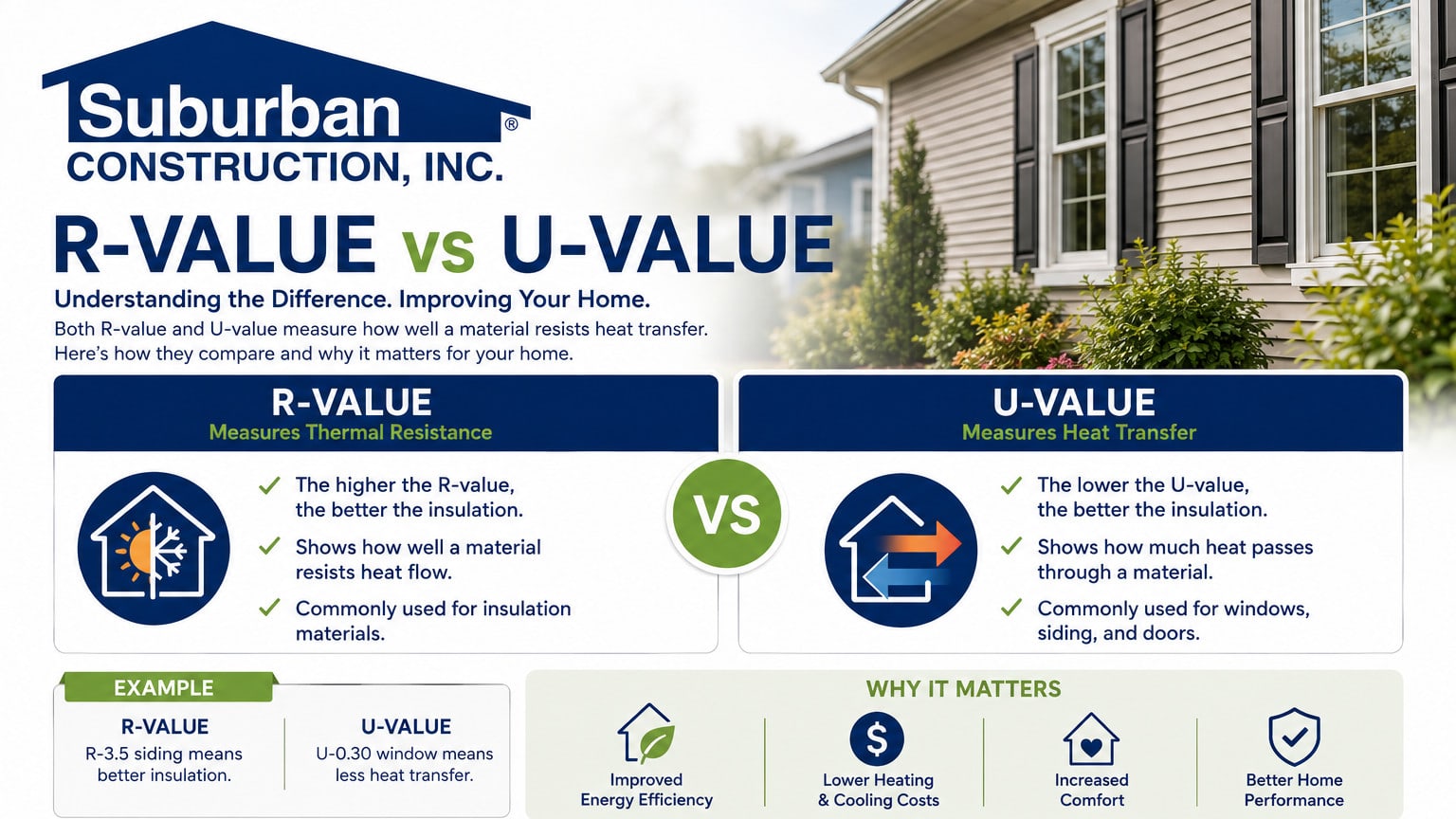
That said, center-of-glass R-value is often the easiest measurement for homeowners to understand because it focuses only on the insulating performance of the glass itself. A higher R-value means better insulation. For example, if one glass package has a center-of-glass R-value of R-5 and another has an R-3 value, most homeowners immediately understand that the R-5 glass is designed to resist heat loss more effectively.
The problem is that the glass alone is not the entire window. Imagine wearing a heavy winter coat with the zipper partially open. The insulation material may be excellent, but cold air can still get through weak spots around the edges. Windows work the same way. Even if the center of the glass performs extremely well, poorly insulated frames or weak edge spacers can reduce the overall efficiency of the complete unit.
For example, a triple-pane window may advertise a center-of-glass R-value near R-7, which sounds impressive. But once the full frame and sash are included, the whole-window rating could drop significantly. Meanwhile, another manufacturer with a stronger frame design and better spacer system may offer slightly lower center-of-glass performance but deliver a better whole-window result overall. That is why whole-window ratings are considered the fairest comparison between products that may appear similar at first glance.
Homeowners throughout the Quad Cities often find these ratings overwhelming, which is why Darin and JR spend time helping customers understand what the numbers actually mean in real-world conditions. Instead of focusing only on marketing claims, they help homeowners compare overall comfort, energy efficiency, air leakage, and long-term performance. Their experience helps homeowners choose replacement windows that make sense for their home orientation, budget, and comfort goals — not just whichever product advertises the highest glass number.
The installation also matters just as much as the rating itself. A high-performing window can still underperform if the opening is not sealed, insulated, and flashed correctly during installation. Professional installation helps ensure the full window system performs as intended, especially during harsh Midwest winters and humid summer conditions.
If you are comparing replacement windows and struggling to understand the difference between whole-window ratings and center-of-glass claims, Suburban Construction can help. Darin and JR work with homeowners across Davenport, Bettendorf, Moline, Rock Island, and surrounding Quad Cities communities to explain window performance in plain language and help you choose energy-efficient windows that deliver real comfort and long-term value.
Share This Post
Share it on Facebook or X, or send it through your device share sheet for Instagram.
More Window Guides
From the Windows Learning Center — Comparisons