A deadbolt that suddenly becomes difficult to lock is often a sign that the door, frame, hinges, or strike plate has shifted. Learn what causes alignment problems and why proper installation matters for lasting security.
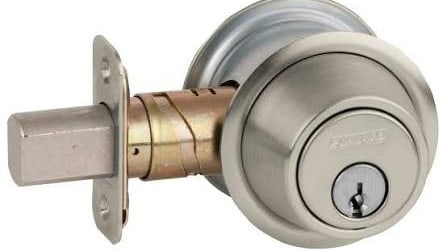
Why Does My Deadbolt Stop Lining Up Over Time?
One of the most common entry door complaints homeowners experience is a deadbolt that suddenly becomes difficult to lock. You may find yourself lifting the door, pulling it toward you, or pushing harder than normal just to get the deadbolt to engage.
While it may seem like a lock problem, the real issue is often the door system itself. Over time, natural settling, seasonal weather changes, daily use, and normal wear can slightly change the relationship between the door and the frame. Even a movement of only a fraction of an inch can prevent the deadbolt from lining up properly.
Common Reasons Your Deadbolt No Longer Lines Up
Entry doors open and close thousands of times throughout their life. Combined with Midwest weather, humidity, and seasonal expansion and contraction, small changes can eventually affect how the lock operates.
- Door sagging. Loose hinges or worn hardware can allow the latch side of the door to drop slightly, causing the deadbolt to miss the strike plate.
- Home settling. Houses naturally shift over time. Even minor movement can change the alignment of the door frame.
- Seasonal expansion and contraction. Temperature and humidity changes can cause materials to expand or contract, affecting door alignment throughout the year.
- Loose strike plate. Short screws or years of repeated use may allow the strike plate to move, making it difficult for the deadbolt to enter smoothly.
- Threshold adjustments. If the threshold sits too high or the weather seal creates excessive pressure, the door may no longer close in exactly the same position.
- Worn weatherstripping. Old or compressed seals can change how tightly the door closes against the frame.
The Door Frame Matters More Than Most Homeowners Realize
Many homeowners focus on the appearance of the door itself, but long-term security and durability are determined by the complete door system—not simply the fiberglass or steel door slab.
The strength of an entry door depends on the frame, hinges, strike plate reinforcement, fasteners, threshold, and professional installation. These hidden components play a much larger role in security than decorative glass or paint color.
A beautiful entry door only performs as well as the frame and hardware supporting it.
Questions Every Homeowner Should Ask
Before purchasing a new entry door, ask your contractor how the complete door system will be built and reinforced. Important questions include:
- Are the deadbolt and latch reinforced?
- Will long structural screws be installed through the strike plate?
- Are composite or rot-resistant jambs available?
- Will the hinges be properly reinforced and adjusted?
- Is the hardware compatible with the selected door system?
- How is the threshold adjusted for a proper seal?
- Is there a written workmanship or labor warranty?
Can the Problem Be Fixed?
Often, yes. Depending on the cause, a professional may simply adjust the hinges, reposition the strike plate, tighten structural fasteners, or reset the threshold.
If the frame has significant movement, rot, or structural damage, replacing the complete entry door system may provide the safest and longest-lasting solution.
Simply enlarging the strike plate opening is usually only a temporary fix. It may allow the lock to engage today, but it does not correct the underlying reason the door shifted in the first place.
Signs Your Door Needs Professional Attention
- You have to lift the door before locking it.
- The latch rubs against the strike plate.
- The deadbolt requires excessive force to lock.
- The door sticks during hot or humid weather.
- You notice drafts around the door.
- The reveal around the door appears uneven.
- You see moisture damage around the frame or threshold.
Long-Term Security Starts with Professional Installation
A properly installed entry door should close smoothly, seal tightly, and allow the deadbolt to engage effortlessly every time. Achieving that level of performance requires much more than installing a new door slab. It requires careful measurements, proper shimming, reinforced hardware, quality materials, and experienced installation.
When comparing entry door companies, don't focus solely on the appearance of the door. Ask how the frame is reinforced, how the strike plate is secured, what type of jamb is being installed, and whether the contractor stands behind their work with a written workmanship warranty.
Entry Door Experts in the Quad Cities
At Suburban Construction, we've helped thousands of homeowners throughout Davenport, Bettendorf, Moline, Rock Island, and the surrounding Quad Cities install secure, energy-efficient entry door systems that are built to last. We believe the best doors aren't just beautiful—they should operate smoothly, protect your family, and continue performing year after year.
Share This Post
Share it on Facebook or X, or send it through your device share sheet for Instagram.
More Door Guides
From the Doors Learning Center — Problems & Repairs