Vinyl siding can melt or warp when reflected sunlight, grills, fire pits, or trapped heat raise the surface temperature too high. Learn the common causes and how to prevent repeat damage.
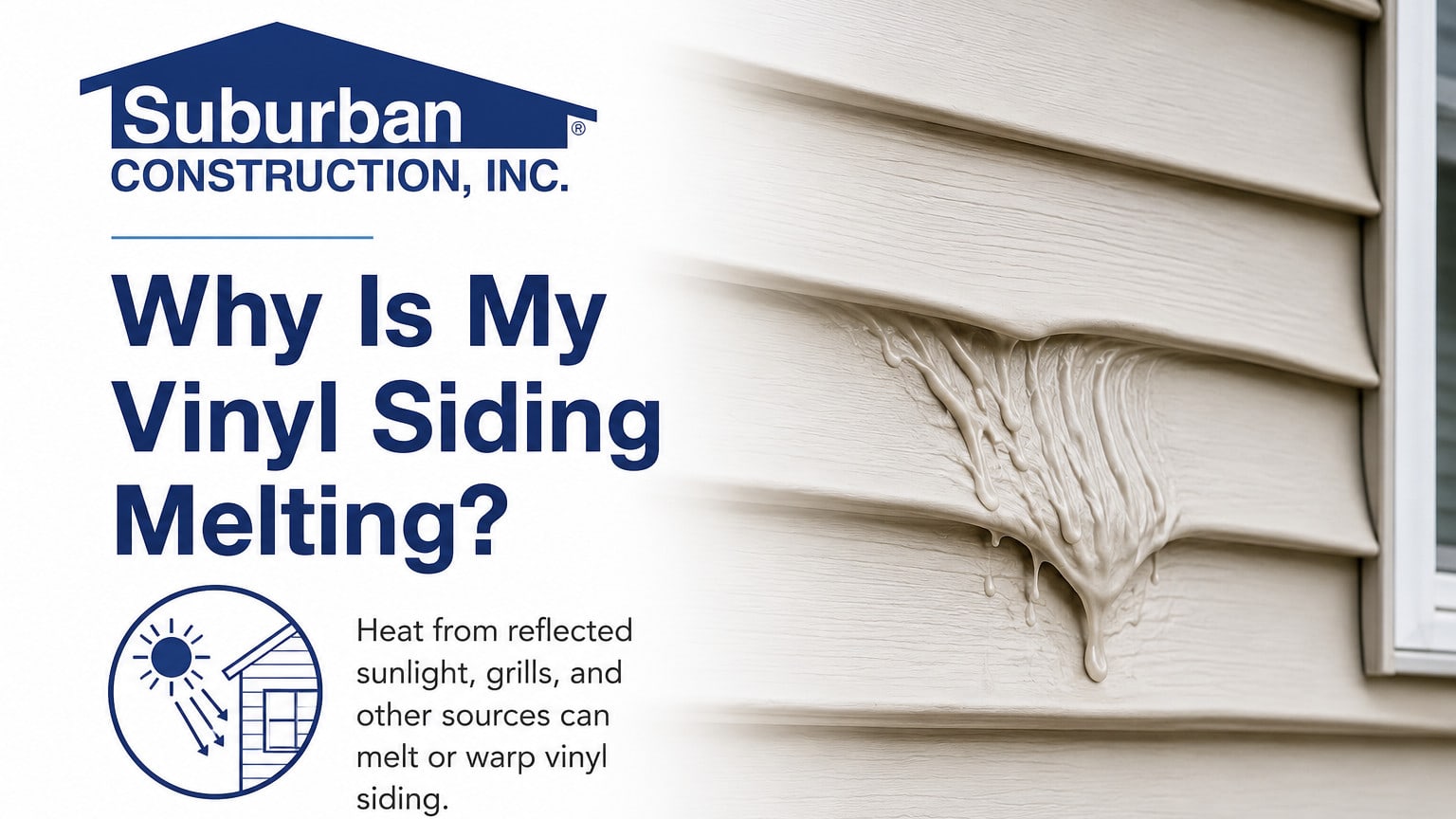
Why Is My Vinyl Siding Melting?
Melting or warped vinyl siding is usually caused by excessive heat. In many cases, the heat does not come from the sun alone, but from reflected sunlight, grills, nearby heat sources, or trapped heat around the home.
Vinyl siding is made to handle normal outdoor conditions, but it can soften and distort when surface temperatures become too high. According to the Vinyl Siding Institute, rigid vinyl siding can begin to distort around 160–165°F. Once that happens, panels may ripple, buckle, sag, bubble, or look like they have melted.
Common Reasons Vinyl Siding Melts
- Reflected sunlight from windows: Low-E or double-pane windows can sometimes reflect concentrated sunlight onto siding, creating temperatures much hotter than direct sunlight alone.
- Grills placed too close to the house: Heat from a grill can quickly warp or melt vinyl panels, especially during warm weather.
- Fire pits or outdoor heaters: Any strong heat source near the exterior wall can damage siding.
- Dark siding colors: Darker colors absorb more heat, which can make distortion more likely in high-heat conditions.
- Trapped heat: Alcoves, tight corners, overhangs, and areas with poor airflow can hold heat against the siding.
Why Window Reflection Can Be a Problem
Reflected sunlight can act like a focused beam of heat. When that reflection lands on vinyl siding for a long enough period of time, the surface temperature may rise high enough to soften the material. This is why the damage often appears in a specific patch rather than across the entire wall.
What Does Melted Vinyl Siding Look Like?
- Wavy or rippled panels
- Buckling or sagging sections
- Glossy, shiny, or distorted spots
- Panels pulling out of alignment
- Visible warping in one concentrated area
Can Melted Vinyl Siding Be Fixed?
Once vinyl siding has melted or permanently warped, the affected panels usually need to be replaced. The more important step is identifying the heat source before replacing the siding. Otherwise, the same problem can happen again.
How to Help Prevent It From Happening Again
- Move grills, fire pits, and outdoor heaters away from the home.
- Check whether nearby windows are reflecting sunlight onto the damaged area.
- Consider shade screens, awnings, landscaping, or other reflection-control options.
- Use a more heat-resistant material in repeat-problem areas if needed.
- Have a siding professional inspect the wall before replacing damaged panels.
The bottom line:
Vinyl siding usually melts because something is making the surface hotter than it was designed to handle. Replacing the damaged panels is only half the fix. The real solution is finding and correcting the heat source.
Share This Post
Share it on Facebook or X, or send it through your device share sheet for Instagram.
More Siding Guides
From the Siding Learning Center — Problems & Repairs