Learn why vinyl siding buckles, including tight nails, poor installation, heat exposure, moisture damage, and lack of expansion space.
Vinyl Siding Education
Why Vinyl Siding Buckles
Vinyl siding is designed to protect your home while giving the exterior a clean, finished look. When installed correctly, it can perform well for many years. But when siding begins to buckle, ripple, or warp, it is usually a sign that something is wrong with the installation, the wall behind it, or the way the material is reacting to heat and movement.
Understanding why vinyl siding buckles can help homeowners spot issues early and avoid bigger exterior problems down the road.
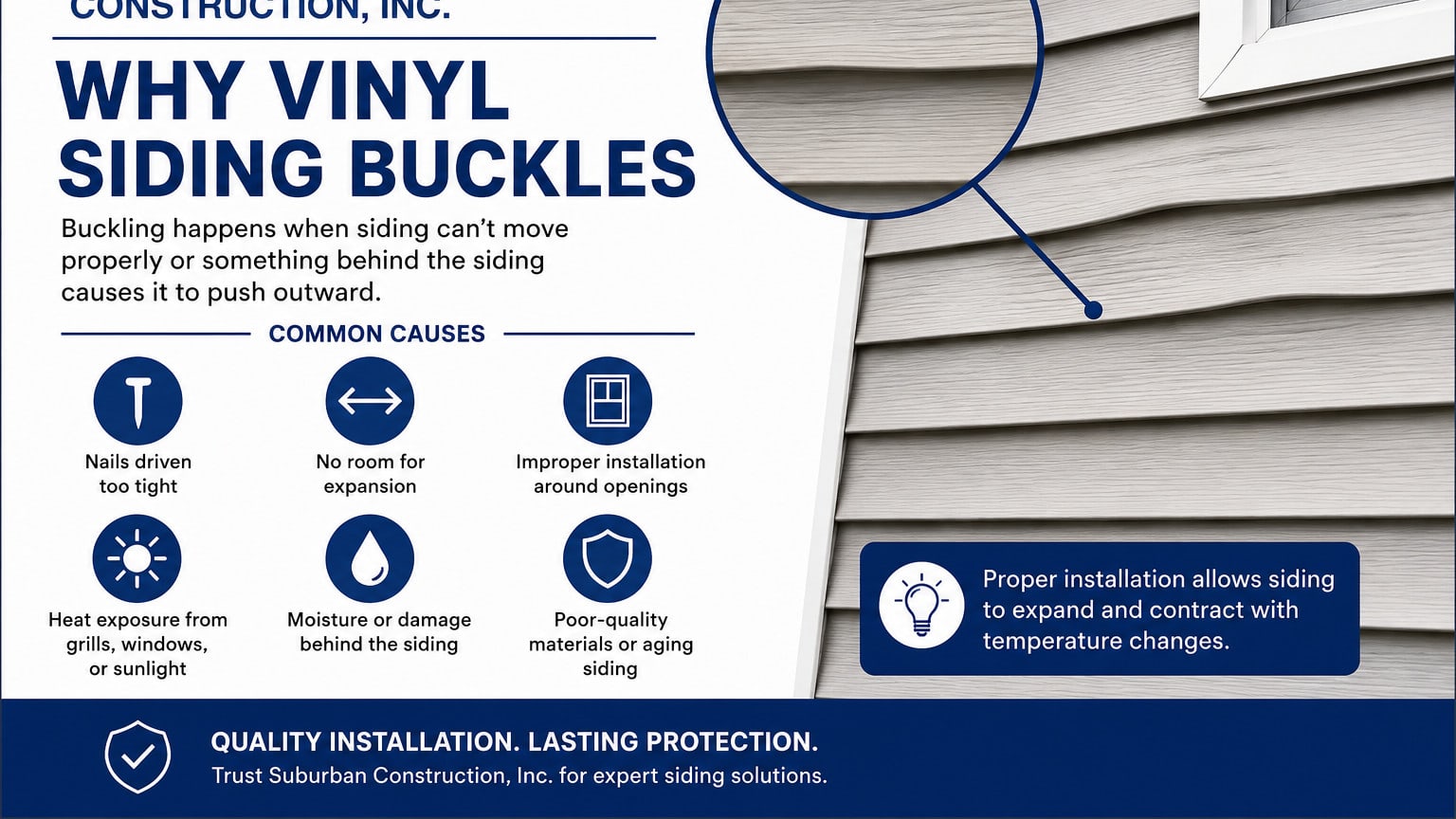
Common Reasons Vinyl Siding Buckles
- Siding was nailed too tightly
- Panels were not given room to expand and contract
- Improper installation around windows, doors, or corners
- Heat exposure from grills, windows, or reflected sunlight
- Moisture damage or uneven wall surfaces behind the siding
- Poor-quality materials or aging siding
1. Vinyl Siding Needs Room to Move
Vinyl siding expands and contracts as temperatures change. During hot weather, the panels expand. During colder weather, they contract. This movement is normal and expected.
If the siding is installed too tightly, the panels cannot move freely. Instead of sliding slightly as they expand, they may push against each other, creating waves, bulges, or buckled sections.
This is one of the most common causes of buckling. Vinyl siding should be secured firmly enough to stay in place, but not so tightly that it is locked against the wall.
2. Nails May Have Been Driven Too Tight
Vinyl siding is not supposed to be nailed tightly against the house. The nail should hold the panel in place while still allowing it to move along the nailing slot.
When nails are driven too tight, the siding becomes pinned to the wall. As the material expands, it has nowhere to go. That pressure can cause visible buckling.
A properly installed panel should have a small amount of movement from side to side. If it feels completely locked in place, the siding may have been fastened incorrectly.
3. Panels May Be Cut Too Long
Vinyl siding panels need space at the ends where they meet trim, corners, windows, and doors. If panels are cut too long, they may press against these areas when they expand.
That pressure can cause the siding to bow outward or buckle. This often shows up near window trim, door openings, corner posts, or long wall sections that receive a lot of sun.
4. Heat Can Cause Warping or Buckling
Heat exposure can also cause vinyl siding to warp or buckle. This may happen when siding is exposed to unusually intense or concentrated heat.
Common heat sources include:
- Outdoor grills placed too close to the house
- Fire pits or patio heaters near the siding
- Reflected sunlight from nearby windows
- Dark surfaces that absorb and radiate heat
- Improper clearance around exterior heat sources
Reflected sunlight can be especially frustrating because the source may not be obvious at first. In some cases, sunlight reflecting from a neighboring window can create enough concentrated heat to distort vinyl siding.
5. Moisture or Wall Damage Behind the Siding
Sometimes buckling is not only a siding issue. The problem may be behind the siding.
If the wall sheathing is damaged, uneven, swollen, or rotted, the siding may no longer sit flat. Moisture problems can also cause movement behind the exterior surface, which may show up as waves or bulges in the siding.
This is why it is important to inspect the wall system, not just the visible siding. Covering a damaged surface with new siding without fixing the underlying issue can lead to future problems.
6. Poor Installation Around Windows and Doors
Windows, doors, corners, and roofline transitions require careful siding installation. These areas need proper spacing, flashing, trim work, and water management.
When siding is forced too tightly into trim channels or installed without enough clearance, it may buckle as temperatures change. Poor installation in these areas can also allow moisture to get behind the siding, creating additional issues over time.
How to Tell If Your Vinyl Siding Is Buckling
Buckling can show up in several ways. Some signs are subtle at first, while others are easier to notice from the street.
- Wavy or rippled siding panels
- Bulges in certain sections of the wall
- Panels that appear pushed outward
- Siding that looks uneven in direct sunlight
- Warped areas near windows, grills, or heat sources
- Loose or separated panels
Can Buckled Vinyl Siding Be Fixed?
In some cases, buckled vinyl siding can be repaired. If the issue is caused by tight nails or a panel that was installed incorrectly, a professional may be able to loosen, adjust, or replace the affected section.
If the siding has warped from heat or if there is damage behind the wall, replacement may be the better option. The correct solution depends on what caused the buckling in the first place.
The most important step is identifying the source of the problem before making repairs.
How to Help Prevent Vinyl Siding From Buckling
The best way to prevent buckling is to make sure the siding is installed correctly from the beginning.
- Use an experienced siding contractor.
- Allow proper expansion space at panel ends.
- Avoid driving nails too tightly.
- Inspect exterior walls before installation.
- Keep grills and heat sources away from siding.
- Address moisture problems before installing new siding.
- Use quality materials suited for the home and climate.
Final Thoughts
Vinyl siding usually buckles because it cannot move the way it was designed to move. Tight nails, improper spacing, heat exposure, poor installation, or problems behind the siding can all lead to visible distortion.
If you notice buckling on your home, it is worth having it inspected before the problem becomes worse. A careful evaluation can help determine whether the siding can be adjusted, repaired, or should be replaced.
Share This Post
Share it on Facebook or X, or send it through your device share sheet for Instagram.
More Siding Guides
From the Siding Learning Center — Problems & Repairs