What type of Low-E glass is best for Iowa and Illinois homes? Learn the differences between passive Low-E, solar-control Low-E, double-silver and triple-silver coatings. Suburban Construction Inc. explains U-factor, solar heat gain, triple-pane windows, and ENERGY STAR ratings to help Quad Cities homeowners choose energy-efficient replacement windows.
Energy-Efficient Windows | Suburban Construction Inc.
What Type of Low-E Glass Is Best for Iowa and Illinois Homes?
When shopping for replacement windows, you will probably hear the term Low-E glass. But not all Low-E glass performs the same way. Some coatings are designed to admit more solar heat, while others reduce heat gain from direct sunlight. For homeowners in Iowa and Illinois, where winters are cold and summers can be hot and humid, choosing the right Low-E glass can make a meaningful difference in year-round comfort.
At Suburban Construction Inc., we help Quad Cities homeowners compare replacement window options based on their homes, comfort priorities, and energy-efficiency goals.
The best Low-E glass for a home in Davenport, Bettendorf, Eldridge, Moline, or Rock Island is not necessarily the glass with the darkest tint or the greatest number of coatings. It is the glass package that delivers the right balance of insulation, solar heat control, and natural light.
1. What Is Low-E Glass?
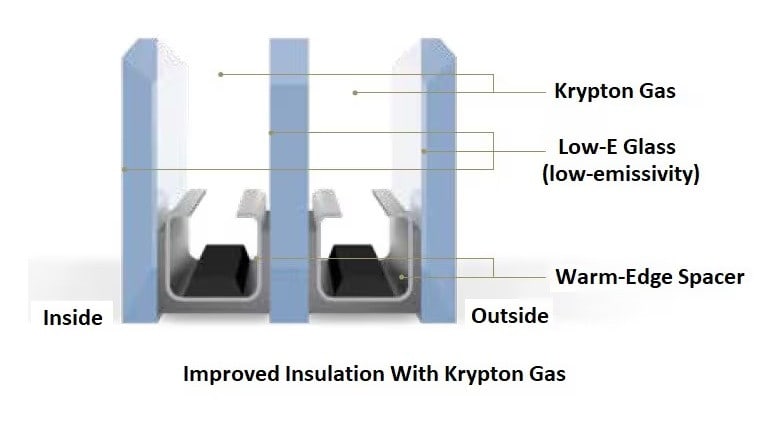
Low-E stands for low emissivity. Low-E glass contains a microscopically thin coating that reduces radiant heat transfer through the glass.
Depending on the coating, it can help retain indoor heat during winter and limit unwanted solar heat during summer.
Modern Low-E coatings are generally designed to allow visible daylight through while controlling selected portions of infrared energy.
2. Understanding the Different Types of Low-E Glass
Homeowners may encounter several descriptions when comparing window glass packages.
- Passive Low-E: Designed to reduce heat loss while allowing relatively more beneficial solar heat gain.
- Solar-control Low-E: Designed to reduce unwanted solar heat gain, particularly useful for windows exposed to intense sunlight.
- Double-silver Low-E: A coating design often used to balance insulation, solar control, and daylight.
- Triple-silver Low-E: A coating design that can provide stronger solar control, depending on the product.
Silver-layer counts are not universal performance ratings. Two products with the same number of silver layers can perform differently, so compare the actual window specifications rather than the coating name alone.
3. Why Iowa and Illinois Need Balanced Glass Performance
Quad Cities homeowners experience freezing winter temperatures, significant seasonal temperature changes, and warm, humid summers.
A glass package optimized exclusively for extreme summer solar control may not be the best choice for every Midwest home, particularly where useful winter sunlight is desirable.
For many homes, a well-insulated, double-pane or triple-pane window with an appropriate Low-E coating and insulated frame offers a practical balance.
Explore energy-efficient replacement windows from Suburban Construction to compare available options.
4. U-Factor: One of the Most Important Numbers
U-factor measures how readily heat passes through a window assembly. Lower numbers indicate better insulating performance.
For cold Midwest winters, a lower whole-window U-factor can help reduce heat loss and improve comfort near windows.
When comparing products, look for the National Fenestration Rating Council (NFRC) label. This provides standardized performance information for the complete rated window rather than the glass alone.
5. SHGC: How Much Solar Heat Gets Through?
Solar Heat Gain Coefficient, or SHGC, describes how much solar heat enters through a window. The rating ranges from 0 to 1.
Lower SHGC values reduce solar heat gain. Higher values allow more solar warmth into the home.
A west-facing window exposed to strong afternoon sun may benefit from a lower SHGC, while a shaded or south-facing window may have different priorities.
The right choice depends on window orientation, shading, insulation, heating and cooling needs, and the homeowner's comfort preferences.
6. Double-Pane or Triple-Pane Low-E Glass?
Double-pane windows with Low-E coatings and insulating gas fills can deliver substantial performance improvements over many older single-pane windows.
Triple-pane windows may provide additional insulation and improved interior glass temperatures, particularly during winter.
However, triple-pane windows typically cost more and may differ in weight, daylight transmission, and solar performance.
Compare complete window ratings and pricing rather than assuming that more panes always provide the best overall value.
7. Does Argon Gas Make a Difference?
Many insulated replacement windows use argon gas between the panes to reduce heat transfer compared with ordinary air-filled cavities.
Argon works together with the Low-E coating, spacer system, and insulated glass construction to improve thermal performance.
It is important to evaluate the entire insulated glass package rather than focusing on a single feature.
8. What About Visible Light and Window Tint?
Visible Transmittance, or VT, measures how much visible light passes through a window. Higher VT ratings generally mean more natural daylight.
Some high-solar-control coatings reduce visible light more than others. That may be acceptable in a bright west-facing room but less desirable in a naturally shaded living space.
Before selecting glass, consider how much daylight you want in each room and how the windows will look from inside and outside.
9. Look for ENERGY STAR Certification
ENERGY STAR certification can help homeowners identify windows that meet established energy-efficiency criteria for their climate zone.
The Quad Cities falls within the Northern climate zone under ENERGY STAR residential window criteria.
For current ENERGY STAR Version 7.0 Northern-zone window criteria, qualifying windows generally need a whole-window U-factor of 0.22 or lower, with specific alternative U-factor and SHGC combinations also permitted.
Always verify current certification and the exact model's NFRC ratings. ENERGY STAR qualification and eligibility for any particular tax credit or incentive are separate questions.
10. Why Professional Installation Still Matters
Even a highly rated Low-E window may not deliver the expected comfort if it is poorly installed.
Proper measurements, flashing, air sealing, insulation, and installation procedures all contribute to long-term performance.
Learn more about Suburban Construction's history serving Quad Cities homeowners and our commitment to professional exterior remodeling.
So, Which Low-E Glass Is Best for the Quad Cities?
For many Iowa and Illinois homes, the best starting point is an ENERGY STAR-certified window with a low whole-window U-factor and a Low-E coating selected for the home's sun exposure.
A balanced solar-control coating may work well for many applications, but a different SHGC could be appropriate for specific rooms or window orientations. There is no single Low-E coating that is automatically best for every home.
You can explore replacement window options at our Davenport showroom and discuss glass packages that match your priorities.
Ready to Upgrade Your Windows?
Suburban Construction Inc. has served Quad Cities homeowners since 1985, specializing in professionally installed replacement windows, siding, entry doors, patio doors, seamless gutters, and exterior remodeling.
Whether your goal is reducing winter drafts, controlling summer heat, or improving your home's appearance, our Davenport team can help you compare available window and glass options.
Share This Post
Share it on Facebook or X, or send it through your device share sheet for Instagram.
More Window Guides
From the Windows Learning Center — Materials & Products