Can rot around an old door frame be repaired during installation? Learn how professional installers identify and repair wood rot, reinforce the opening, and ensure your new entry door performs properly for decades.
Can Rot Around the Old Frame Be Repaired During Installation?
Yes—in many cases, wood rot discovered around an existing entry door can and should be repaired during the installation of a new door. In fact, replacing an entry door without addressing damaged framing often leads to continued problems with operation, energy efficiency, and water intrusion.
A quality door installation isn't simply about replacing the door slab. It's about restoring the entire opening so the new entry door has a solid, weather-resistant foundation that will perform properly for decades.
Why Does Rot Develop?
Rot usually develops after years of moisture exposure. Failed caulking, leaking flashing, worn weatherstripping, improper drainage, or aging wood can allow water to penetrate the frame and eventually damage the surrounding structure.
In many homes, the damage isn't visible until the old entry door is removed. Once the opening is exposed, experienced installers can inspect the framing and determine whether repairs are needed before the new door is installed.
What Happens During a Professional Installation?
- Remove the existing door and frame.
- Inspect the rough opening for rot or structural damage.
- Replace damaged framing materials as needed.
- Square and level the opening.
- Shim the new frame for proper alignment.
- Insulate and air seal the rough opening.
- Install flashing and moisture protection where required.
- Adjust the threshold, weatherstripping, and hardware for smooth operation.
- Install interior and exterior trim and complete final adjustments.
Why Installation Quality Matters
Door installation is one of those jobs where small details make a tremendous difference. Even minor alignment errors can create frustrating daily problems, including sticking doors, uneven reveal lines, visible daylight around the frame, lock alignment issues, air leaks, and water intrusion.
That's why a trustworthy contractor should explain the installation process in plain language. Homeowners deserve to understand how the opening will be prepared, how the frame will be squared and shimmed, how the rough opening will be insulated and sealed, and how the final adjustments will be made before the project is complete.
Security Starts with the Frame
Many homeowners focus on the appearance of the new door, but long-term security and durability are determined just as much by the frame and hardware as the door itself.
Ask Your Contractor About:
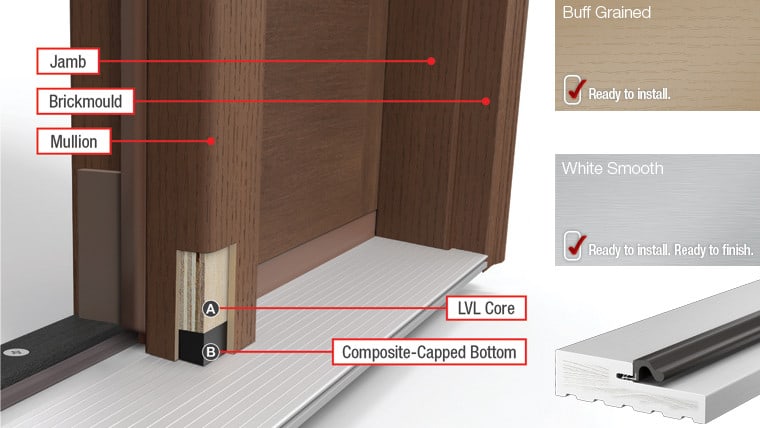
- Composite or rot-resistant jamb materials.
- Reinforced strike plate locations.
- Long screws that anchor into the wall framing.
- Proper deadbolt and lockset compatibility.
- Weather-resistant flashing and sealing methods.
- A written workmanship warranty.
These details are often invisible once the project is finished, yet they have a major impact on the door's security, durability, and long-term performance.
What Does FGIA (Formerly AAMA) Say?
The Fenestration and Glazing Industry Alliance (FGIA), formerly the American Architectural Manufacturers Association (AAMA), develops installation guidelines that emphasize preparing the rough opening, correcting structural deficiencies, properly flashing the opening, sealing against air and water infiltration, and installing the door square and plumb.
Simply installing a new door into a damaged or out-of-square opening can compromise the performance of even the highest-quality entry door. Repairing rot and restoring the opening is an essential part of a professional installation—not an optional upgrade.
Trusted Entry Door Experts Since 1985
Since 1985, Suburban Construction has completed more than 40,000 exterior remodeling projects throughout the Quad Cities. President JR Girskis and Vice President Darin Wilson understand that every successful entry door installation begins with evaluating the condition of the existing opening—not simply measuring for a replacement door.
Their crews routinely inspect for hidden wood rot, structural movement, water damage, and framing issues before installing premium Therma-Tru® entry door systems. By correcting problems before the new door is installed, homeowners receive an entry system that operates smoothly, seals tightly, and performs for decades.
Backed by a Lifetime Written Workmanship Warranty
Every entry door installation from Suburban Construction is backed by a Lifetime Written Workmanship Warranty. While manufacturers warranty the door components, Suburban stands behind the quality of its installation. From repairing damaged framing to final hardware adjustments, every step is completed with long-term performance in mind, giving homeowners confidence that their investment is built to last.
The Bottom Line
Yes, rot around an old door frame can often be repaired during installation—and in many cases, it should be. Repairing damaged framing, properly preparing the opening, and installing the new door square, level, and weather-tight helps prevent future drafts, sticking, water intrusion, and security concerns. A professionally installed entry door isn't just about what you see after the project is finished—it's about the craftsmanship hidden behind the trim that allows the entire system to perform for years to come.
Share This Post
Share it on Facebook or X, or send it through your device share sheet for Instagram.
More Door Guides
From the Doors Learning Center — Problems & Repairs