Finding the best siding contractor in the Quad Cities takes more than comparing prices. Learn how to verify registration, insurance, local experience, references, Google reviews, warranties, service after installation, and how to avoid storm chasers.
Quad Cities Home Improvement Guide
```How to Find the Best Siding Contractor in the Quad Cities
Choosing a siding contractor is about more than comparing prices. The company you hire will remove or cover part of your home’s exterior, work around windows and doors, manage flashing and water-resistant materials, and install a system expected to protect your home for many years.
```A dependable siding contractor should be properly registered or licensed where required, adequately insured, experienced with the products being installed, and willing to provide clear documentation before work begins. They should also be available after installation if your home needs service, adjustments, or warranty assistance.
```Homeowners in Bettendorf, Davenport, Eldridge, LeClaire, Moline, Rock Island, and surrounding Quad Cities communities should look beyond the sales presentation. A contractor’s local history, showroom, references, installation standards, communication, and long-term service record often reveal more than the lowest number on an estimate.
```What Makes a Siding Contractor Worth Hiring?
```The best siding contractor is not necessarily the largest company, the most expensive company, or the company that can begin tomorrow. A strong contractor is one that combines proper credentials, product knowledge, skilled installation, clear communication, and dependable service after the project is complete.
Before signing a contract, take time to verify the company rather than relying only on advertising, a yard sign, or a salesperson’s promises.
```Siding Contractor Checklist
```| What to Verify | Why It Matters | What to Request |
|---|---|---|
| Registration or licensing | Confirms that the company has completed applicable state or local requirements. | Registration number, license details, and permit responsibility. |
| Insurance | Helps protect the homeowner if property damage or a jobsite injury occurs. | Current proof of general liability and workers’ compensation coverage. |
| Local presence | Makes it easier to verify the company and request future service. | Physical address, showroom, local phone number, and regular business hours. |
| Experience | Experienced contractors are more likely to recognize difficult wall, flashing, and trim conditions. | Years in business and examples of comparable local projects. |
| Warranty and service | Clarifies who will respond if a panel loosens or another concern appears later. | Written product warranty, workmanship warranty, and service process. |
Contractor Qualification 1
```Verify Registration, Licensing, and Permit Requirements
Ask the contractor to explain which registrations, licenses, and permits apply to your project. Requirements are not identical throughout the Quad Cities because the region includes communities in both Iowa and Illinois.
Iowa requires qualifying construction contractors earning at least $2,000 annually from construction work to register with the Department of Inspections, Appeals, and Licensing. Homeowners can use the state’s contractor information to help verify a company’s registration status.
State registration is not a guarantee of workmanship. It is one part of the screening process and should be considered alongside insurance, references, experience, written contracts, and product knowledge.
```Contractor Qualification 2
```Confirm the Contractor Is Properly Insured
Ask for current proof of general liability insurance and workers’ compensation coverage where applicable. Do not rely only on a statement that the company is “fully insured.”
Contact information for the insurance provider should be included on the certificate so coverage can be independently confirmed. Check that the company name on the certificate matches the company named in the contract.
The Federal Trade Commission recommends checking that home-repair companies have the required licensing and insurance before work begins.
```Contractor Qualification 3
```Look for a Local Showroom or Established Office
A local showroom allows you to compare siding colors, profiles, trim accessories, soffit, fascia, and other materials before making a large investment.
It also gives the contractor a verifiable physical presence. A showroom or established office does not guarantee quality, but it demonstrates a greater local commitment than a temporary phone number, rented mailbox, or door-to-door sales team with no permanent location.
During your visit, pay attention to whether the staff can explain product differences, installation requirements, warranties, and available accessories without relying only on color brochures.
```Contractor Qualification 4
```Ask How Long the Company Has Been in Business
Years in business provide useful context. An established contractor has had time to complete projects through multiple seasons, respond to service requests, and build a reputation that can be evaluated.
Ask how long the company has operated under its current name and ownership. A salesperson may have years of personal experience even when the company itself is relatively new.
Newer companies can still perform excellent work, but they should be especially prepared to document installer experience, insurance, references, product training, and warranty support.
```Contractor Qualification 5
```Request Local References
Ask for references from projects similar to yours, preferably completed in the Quad Cities. A contractor experienced with full siding replacement may not have the same background with historic homes, complex window trim, insulated siding, stone transitions, or extensive water-damage repairs.
Questions to Ask a Reference
- Was the project completed close to the promised schedule?
- Did the final cost match the written agreement?
- Did the crew protect landscaping, windows, driveways, and outdoor equipment?
- Was the jobsite cleaned at the end of each day?
- Did the company communicate clearly when unexpected conditions appeared?
- Has the contractor responded to any service requests since installation?
- Would the customer hire the company again?
Contractor Qualification 6
```Read Google Reviews Carefully
Google reviews can reveal patterns in communication, scheduling, cleanup, workmanship, and service. Google Business Profiles allow companies to display business information and engage with customer reviews on Google Search and Maps.
Do not judge a contractor by the average star rating alone. Read recent reviews, older reviews, detailed comments, and the company’s responses to criticism.
Look for Review Patterns Such As:
- Consistent praise for communication and cleanup
- Repeated complaints about delays or unanswered calls
- Reviews describing service months or years after installation
- Photos of completed local projects
- Thoughtful company responses to concerns
- A natural history of reviews rather than a sudden group of vague comments
Online reviews are helpful, but they should support—not replace—registration checks, insurance verification, references, showroom visits, and written warranty review.
```Contractor Qualification 7
```Understand the Product and Workmanship Warranties
A siding project may include two separate warranties: the manufacturer’s product warranty and the contractor’s workmanship warranty.
The manufacturer’s warranty generally addresses qualifying product defects under its written terms. The workmanship warranty addresses the installation performed by the contractor.
Ask the Contractor to Explain:
- How long the workmanship warranty lasts
- What installation problems are covered
- What conditions are excluded
- Who submits a manufacturer warranty claim
- Whether the warranty transfers to a future homeowner
- How service requests are submitted
- Whether warranty terms will be provided in writing
Contractor Qualification 8
```Evaluate Service After Installation
The relationship should not end when the final payment is collected. Siding may require future inspection after a severe storm, accidental impact, window replacement, utility work, or a manufacturer service issue.
Ask who handles service after installation and how quickly the company typically responds. Determine whether the contractor maintains a service department or simply refers customers to subcontractors.
A contractor willing to explain its long-term service process before the sale is easier to evaluate than one that makes a vague promise to “take care of anything later.”
```Why Hiring a Local Contractor Matters
```A siding project is a long-term investment in your home. The company you choose should be available not only during the sale and installation, but also years later if warranty work, service, or adjustments are needed.
Some national or out-of-area companies reduce their local presence after completing a project or after storm demand slows. When that happens, homeowners may have difficulty reaching the original installer for service.
A well-established local contractor has a reputation to protect within the same communities where its employees, customers, suppliers, and business partners live. Its future work depends heavily on referrals, repeat customers, and visible local results.
Local companies are also more familiar with Quad Cities weather, including strong winds, hail, humid summers, winter temperature changes, and freeze-and-thaw conditions. They are more likely to have experience with the region’s housing stock, common siding profiles, older wall assemblies, and local permitting practices.
When investing thousands of dollars in your home, knowing your contractor has an established local presence can provide valuable peace of mind.
```Local Contractor vs. Temporary Out-of-Area Company
```| Established Local Contractor | Temporary or Unverified Contractor |
|---|---|
| Has a verifiable local office or showroom. | May operate from a temporary location or out-of-area phone number. |
| Can provide nearby references and completed projects. | May provide references from another region or none at all. |
| Has an ongoing local reputation to protect. | May leave the area when storm-related demand slows. |
| Is easier to contact for service and warranty assistance. | May be difficult to locate after final payment. |
Avoid Storm Chasers
```Severe storms often bring an immediate increase in door-to-door contractors. Some are legitimate companies responding to local demand. Others are unverified operators who use urgency, insurance confusion, and pressure to obtain signatures or deposits.
The Federal Trade Commission warns homeowners to be cautious of unlicensed contractors and scammers after severe weather. It recommends checking credentials, obtaining written estimates, reviewing written contracts, and avoiding high-pressure payment demands.
The Illinois Attorney General has also warned that storm-related scammers may move quickly into affected communities to target homeowners and businesses needing repairs.
Storm-Chaser Warning Signs
- The salesperson appears immediately after a storm and pressures you to sign that day.
- The company has no permanent local address or showroom.
- The contractor cannot provide current proof of insurance.
- The salesperson asks you to sign over insurance benefits without a clear explanation.
- The company wants a large cash deposit or wire transfer.
- The estimate is vague and does not list products, accessories, or installation details.
- The contractor offers to pay, waive, or hide your insurance deductible.
- References and completed projects cannot be verified locally.
- Warranty promises are verbal rather than written.
- The company discourages you from comparing estimates.
Get More Than One Written Estimate
```The FTC recommends obtaining multiple written estimates before hiring a home-repair contractor.
The estimates should be detailed enough to compare the actual scope—not only the total price. One proposal may include housewrap repair, flashing, trim accessories, insulation, disposal, and permits, while another may include only siding panels and labor.
A Strong Siding Estimate Should Identify:
- Siding manufacturer, product line, profile, and color
- Housewrap or water-resistive barrier work
- Window, door, roofline, and penetration flashing
- Starter strip, J-channel, corner posts, utility trim, and mounting blocks
- Soffit, fascia, gutters, or trim coil included in the scope
- Removal and disposal of existing materials
- Repairs to damaged sheathing or framing
- Permit and inspection responsibility
- Workmanship and manufacturer warranty details
- Payment schedule and estimated project timing
Be Careful with the Lowest Bid
```A lower estimate may be legitimate, but homeowners should understand why the price is lower. The proposal may use a different siding grade, exclude wall repairs, omit accessories, provide a shorter warranty, or rely on a less complete installation scope.
Ask every contractor to explain what is not included. A detailed estimate makes it easier to distinguish genuine efficiency from missing work.
The best value is the contractor most likely to install the right system correctly and remain available afterward—not simply the contractor with the lowest initial number.
```Review the Contract Before Work Begins
```Do not authorize major siding work based only on a handshake or verbal scope. The contract should identify the company, homeowner, property, products, price, payment schedule, estimated timing, warranty, and responsibilities of both parties.
Illinois consumer guidance requires contractors to provide a Home Repair Consumer Rights document for qualifying work valued at $1,000 or more and describes contract protections under the state’s home-repair laws.
Do not sign a document with blank spaces or unclear insurance language. Keep a complete copy of everything you sign.
``````“The best siding contractor should be able to show you where they are located, what products they install, how long they have served the area, and who will answer the phone after the project is finished. Siding is a long-term investment, so the relationship with the contractor should continue well beyond installation day.”
```
Questions to Ask Every Siding Contractor
```- Are you properly registered or licensed for this work?
- Can you provide current proof of insurance?
- How long have you operated under this company name?
- Do you have a local showroom or permanent office?
- Can I speak with recent Quad Cities customers?
- Who performs the installation?
- What flashing and water-management work is included?
- What manufacturer and workmanship warranties apply?
- Who handles service after installation?
- What happens if hidden wall damage is discovered?
Choose Stability, Transparency, and Local Service
```A strong siding contractor should welcome careful questions. The company should be willing to document its credentials, explain its products, identify what is included, provide references, and describe how future service will be handled.
Take enough time to compare the complete proposals. A thoughtful decision made before the project begins is far easier than trying to resolve missing materials, poor flashing, communication problems, or warranty questions after the siding is installed.
The right contractor should leave you confident not only in how the finished home looks, but also in who you can call years later.
```Talk with an Established Quad Cities Siding Contractor
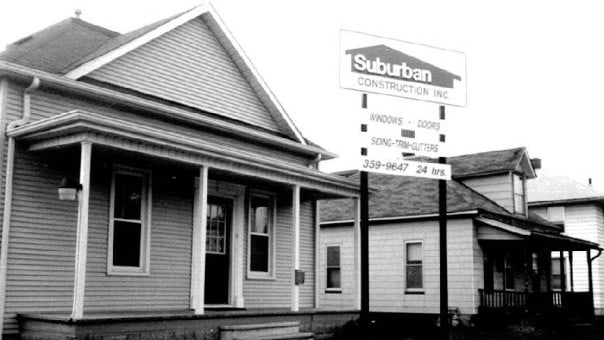
```Suburban Construction has an established local presence and helps Quad Cities homeowners evaluate siding, storm damage, flashing, trim, soffit, fascia, windows, and complete exterior remodeling needs.
Schedule a free exterior inspection and visit our local showroom to compare siding products, colors, accessories, and project options.
```Consumer note: Contractor registration, licensing, permit, insurance, and contract requirements vary by location and scope of work. Homeowners should verify current requirements with the appropriate state and local agencies before signing an agreement.
Share This Post
Share it on Facebook or X, or send it through your device share sheet for Instagram.