Cheap vinyl siding may lower the initial project price, but fading, storm damage, poor accessories, weak warranties, installation shortcuts, and repeated repairs can make it more expensive over time. Learn how to compare siding products and complete installation proposals based on long-term value.
Vinyl Siding Value and Performance Guide
```Why Cheap Vinyl Siding Costs More in the Long Run
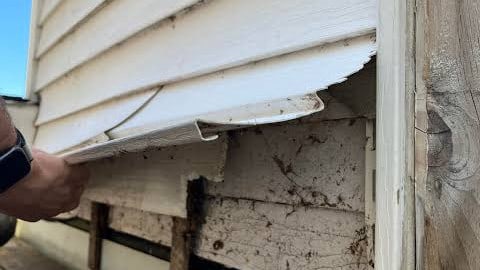
Choosing the least expensive vinyl siding can reduce the initial project price, but it does not always produce the lowest long-term cost. Thin panels, limited product options, weaker locking systems, shorter or more restrictive warranties, poor accessories, and rushed installation can lead to fading, storm damage, loose siding, repeated repairs, and earlier replacement.
```Vinyl siding should be evaluated as a complete exterior system rather than as a price per square alone. The panels must work with the starter strip, corner posts, J-channel, utility trim, soffit, fascia, mounting blocks, fasteners, flashing, and water-resistive barrier.
```A lower-cost product installed correctly may still serve a homeowner well. The concern arises when a low bid combines entry-level material with missing accessories, inadequate wall preparation, improper fastening, weak warranty protection, or an installer who will not be available when service is needed.
```The Lowest Price Is Not Always the Lowest Cost
```The upfront price is only one part of a siding investment. Homeowners should also consider expected service life, repair frequency, storm resistance, color retention, warranty coverage, accessory quality, installation standards, and the cost of replacing discontinued or damaged panels later.
A siding system that requires several service calls, develops visible fading, loses panels during storms, or needs premature replacement may cost considerably more than a better-planned project with a higher initial price.
```Cheap Siding vs. Long-Term Value
```| Cost Factor | Lower-Cost Approach | Long-Term Value Approach |
|---|---|---|
| Panel selection | Chosen mainly by the lowest material price. | Selected for the home’s exposure, design, color, warranty, and expected performance. |
| Wall preparation | Uneven, deteriorated, or poorly wrapped surfaces may be covered without correction. | The wall is inspected, flattened, repaired, and prepared before siding is installed. |
| Flashing | Existing details may be reused without inspection or omitted from the proposal. | Windows, doors, rooflines, decks, and penetrations are integrated with the drainage plane. |
| Accessories | Generic or shallow components may be used to reduce material cost. | Starter strip, channels, corners, and blocks are selected for the exact siding profile. |
| Service and warranty | Coverage may be vague, limited, or difficult to use after installation. | Product and workmanship responsibilities are clearly documented in writing. |
Long-Term Cost 1
```Lower-Quality Panels May Be More Vulnerable to Damage
Vinyl siding products vary by profile design, nominal thickness, lock geometry, surface texture, formulation, color technology, and intended performance. Thickness alone does not determine quality, but very light panels may be less rigid and can reveal uneven walls more readily.
Certified vinyl siding is tested for characteristics that include weatherability, wind-load resistance, impact resistance, expansion and shrinkage, surface distortion, dimensions, and thickness under ASTM D3679. Selecting certified siding provides independent confirmation that the product meets the applicable standard’s requirements.
Homeowners should ask for the exact manufacturer, product line, profile, thickness, wind information, certification status, and warranty rather than accepting a proposal that identifies the material only as “vinyl siding.”
```Long-Term Cost 2
```Poor Wind Performance Can Lead to Repeated Repairs
Wind performance depends on both product selection and installation. Even a strong panel may fail if the fasteners are too widely spaced, the locks are not fully engaged, the starter strip is loose, or the siding is installed over a weak substrate.
PEPA explains that certified vinyl siding is tested for wind-load resistance, but it must also be properly selected and installed to perform to its potential. The published wind rating is tied to specified installation methods rather than to the panel alone.
Reconnecting loose panels after every major storm can eventually cost more than selecting an appropriate siding system and correcting the underlying fastening or wall-preparation issues from the beginning.
```Long-Term Cost 3
```Fading Can Make Future Repairs More Noticeable
Color performance matters because siding is expected to cover a large portion of the home for many years. Uneven or excessive fading can reduce curb appeal and make replacement panels more difficult to blend.
Premium and established product lines may include specifically stated fade protection, subject to their written warranty terms. For example, current Gentek Concord and Signature Supreme product information describes lifetime fade coverage, hail protection, and transferable lifetime limited warranty protection.
A color warranty does not mean the siding can never change in appearance. Homeowners should review how the manufacturer defines excessive fading, what measurements are used, what exclusions apply, and whether labor is included.
```Long-Term Cost 4
```Weak or Limited Warranty Protection Can Shift Costs to the Homeowner
Siding warranties differ significantly. Some cover manufacturing defects only, while others may include defined fade protection, limited hail provisions, or transferability to a future owner.
Gentek states that qualifying siding and accessory products are backed by lifetime limited transferable warranties, while individual product pages identify additional coverage that may apply to specific collections. The actual warranty document controls and contains important limitations and exclusions.
CertainTeed similarly recommends reviewing what a siding warranty covers, how long it lasts, and whether it addresses issues such as fading, hail, or transferability.
A lower initial price may be less attractive when the warranty excludes the concern that later develops or covers replacement material but leaves the homeowner responsible for removal, labor, freight, and disposal.
```Questions to Ask About a Siding Warranty
```- What manufacturing defects are covered?
- Does the warranty include defined fade protection?
- Is hail damage addressed, and does insurance coverage affect the benefit?
- Are labor, freight, removal, and disposal included?
- Is the coverage prorated over time?
- Can the warranty transfer to a future homeowner?
- Must the product be registered after installation?
- What maintenance and installation conditions apply?
- Who helps prepare and submit a warranty claim?
- What workmanship warranty does the contractor provide separately?
Long-Term Cost 5
```Cheap Installation Can Damage Good Siding
The most expensive siding product can still fail when installed incorrectly. Vinyl siding must be fastened securely while remaining free to expand and contract.
ASTM D3679 states that siding produced to the standard should be installed according to ASTM D4756 and the manufacturer’s instructions for the specific product. ASTM D4756 addresses minimum installation requirements and methods that affect effectiveness and durability in service.
A contractor who reduces labor by skipping wall preparation, driving fasteners too tightly, using the wrong accessories, or failing to integrate flashing can create repair costs that far exceed the original savings.
```Installation Shortcuts That Can Become Expensive
```- Overdriven fasteners: Panels cannot move and may buckle, warp, or damage their locks.
- Too few fasteners: Siding may rattle, sag, or become more vulnerable to wind.
- Improper starter strip: The first course can disengage and allow wind to work behind the wall.
- Insufficient expansion clearance: Panel ends press against corners and trim during warm weather.
- Wrong J-channel depth: Thick or specialty siding can be compressed into an undersized receiver.
- Poor substrate preparation: Uneven sheathing and protruding fasteners can create waves across the finished wall.
- Missing flashing: Water can reach sheathing, insulation, framing, and interior finishes.
- Improvised utility penetrations: Lights, outlets, vents, and faucets may leak when proper mounting blocks are omitted.
Long-Term Cost 6
```Missing Flashing Can Lead to Hidden Wall Damage
Vinyl siding is not the wall’s only water-management layer. Incidental moisture that reaches the back of the cladding should be directed outward by properly installed flashing and a continuous water-resistive barrier.
A low proposal may exclude window flashing, roof-to-wall corrections, kick-out flashing, mounting blocks, housewrap repair, or replacement of damaged sheathing.
These exclusions can reduce the contract price, but they may leave the homeowner with rot, wet insulation, mold-related concerns, loose fasteners, and a much more expensive wall repair later.
```Long-Term Cost 7
```Limited Product Availability Can Complicate Future Repairs
A siding project may need repairs years later because of hail, wind, accidental impact, window replacement, or utility work. Future repairs are easier when the manufacturer, product line, profile, color, and supplier remain identifiable.
An obscure or short-lived product line may become difficult to source. Even when a similar color is available, the profile, texture, exposure, and locking system may not match.
Established manufacturers generally provide broader technical documentation, warranty information, installation resources, and continuing product support. Homeowners should still save leftover panels and all project records because no manufacturer can guarantee that every color and profile will remain available indefinitely.
```Long-Term Cost 8
```Thin or Flexible Panels Can Reveal Wall Imperfections
Vinyl siding follows the plane of the wall beneath it. If the sheathing, old siding, backerboard, or framing is uneven, a less rigid panel may show waves and shadows more noticeably.
The correct response is not simply to buy the thickest siding available. Wall preparation, profile design, fastening, exposure, insulation products, and panel rigidity all contribute to the finished appearance.
A contractor should inspect the wall and explain how irregularities will be corrected before the new siding is installed.
```Long-Term Cost 9
```Poor Accessories Can Undermine the Entire Exterior
The siding panel receives most of the attention, but accessories complete the wall. Starter strip holds the first course. Corner posts and J-channel receive panel ends. Utility trim secures cut panels. Mounting blocks manage penetrations.
Using mismatched or undersized components to save money can restrict movement, expose cut edges, create loose sections, and produce an unfinished appearance.
Ask whether the proposal includes manufacturer-compatible starter strip, corners, channels, utility trim, vents, blocks, and other accessories required for the selected siding profile.
```Long-Term Cost 10
```A Cheap Contractor May Not Be Available Later
The contractor’s price should include more than installation day. Homeowners may need help later with loose panels, storm damage, warranty documentation, discontinued products, or adjustments after other exterior work.
A low bid from a temporary or difficult-to-contact installer may leave the homeowner responsible for locating another contractor and paying for the repair again.
Before signing, confirm the company’s local address, years in business, insurance, references, written workmanship warranty, and service process.
```Compare Complete Proposals, Not Just Totals
```Two siding estimates may appear to cover the same project while including very different work. A detailed comparison can reveal whether the lower bid excludes important materials or installation steps.
Every Proposal Should Identify:
- Siding manufacturer and exact product line
- Profile, nominal thickness, texture, and color
- Certification and applicable wind information
- Water-resistive barrier and housewrap work
- Window, door, roofline, and penetration flashing
- Starter strip, corner posts, J-channel, utility trim, and mounting blocks
- Sheathing or substrate repairs
- Removal and disposal of existing materials
- Soffit, fascia, gutters, and trim-coil work
- Manufacturer warranty and contractor workmanship warranty
- Permit, inspection, cleanup, and service responsibilities
Paying More Does Not Automatically Guarantee Better Siding
```A high estimate is not proof of superior products or workmanship. Homeowners should still verify every material, accessory, warranty, and installation detail.
The goal is not to buy the most expensive siding available. The goal is to choose a system appropriate for the home, climate, wind exposure, appearance goals, maintenance expectations, and budget.
Good value comes from a transparent proposal, suitable certified products, correct installation, dependable warranty support, and a contractor who remains available after the project.
``````“The least expensive siding proposal can become the most expensive when it leaves out the details behind the panels. Product quality matters, but so do the starter strip, flashing, housewrap, accessories, fasteners, wall preparation, and service after installation. Long-term value comes from building the complete exterior correctly.”
```
Signs a Low Bid May Cost More Later
```- The estimate does not identify the exact siding product.
- The contractor will not provide product samples or warranty documents.
- Housewrap and flashing are not included or explained.
- Sheathing repairs are ignored or described only as an extra.
- Generic accessories will be used with a specialty siding profile.
- The installer cannot explain fastener spacing or expansion clearance.
- Labor and workmanship coverage are not written into the agreement.
- The company has no established local service process.
- The bid is dramatically lower but the contractor cannot explain why.
- You are pressured to sign before comparing products and proposals.
Invest in the Parts You Cannot See
```Once the siding is installed, the most important water-management details are hidden. That includes housewrap seams, window flashing, roof-to-wall transitions, substrate repairs, and mounting-block integration.
These concealed details do not always improve the appearance of the finished project, but they often determine whether the wall drains, dries, and remains serviceable.
A responsible siding investment includes the work behind the panel—not only the color and profile visible from the street.
```Choose Siding for Long-Term Value
```A good siding project balances budget with durability, appearance, repairability, warranty protection, and installation quality.
Certified products provide verified performance criteria, while ASTM standards and manufacturer instructions establish the installation framework required for those products to perform correctly.
Spend enough time reviewing the complete exterior system before comparing final prices. The right decision should still make sense after the first major windstorm, the first repair, and many years of Iowa and Illinois weather.
```Compare Siding Options Before You Buy
```A lower initial price can be appealing, but missing installation details, weaker warranty coverage, poor accessories, and repeated repairs may cost considerably more over the life of the home.
Schedule a free exterior consultation with Suburban Construction to compare siding products, installation scopes, warranties, and long-term value.
```Standards and Technical References
```- Polymeric Exterior Products Association, Certified Exterior Cladding Products and ASTM D3679 Performance Requirements.
- Polymeric Exterior Products Association and the Vinyl Siding Institute, Vinyl Siding Installation Manual.
- ASTM International, ASTM D3679, Standard Specification for Rigid Poly(Vinyl Chloride) PVC Siding.
- ASTM International, ASTM D4756, Standard Practice for Installation of Rigid Poly(Vinyl Chloride) PVC Siding and Soffit.
- Gentek Building Products, Current Vinyl Siding Product Specifications and Warranty Information.
- CertainTeed, Current Vinyl Siding Product and Warranty Information.
- Current installation instructions, wind information, technical specifications, certification details, accessory requirements, maintenance guidance, and written warranties published by the manufacturer of the selected siding.
Technical note: Product price, nominal thickness, and warranty length do not independently determine siding quality or expected service life. Performance depends on product design, certification, climate exposure, wall preparation, flashing, accessories, fastening, installation quality, maintenance, and site-specific conditions. Warranty benefits are subject to the complete written terms, limitations, exclusions, registration requirements, and claim procedures.
```Share This Post
Share it on Facebook or X, or send it through your device share sheet for Instagram.