Learn the five main factors that influence the cost of vinyl siding, including home size, exterior condition, product choices, installation, and return on investment.
Vinyl Siding Cost Guide
5 Factors That Influence the Cost of Vinyl Siding
Vinyl siding is one of the most popular exterior upgrades for homeowners because it can improve curb appeal, protect the home, and reduce ongoing maintenance. But the cost of vinyl siding is not the same for every project.
The final price depends on several important details, including the size and design of your home, the condition of the existing exterior, the products you choose, the installation process, and the long-term return on investment.
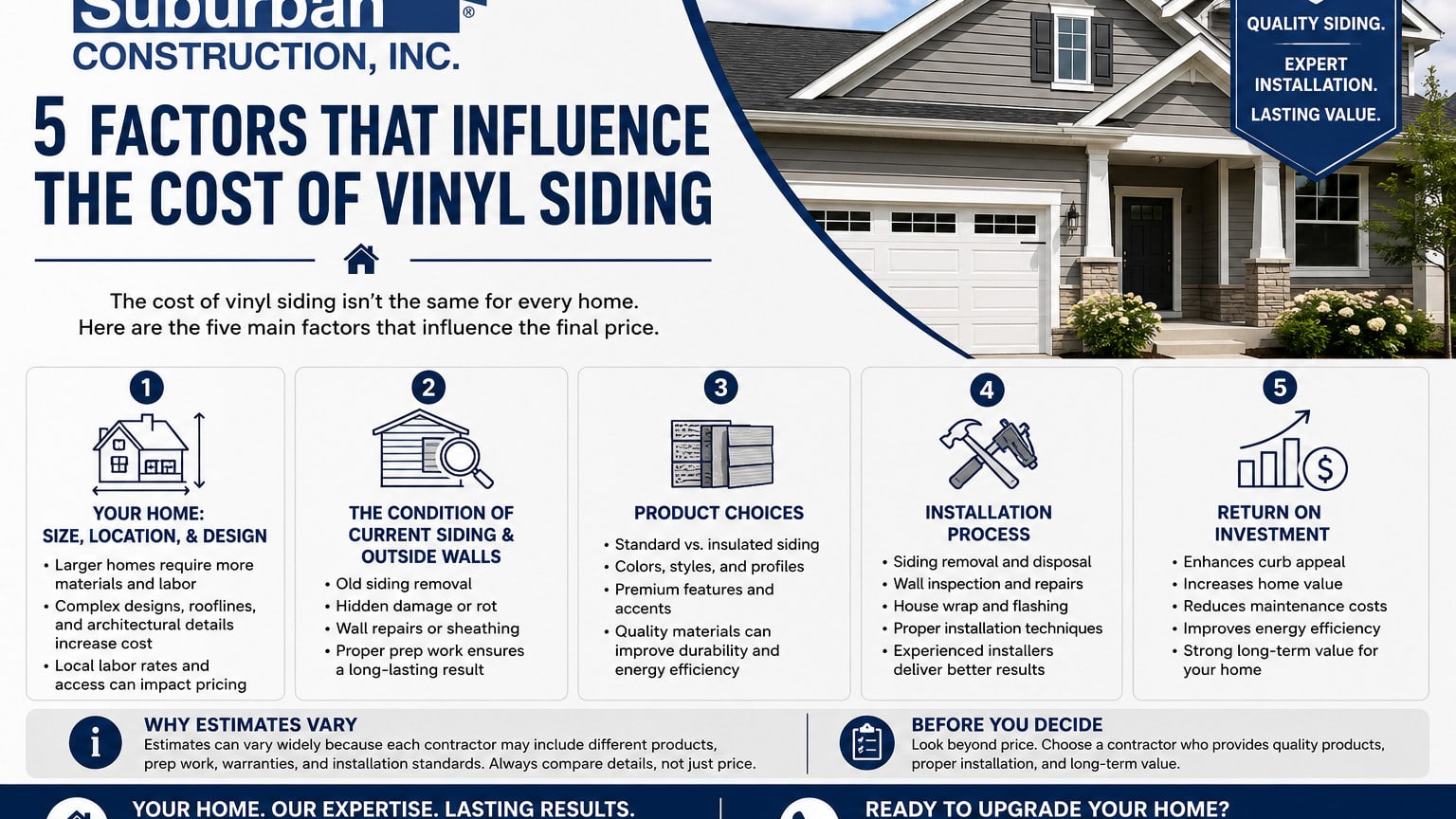
The 5 Main Factors That Affect Vinyl Siding Cost
- Your home’s size, location, and design
- The condition of your current siding and exterior walls
- Your siding product choices
- The installation process
- The return on investment
1. Your Home: Size, Location, and Design
The size of your home is one of the biggest factors in determining vinyl siding cost. A larger home requires more material, more labor, and more time to complete.
However, square footage is not the only thing that matters. The shape and design of the home also play a major role.
- Two-story homes may require more equipment and labor.
- Homes with multiple gables, dormers, corners, or bump-outs take more time to side properly.
- Complex trim details can increase installation time.
- Homes in areas with difficult access may require additional planning.
- Local labor rates and regional building conditions can influence overall pricing.
A simple, single-story home will usually be more straightforward to install than a large home with multiple rooflines and detailed architectural features.
2. The Condition of Current Siding and Outside Walls
Before new siding can be installed, the existing exterior needs to be evaluated. If the current siding is in poor condition, there may be additional work required before the new vinyl siding can go on.
Common issues that can affect cost include:
- Old siding removal
- Hidden water damage
- Rotted wood or sheathing
- Uneven exterior walls
- Damaged trim or fascia
- Improperly installed previous siding
This is where cheaper estimates can become risky. If a contractor does not properly inspect the exterior, important repair needs may be missed. A quality siding project starts with a sound, properly prepared surface.
3. Product Choices
Not all vinyl siding products are the same. The style, thickness, profile, color, insulation, and accessories you choose can all influence the final cost.
Product choices may include:
- Standard vinyl siding
- Insulated vinyl siding
- Premium vinyl siding profiles
- Board and batten siding
- Shake or shingle-style accents
- Darker or specialty colors
- Decorative trim and corner posts
- Soffit, fascia, and gutter-related upgrades
A basic siding product may lower the upfront cost, while premium products can improve appearance, durability, energy performance, and curb appeal. The right choice depends on your goals, budget, and how long you plan to stay in the home.
4. Installation Process
Installation quality has a major impact on how vinyl siding looks and performs over time. Even a good product can fail to deliver the right results if it is installed poorly.
A proper installation may include:
- Removing old siding when necessary
- Inspecting the wall surface
- Repairing damaged wood or sheathing
- Installing house wrap or weather-resistant barriers
- Flashing windows, doors, and transitions correctly
- Allowing proper expansion and contraction
- Finishing corners, trim, and edges cleanly
Labor is not just about putting siding on the wall. It is about protecting the structure, managing moisture, creating clean lines, and making sure the finished exterior looks professional.
5. Return on Investment
While vinyl siding cost matters, it is also important to think about long-term value. New siding can improve curb appeal, reduce maintenance, and make the home feel cleaner and more updated.
Homeowners often consider vinyl siding because it may help:
- Improve exterior appearance
- Increase perceived home value
- Reduce painting and maintenance needs
- Improve protection against weather
- Support better energy performance when paired with insulation upgrades
- Make the home more attractive to future buyers
The lowest price is not always the best investment. A well-installed siding system using quality materials can deliver better long-term satisfaction and stronger curb appeal.
Why Estimates Can Vary So Much
If you have received more than one siding estimate, you may notice a wide range in pricing. That does not always mean one contractor is overcharging or another is offering a bargain.
Estimates can vary because contractors may include different products, preparation steps, warranties, removal work, wall repairs, trim details, and installation standards.
Before comparing prices, make sure you understand exactly what is included. A detailed estimate is usually more helpful than a simple bottom-line number.
Final Thoughts
The cost of vinyl siding depends on more than the siding itself. Your home’s size and design, the condition of the existing exterior, product selections, installation quality, and long-term return on investment all play a role.
A good siding project should protect your home, improve curb appeal, and give you confidence in the finished result. Before choosing based on price alone, take time to compare the details behind each estimate.
Share This Post
Share it on Facebook or X, or send it through your device share sheet for Instagram.
More Siding Guides
From the Siding Learning Center — Cost & Pricing