After a Quad Cities hailstorm, inspect your home's siding, windows, screens, gutters, downspouts, soffit, fascia, exterior trim, doors, and other exposed surfaces. This homeowner checklist explains common signs of hail damage, what to document, and when to call a professional.
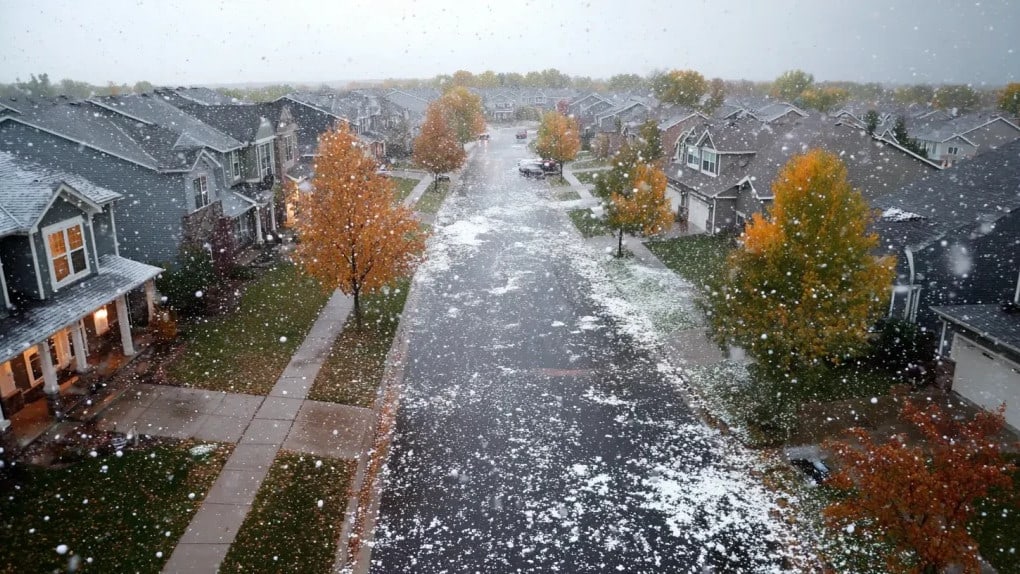
Hail Damage Inspection for Quad Cities Homeowners
What Should I Inspect After a Quad Cities Hailstorm?
Hailstorms can damage more than a roof. In the Quad Cities, hail can affect siding, windows, screens, gutters, downspouts, soffit, fascia, exterior trim, and other parts of the home. After the storm passes and conditions are safe, a careful walk around the property can help you identify visible damage, document what changed, and decide whether anything needs professional attention.
The first step after any hailstorm is safety.
Do not inspect the exterior while lightning, strong wind, flooding, or falling debris are still possible.
Once conditions are safe, most homeowners can perform a useful first inspection from the ground.
You do not need to climb onto the roof or use a tall ladder to spot many common signs of hail damage.
Your goal is simple: look for what changed.
Start With a Wide View of the House
Before walking directly up to the siding, step back and look at each side of the house as a whole.
A wider view can reveal storm damage that is harder to notice when standing a few feet from the wall.
Look for:
- Loose or missing siding
- Sections that appear uneven
- Dented gutters
- Loose fascia
- Missing soffit panels
- Broken windows
- Tree limbs or debris against the house
- Anything that looks different than it did before the storm
Take photos before moving or repairing anything if it is safe to do so.
1. Inspect Vinyl Siding for Cracks, Holes, and Chips
Vinyl siding can react to hail differently depending on the size of the hail, wind speed, temperature, age of the siding, panel thickness, and angle of impact.
Look carefully for:
- Cracks
- Holes
- Chipped edges
- Split panels
- Loose panels
- Panels that have unlocked
- Impact marks near panel edges
- Damage around corners, windows, and doors
Hail damage on vinyl siding may be most noticeable around the edges and lower portions of individual panels.
Learn more about siding options from Suburban Construction .
Do Not Assume Every Small Mark Is Hail Damage
Dirt, old scratches, lawn equipment damage, previous repairs, and normal wear can sometimes be mistaken for storm damage.
The strongest clue is change.
If you have older photos of the house, compare them to what you see after the storm.
Consistent impact patterns across the side of the home that faced the hail can also help distinguish recent storm damage from unrelated wear.
2. Look for Dents in Metal Siding and Exterior Components
Steel, aluminum, and other metal exterior components may show hail damage differently than vinyl siding.
Instead of cracking, metal surfaces may show:
- Dents
- Dings
- Distorted profiles
- Paint or finish damage
- Repeated circular impact patterns
Look at the wall from several angles. Shallow dents may become easier to see when sunlight reflects across the surface.
3. Check Window Screens and Screen Frames
Window screens can be one of the easiest places to notice evidence of hail.
Check for:
- New tears
- Small holes
- Stretched screen material
- Dented screen frames
- Frames knocked out of alignment
Screen damage does not automatically mean the window itself is damaged, but it is a good reason to inspect the surrounding glass, frame, and trim more carefully.
4. Inspect Window Glass, Frames, and Exterior Trim
Large hail or wind-driven hail can affect more than screens.
Inspect windows for:
- Cracked or broken glass
- Chips along glass edges
- Dented exterior trim
- Loose aluminum wrapping
- Damage to frames
- New gaps around the opening
Check the inside of affected windows too, especially if heavy rain accompanied the hail.
Explore replacement window options from Suburban Construction .
5. Inspect Gutters for Hail Dents
Gutters are often one of the easiest exterior components to inspect for hail impact.
Look for:
- Dents on the front face
- Dents along the bottom
- Sections that appear twisted or distorted
- Loose hangers
- Gutters pulling away from fascia
- Damage at corners
Hail dents in gutters can provide useful clues about how heavily one side of the home was hit.
Learn more about seamless gutters and gutter protection .
6. Check Downspouts for Impact Damage
Downspouts present broad vertical surfaces that can make hail damage easy to spot.
Look for repeated dents, crushed corners, loose sections, or areas that were knocked out of alignment.
Also make sure downspout extensions still direct water away from the foundation.
7. Inspect Aluminum Window and Door Wraps
Custom-bent aluminum around windows and doors can show hail impacts clearly.
Check for:
- Small dents
- Repeated impact patterns
- Creases
- Loose pieces
- Open seams
- Finish damage
These areas can sometimes provide additional evidence of the direction and intensity of a hailstorm.
8. Look at Fascia and Rake Trim
Fascia and rake trim are exposed at the roofline and can take direct hail impact.
Step back from the house and look for:
- Dents
- Bent sections
- Loose aluminum
- Sections pulling away
- Exposed wood
Binoculars can be useful for viewing these higher areas safely from the ground.
9. Inspect Soffit Panels
Soffit sits underneath the roof overhang, so it may receive less direct hail impact than other components.
Wind during a hailstorm can still damage it.
Look for:
- Loose panels
- Missing panels
- Dents
- Panels hanging down
- Open areas along the roofline
10. Inspect Exterior Doors and Storm Doors
Entry doors and storm doors can also receive hail damage.
Check for:
- Dents
- Broken decorative glass
- Damaged storm-door glass
- Torn screens
- Dented aluminum frames
- Damage to surrounding trim
Make sure the door still opens, closes, and latches properly after the storm.
Check Garage Doors Too
A garage door provides a large surface area for hail impact.
Look across the panels from an angle to identify dents that may not be obvious when viewed straight on.
Also check windows and perimeter trim around the garage-door opening.
Check Outdoor Equipment and Metal Surfaces for Clues
Other objects around the property may help you understand how severe the hail was.
Look at:
- Air-conditioning units
- Metal patio furniture
- Grills
- Mailboxes
- Downspouts
- Vehicles
- Metal sheds
Repeated fresh dents across exposed surfaces can be another clue that the property experienced significant hail impact.
Look for Damage on the Side the Storm Hit Hardest
Hail rarely strikes every side of a home equally.
Wind direction can cause one or two elevations to receive much more impact than the others.
If you see significant damage on one side, inspect the siding, windows, screens, gutters, trim, and doors on that elevation especially carefully.
What About the Roof?
Roof damage is often one of the biggest concerns after a hailstorm.
Homeowners should not climb onto the roof to look for it.
From the ground, you may be able to see:
- Missing or displaced shingles
- Damaged roof-edge materials
- Tree limbs on the roof
- Obvious debris
Hail damage to roofing materials can be difficult to evaluate from the ground, so contact a qualified roofing professional if you have concerns.
Check Inside for Water After the Storm
Hailstorms often arrive with wind-driven rain.
Check the interior around windows, doors, ceilings, and exterior walls for:
- Fresh water stains
- Damp drywall
- Wet trim
- Moisture around window sills
- New ceiling discoloration
Photograph fresh water intrusion before it dries whenever possible.
Photograph the Entire Exterior
Documentation can be extremely useful after a hailstorm.
Take wide photographs of:
- The front of the house
- The back of the house
- Both side elevations
- Detached garages or sheds
Then take close-up photos of individual areas showing visible damage.
This gives you both context and detail.
Keep Any Siding Pieces That Come Off
If hail or wind knocks a piece of siding or trim off the house, keep it if it can be retrieved safely.
That material can sometimes help identify:
- The manufacturer
- The siding profile
- The approximate color
- The panel thickness
- Other product characteristics
Product identification can become particularly important when an older siding system needs repair.
Can One or Two Damaged Siding Panels Be Replaced?
Sometimes.
If the damage is isolated and compatible replacement material is available, individual panels may be replaceable without removing the entire siding system.
The challenge is often matching older material.
Manufacturers discontinue colors and profiles, and years of sun exposure can make existing siding look different from brand-new material even when the original color is still manufactured.
What if You Cannot Identify the Existing Siding?
Product identification services such as ITEL reports may be useful when the manufacturer, product line, or color of existing siding is unknown.
A sample of the existing material can be analyzed to help identify potentially compatible products.
An ITEL report does not guarantee a perfect visual match, especially when older siding has weathered or faded, but it can provide useful information when evaluating repair options.
Hail Damage Does Not Automatically Mean the Entire House Needs New Siding
The extent and location of the damage matter.
One damaged elevation is different from widespread damage across the entire house.
A few repairable panels are different from a siding system where replacement products are no longer available.
A professional inspection should help homeowners understand the actual condition rather than assuming every hailstorm requires full replacement.
What Should You Do if You Think You Have an Insurance Claim?
If you believe the hail caused damage that may be covered by your homeowners insurance, review your policy and contact your insurance company for guidance on its claim process.
Keep photographs and notes showing what you observed after the storm.
A contractor can help inspect and document exterior conditions, but the insurance carrier determines coverage according to the terms of the policy.
Be Careful With Immediate Door-to-Door Storm Offers
Significant Quad Cities hailstorms can bring a large number of contractors into affected neighborhoods.
Some are established local companies.
Others travel from storm to storm.
Before signing an agreement, ask:
- Where is your permanent office?
- How long have you operated in the Quad Cities?
- Who will actually install the work?
- Who handles service later?
- Can I verify your insurance?
- What workmanship warranty or guarantee is included?
Storm damage may create urgency, but it should not eliminate normal contractor research.
Avoid "Sign Right Now" Pressure
Emergency temporary repairs may need to happen quickly when the home is exposed to additional damage.
Permanent replacement decisions usually deserve more thought.
Homeowners should have an opportunity to understand the damage, insurance process, products, contractor, installation scope, and warranties before signing a major agreement.
Why a Permanent Local Contractor Can Matter After a Hailstorm
Storm repairs may involve products that remain on your home for decades.
It is reasonable to ask who you will call if you need service several years later.
Suburban Construction operates from a permanent Davenport facility at 3602 North Harrison Street.
Homeowners can visit the local showroom, meet the team, compare exterior products, and know where the company is located before and after the project.
Take a closer look at our Davenport showroom .
Local Experience Helps With Older Quad Cities Homes
Hail damage can become more complicated when the home's existing siding, windows, or exterior trim are older.
Older Quad Cities homes may have discontinued siding, previous repairs, unusual trim details, multiple exterior materials, or products that are no longer manufactured.
Experience with local homes can be useful when determining what appears repairable and where replacement may need to be considered.
Suburban Construction Has Served the Quad Cities Since 1985
Suburban Construction Inc. has worked on exterior remodeling projects throughout Davenport, Bettendorf, Eldridge, LeClaire, Moline, Rock Island, East Moline, and surrounding communities for more than four decades.
Our exterior work includes replacement windows, siding, entry doors, patio doors, seamless gutters, gutter protection, soffit, fascia, and exterior trim.
Learn more about Suburban Construction's history in the Quad Cities .
After a Hailstorm, Look for Patterns and Changes
Hail damage is not always dramatic.
Sometimes the clearest evidence is a pattern of small dents across gutters and downspouts, tears in window screens, or cracks in siding on the side of the house that took the strongest impact.
Walk the property carefully, document what you see, and compare it with older photos if you have them.
If you are unsure whether an area was damaged by hail or whether it can be repaired, ask a qualified professional to take a closer look.
See Hail Damage on Your Home?
If a Quad Cities hailstorm leaves you with damaged siding, windows, doors, gutters, soffit, fascia, or exterior trim, Suburban Construction Inc. can help you evaluate your exterior remodeling options.
Visit our Davenport showroom or schedule a free, no-pressure estimate with a local exterior remodeling company that has served the Quad Cities since 1985.
Share This Post
Share it on Facebook or X, or send it through your device share sheet for Instagram.
More Siding Guides
From the Siding Learning Center — Common Questions