When should exterior caulk be replaced? Learn the warning signs of failing caulk around windows, doors, siding, and exterior trim, including cracks, separation, brittleness, and moisture damage. Suburban Construction Inc. explains how Quad Cities homeowners can maintain exterior sealants and recognize when a larger repair may be necessary.
Exterior Home Maintenance | Suburban Construction Inc.
When Should Exterior Caulk Be Replaced?
Exterior caulk helps protect vulnerable joints around windows, doors, trim, and other exterior surfaces from unwanted air and moisture. But caulk does not last forever. Over time, exposure to sunlight, rain, freezing temperatures, and building movement can cause sealant to crack, shrink, or separate. Knowing when to replace exterior caulk can help homeowners prevent small maintenance problems from becoming expensive repairs.
For homeowners throughout Davenport, Bettendorf, Eldridge, Moline, Rock Island, and the surrounding Quad Cities, seasonal temperature changes make exterior sealant maintenance particularly important.
The good news? You do not need to replace every bead of caulk on a fixed schedule. Instead, inspect it regularly and look for signs that it is no longer performing its intended function.
1. Replace Caulk When It Cracks or Splits
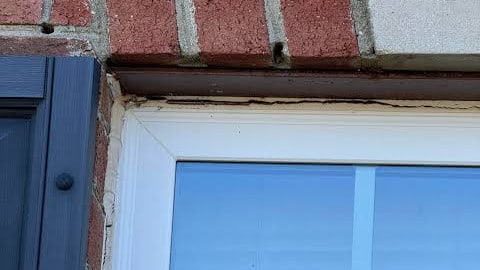
Visible cracking is one of the most common signs of deteriorating exterior caulk.
Small surface imperfections may be cosmetic, but cracks extending through the sealant can allow air or water to reach areas that should remain protected.
If the bead is brittle, severely cracked, or missing sections, replacement is generally more dependable than applying another layer over failing material.
2. Watch for Caulk Pulling Away From the Surface
Exterior caulk should remain properly bonded to the surfaces it is intended to seal.
Look for gaps between the sealant and adjacent window frames, door trim, or exterior materials. A dark line along the edge of the bead can indicate separation.
This may happen because of aging, improper surface preparation, incompatible sealant, or movement between building materials.
3. Replace Caulk That Has Become Hard or Brittle
Many exterior joints expand and contract as temperatures change. Sealants designed for those joints must accommodate movement within their rated limits.
When an older bead becomes brittle, crumbles, or loses its ability to remain bonded during movement, it may no longer provide a dependable seal.
Avoid pulling or cutting into otherwise sound caulking simply to test it. A careful visual inspection is usually the best starting point.
4. Investigate Water Stains Around Windows and Doors
Water stains, peeling paint, swollen trim, or damp drywall around windows and doors may indicate a moisture problem.
Failed caulk is one possible cause, but it is not the only one. Improper flashing, damaged siding, or installation defects can also allow water to enter.
If your windows are leaking repeatedly, learn more about replacement window options from Suburban Construction .
5. How Many Years Does Exterior Caulk Last?
There is no single lifespan that applies to every exterior caulk. Durability varies depending on the sealant formulation, surface preparation, joint design, installation quality, and weather exposure.
Some products advertise service lives measured in decades, but those claims do not guarantee that every installed joint will perform for that long.
Rather than automatically replacing caulk every five or ten years, inspect it in the spring and fall and repair confirmed failures when conditions permit.
6. When Is the Best Time of Year to Replace Exterior Caulk?
Spring and fall are often convenient times for exterior caulking projects in Iowa and Illinois.
Many sealants require specific application temperatures, clean surfaces, and dry conditions. Some products can be applied in colder weather, while others cannot.
Always follow the selected sealant manufacturer's temperature, moisture, preparation, and curing instructions rather than relying on a universal weather rule.
7. Do Not Caulk Every Gap You See
This is one of the most important exterior maintenance lessons for homeowners.
Windows, doors, and siding systems may contain intentional drainage openings, weep holes, and ventilation paths.
Sealing these openings can trap moisture and interfere with the system's intended performance.
If you are unsure whether a joint should be sealed, consult the product manufacturer's instructions or an experienced exterior contractor before applying caulk.
8. Should You Remove Old Caulk Before Applying New?
In most cases, loose, separated, or deteriorated sealant should be removed before a replacement bead is installed.
The joint should then be properly cleaned, prepared, and dried according to the new sealant's instructions.
For wider or deeper joints, proper backer rod and joint dimensions may also be necessary. Simply filling a large opening with excessive caulk is not a substitute for correct joint design.
9. When Is Caulking No Longer Enough?
Repeatedly replacing caulk around the same window or door may indicate a larger issue.
Deteriorated frames, failing thresholds, damaged flashing, and movement in surrounding materials may require professional evaluation.
If an exterior door has persistent leaks, drafts, or frame deterioration, explore entry and patio door replacement options .
Likewise, recurring moisture problems behind exterior cladding may call for an evaluation of the siding and surrounding wall system .
Regular Inspections Matter More Than a Calendar
Exterior caulk should be replaced when it is no longer properly bonded, has cracked through, or has otherwise deteriorated—not simply because it has reached a certain age.
For Quad Cities homeowners, a simple spring and fall inspection can help identify problems early. When caulking failures are accompanied by recurring leaks or damaged building materials, professional evaluation may be the better investment.
Are Your Windows or Doors Showing Their Age?
Suburban Construction Inc. has served Quad Cities homeowners since 1985, providing replacement windows, siding, entry doors, patio doors, seamless gutters, and exterior remodeling services.
If repeated caulking repairs are no longer solving the problem, our Davenport team can help you explore long-term replacement options for your home.
Share This Post
Share it on Facebook or X, or send it through your device share sheet for Instagram.
More Window Guides
From the Windows Learning Center — Problems & Repairs