Can one piece of vinyl siding be replaced? In most cases, yes. Learn how individual panels are removed, why discontinued colors and UV fading make matching difficult, and what Quad Cities homeowners should know before scheduling a siding repair.
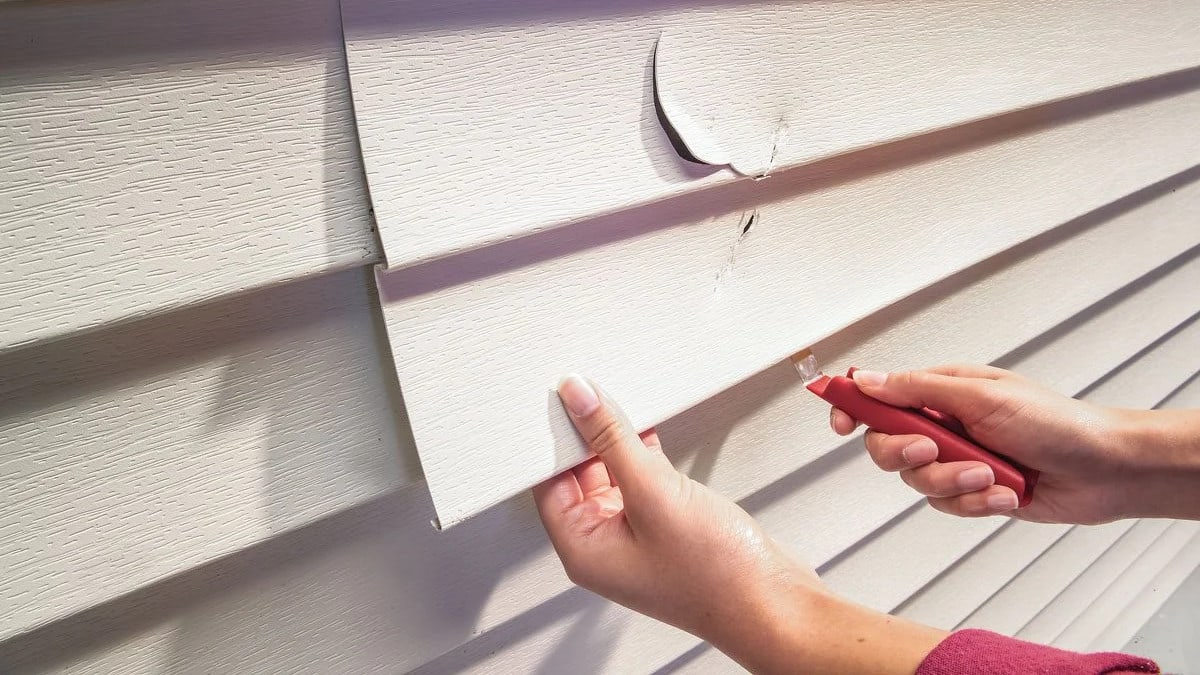
Vinyl Siding Repair Guide
```Can One Piece of Vinyl Siding Be Replaced?
Yes, one piece of damaged vinyl siding can often be replaced without removing or replacing the siding on the entire home. The physical repair is usually straightforward for an experienced siding professional. The more difficult part is often finding a replacement panel that matches the original profile, texture, and color.
```A single vinyl siding panel may need to be replaced after hail damage, wind damage, an impact from lawn equipment, heat exposure, or an accidental crack. When the surrounding siding remains in good condition and a compatible replacement panel is available, a targeted repair can restore the damaged area without changing the rest of the exterior.
```However, homeowners should understand that replacing one panel does not always mean the repair will be visually invisible. Older siding can fade, manufacturers can discontinue colors, and panel profiles can change over time.
```The Simple Answer: Yes
```Vinyl siding is installed in overlapping horizontal or vertical courses. This design allows an individual panel to be unlocked, removed, and replaced without dismantling the entire wall.
The Polymeric Exterior Products Association, formerly associated with the Vinyl Siding Institute, publishes repair guidance explaining how damaged vinyl siding panels can be unlocked, removed, and replaced. The organization also recommends following the current installation instructions published by the manufacturer of the specific siding product.
The success of the repair depends on more than simply finding a panel that looks close. The replacement should have a compatible profile, exposure, locking system, thickness, texture, and color.
```What Must Match?
```| Siding Feature | Why It Matters |
|---|---|
| Panel profile | Double 4-inch, double 5-inch, Dutch lap, clapboard, and other profiles have different shapes and exposures. |
| Locking system | The replacement panel must properly connect with the siding courses above and below it. |
| Texture | Smooth, woodgrain, brushed, and embossed finishes may look noticeably different in sunlight. |
| Color | Even a correct factory color may not perfectly match siding that has been exposed to sunlight for many years. |
| Panel thickness | A significantly different thickness may affect alignment, rigidity, and how the repaired area sits on the wall. |
Why Matching the Color Can Be Difficult
```Color matching is often the biggest challenge when replacing a single piece of vinyl siding. A homeowner may know the original color name and still find that a new panel looks slightly lighter, darker, or brighter than the surrounding wall.
There are several possible reasons for this difference:
- The existing siding has changed slightly after years of sunlight and weather exposure.
- The manufacturer has adjusted the color formulation.
- The original color has been discontinued.
- The replacement panel comes from a different production run.
- The texture or gloss level reflects light differently.
- Dirt, oxidation, or environmental staining has changed the appearance of the existing wall.
How UV Exposure Changes the Appearance
```Modern vinyl siding is manufactured with color-retention technology, and many current products are promoted as fade-resistant. However, no exterior material is completely isolated from years of ultraviolet exposure, temperature changes, dirt, and weathering. Manufacturers such as CertainTeed specifically market current vinyl siding collections with fade-resistant colors.
The amount of visible change may vary from one side of a home to another. A south- or west-facing wall may receive substantially more direct sunlight than a shaded north-facing wall.
This is why a replacement panel that matches well on one side of the home may appear more noticeable on another.
```A Practical Color-Matching Strategy
```When an exact new panel does not blend well, a siding contractor may remove an original panel from a less visible area of the home and use it to repair the highly visible damaged section.
For example, an original panel may be moved from behind landscaping, beneath a deck, or along a less noticeable rear wall. The closest available replacement color can then be installed in that less visible location.
This approach can produce a more attractive repair because the relocated original panel has weathered with the rest of the home.
```What Happens When the Original Color Is Discontinued?
```Siding manufacturers periodically update product collections, profiles, textures, and color palettes. A color that was widely available when a home was built may no longer be produced twenty or thirty years later.
If the original siding is discontinued, the contractor may explore several options:
- Check remaining distributor inventory. A supplier may still have a limited quantity of an older color or profile.
- Identify a compatible current profile. A newer siding line may have a locking system and exposure that works with the existing installation.
- Relocate an original panel. Existing siding from a less visible wall may provide the closest match.
- Replace a larger wall section. Replacing one complete elevation can sometimes create a cleaner result than installing several mismatched spot repairs.
- Consider full siding replacement. This may become practical when the existing product is brittle, extensively damaged, or unavailable.
Quad Cities Homes and Discontinued Siding Colors
```Many homes throughout Bettendorf, Davenport, Eldridge, LeClaire, Moline, and the surrounding Quad Cities were built or resided between approximately 1995 and 2010.
Homes from this period may still have siding that performs well, but the original product line or color may no longer be available. Manufacturers have introduced new color collections, changed panel designs, merged product lines, and retired older colors during the years since those homes were constructed.
For these properties, the repair question is often not whether one panel can physically be replaced. The real question is whether a replacement can be found that matches closely enough to meet the homeowner's expectations.
```Information That Can Help Identify Older Siding
```Before searching for a replacement panel, collect as much information as possible about the existing siding.
- Original building or remodeling records
- Manufacturer warranty documents
- Invoices from the original siding contractor
- Leftover siding stored in a garage, attic, shed, or basement
- Product codes or markings printed on the back of a panel
- The width and shape of each siding course
- Close-up photographs of the texture and locking edge
- A sample removed from the damaged area
A physical sample is generally more useful than a phone photograph because lighting and camera settings can alter how the color appears.
```Proper Tools for Removing One Vinyl Siding Panel
```Replacing one panel requires more than pulling the damaged siding away from the wall. Vinyl siding panels interlock, and the course above the damaged panel must be carefully released to expose the fasteners.
A vinyl siding unlocking tool, commonly called a zip tool, is designed to release the lower locking edge of the panel above the damaged section. PEPA's repair guidance describes unlocking the course above the damaged panel before removing fasteners and inserting the replacement.
Common Tools Used for the Repair
- Vinyl siding zip tool
- Flat pry bar
- Hammer or siding fastener tool
- Aviation snips or vinyl siding shears
- Tape measure
- Utility knife
- Manufacturer-approved fasteners
How One Panel Is Typically Replaced
```- Identify the damaged panel. Inspect the entire panel and the surrounding courses for cracks, damaged locks, or hidden impact damage.
- Unlock the course above it. Use a siding zip tool to release the lower edge of the panel above the damaged siding.
- Remove the existing fasteners. Carefully remove the nails or approved fasteners from the damaged panel's nail hem.
- Inspect the wall underneath. Check the water-resistive barrier, flashing, sheathing, and surrounding accessories for damage.
- Cut the replacement panel. Size the new siding so it maintains the clearances required by the manufacturer.
- Install and fasten the panel. Engage the lower lock, center fasteners within the nail slots, and avoid fastening the panel too tightly.
- Reconnect the upper course. Use the zip tool to lock the panel above into the replacement panel.
Why Proper Fastening Matters
```Vinyl siding expands and contracts as temperatures change. It should be secured without being pinned tightly against the wall.
Fasteners should generally be positioned in the designated nail slots while allowing the panel to move in accordance with the siding manufacturer's instructions. The VSI installation manual provides general installation practices but emphasizes that the specific manufacturer's instructions should be followed when product requirements differ.
Improper fastening can cause buckling, distortion, loose panels, or future wind damage.
```When Replacing One Panel Is Not the Best Solution
```Although one piece can usually be replaced, a larger repair or complete replacement may provide better results under certain conditions.
- The existing siding has become brittle and cracks during removal.
- Several nearby panels are damaged.
- The original profile and locking system are unavailable.
- The color difference is highly visible.
- Damage extends into the water-resistive barrier or sheathing.
- The siding was originally installed incorrectly.
- Repeated repairs are becoming less cost-effective.
- The homeowner wants to update the home's overall appearance.
```“Yes, one piece of vinyl siding can usually be replaced. The challenge with older Quad Cities homes is often identifying the original profile and finding a color that blends with siding that has been exposed to the weather for twenty or thirty years.”
```
Get Help Identifying Your Existing Vinyl Siding
```If you have a cracked, loose, or missing panel, save any damaged pieces rather than throwing them away. The panel's shape, texture, locking edge, and markings may help identify the original manufacturer and product line.
Suburban Wholesale & Supply can help contractors and property owners compare siding profiles, colors, and available replacement options. Bring a clean physical sample whenever possible for the most accurate comparison.
```Need One Piece of Vinyl Siding Replaced?
```One damaged panel does not always mean you need to replace the siding on your entire home. A professional inspection can determine whether the panel can be matched, removed, and replaced without disturbing the rest of the exterior.
Contact Suburban Construction to schedule a siding inspection and discuss repair or replacement options for your Quad Cities home.
```Standards & Technical References
```- Polymeric Exterior Products Association, Vinyl Siding Installation Manual.
- Polymeric Exterior Products Association, How to Replace Vinyl Siding and Corner Posts.
- ASTM International, ASTM D4756, Standard Practice for Installation of Rigid Poly(Vinyl Chloride) PVC Siding and Soffit.
- ASTM International, ASTM D3679, Standard Specification for Rigid Poly(Vinyl Chloride) PVC Siding.
- Current installation instructions, technical specifications, warranty requirements, and color documentation published by the manufacturer of the installed siding.
Technical note: The ability to replace a single vinyl siding panel depends on the condition of the surrounding siding, compatibility of the replacement profile, product availability, installation details, and the condition of the wall underneath. Always follow current manufacturer specifications and applicable installation requirements.
```Share This Post
Share it on Facebook or X, or send it through your device share sheet for Instagram.