Water behind vinyl siding can remain hidden while it damages wall sheathing, insulation, framing, and interior finishes. Learn how trapped moisture can lead to wood rot, mold growth, reduced insulation performance, and expensive structural repairs.
Vinyl Siding Moisture and Wall-Damage Guide
```What Happens if Water Gets Behind Vinyl Siding?
Water getting behind vinyl siding does not automatically mean the wall will be damaged. Vinyl siding is an exterior cladding rather than a completely watertight barrier, so the wall system should include a properly installed water-resistive barrier and flashing that direct incidental moisture back outside.
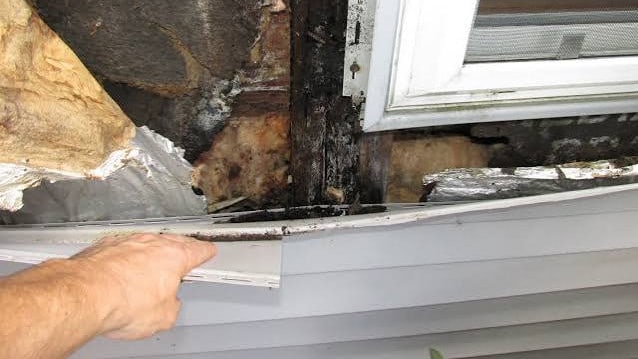
```The serious problems begin when water reaches a damaged drainage plane, becomes trapped, or repeatedly wets the wall faster than it can dry. Over time, moisture can damage wood sheathing, reduce the performance of some insulation materials, contribute to rot, and create conditions that support mold growth.
```Because these materials are concealed, homeowners may not notice the problem until staining, odors, soft walls, insects, peeling finishes, or interior damage appear. By that point, the affected area may extend beyond the siding panel where the symptoms first became visible.
```Vinyl Siding Is Not the Wall’s Primary Waterproofing Layer
```Vinyl siding is designed to shed most rain while allowing the materials behind it to manage and release incidental moisture. Industry installation guidance describes vinyl siding as an exterior cladding rather than a water-resistive barrier.[1]
A water-resistive barrier, commonly called housewrap or a drainage plane, should be installed behind the siding and connected correctly with window flashing, door flashing, roof intersections, and exterior penetrations.[2]
When those concealed layers are intact, small amounts of water can drain toward the exterior. When they are missing, torn, reverse-lapped, punctured, or blocked, moisture may reach vulnerable wall materials.
```What Water Can Damage Behind Vinyl Siding
```| Wall Component | Possible Moisture Damage | Possible Warning Signs |
|---|---|---|
| Wood sheathing | Swelling, softening, loss of fastener holding, deterioration, or decay. | Soft siding areas, loose fasteners, staining, or irregular wall surfaces. |
| Wall framing | Wood decay, weakened connections, and damage around windows, doors, or rooflines. | Soft trim, recurring leaks, movement, or persistent moisture odors. |
| Insulation | Wetting, compression, contamination, reduced thermal performance, or loss of full cavity coverage. | Cold walls, drafts, uneven room temperatures, or rising utility use. |
| Interior drywall and finishes | Staining, bubbling paint, soft gypsum, or damaged trim. | Brown stains, peeling paint, damp baseboards, or wall discoloration. |
| Organic building materials | Conditions that support mold growth when moisture remains present. | Musty odors, visible growth, recurring staining, or occupant irritation. |
Possible Result 1
```Wood Rot and Structural Deterioration
Wood rot develops when susceptible wood remains wet long enough for decay organisms to become active. The siding itself does not rot, but the plywood, oriented strand board, framing, window trim, and other materials behind or beside it can deteriorate.
Damage often begins around locations where water is concentrated, including window corners, door heads, roof-to-wall intersections, deck ledgers, utility penetrations, and the lower ends of gutters.
Repeated wetting can soften sheathing and reduce its ability to hold siding fasteners securely. A panel that continually comes loose may therefore be a symptom of damaged material behind the siding rather than only a fastening problem.
```Why Rot Can Stay Hidden
```Vinyl siding and trim can conceal damaged wood for a long time. The exterior may appear mostly normal while the sheathing or framing behind it remains damp.
Aluminum capping can create a similar concern when it is installed over deteriorated window or fascia boards without correcting the original water source.
The only dependable way to assess concealed rot is often to remove enough siding or trim to inspect the wall directly.
```Possible Result 2
```Mold Growth
Mold needs moisture to grow. The United States Environmental Protection Agency emphasizes that moisture control is the key to mold control and recommends drying wet building materials within approximately 24 to 48 hours when possible.[3]
Water behind siding may wet wood sheathing, paper-faced drywall, dust, insulation facings, and other materials that can support growth. The risk increases when repeated leaks or poor drying keep the cavity damp.
Mold should not be treated as only a surface-cleaning problem. The water source must be identified and corrected, and materials that cannot be cleaned or dried may need to be removed.
```Possible Signs of Hidden Mold or Moisture
```- Persistent musty or earthy odors
- Dark staining around windows, doors, or baseboards
- Peeling or bubbling interior paint
- Damp drywall or soft interior trim
- Visible growth on exposed sheathing or framing
- Recurring staining after repainting
- Moisture readings that remain elevated
- Occupant symptoms that appear associated with a damp area
These signs do not prove that mold is present behind the siding, but they justify a closer investigation of the moisture source and affected materials.
```Possible Result 3
```Wet or Damaged Insulation
Water that passes through damaged sheathing joints or openings can reach wall-cavity insulation. The effect depends on the insulation material, how wet it becomes, whether contaminants are present, and how quickly the assembly can dry.
Fibrous insulation may compress, slump, or lose full contact with the wall cavity. Wet insulation can also hold moisture beside framing and sheathing, slowing the drying process.
Even after the visible leak stops, insulation may remain damp inside a closed cavity. An inspection may require selective removal of siding, sheathing, or interior finishes to determine the full extent of the damage.
```Can Wet Insulation Increase Utility Bills?
```Wet, compressed, displaced, or missing insulation may reduce the consistency of the wall’s thermal protection. This can contribute to cold interior surfaces, drafts, uneven temperatures, and increased heating or cooling demand.
Higher utility bills can have many causes, including weather, energy rates, windows, duct leakage, equipment efficiency, and air leakage. Damaged siding and wet insulation should be considered as part of a complete exterior and energy evaluation rather than assumed to be the only cause.
Replacing the visible siding panel without restoring wet or displaced insulation may leave the comfort problem unresolved.
```Possible Result 4
```Swollen or Deteriorated Wall Sheathing
Wall sheathing creates a flat backing surface and may contribute to the structural performance of the wall. Common materials include plywood, oriented strand board, structural panels, and exterior gypsum products.
Repeated wetting can cause some wood-based panels to swell, soften, delaminate, or lose fastener-holding strength. Building-science guidance notes that some walls, especially those using materials with limited drying ability, can have difficulty releasing moisture after they become wet.[4]
New siding should not be installed over deteriorated sheathing. The affected material and the source of water should be addressed before the wall is closed.
```Signs the Sheathing May Be Damaged
```- Siding fasteners no longer hold securely
- Panels move inward when gently pressed
- The wall surface appears uneven or sunken
- Brown or dark staining is visible behind removed siding
- The panel surface is swollen, flaky, or soft
- A musty odor appears when the wall is opened
- Moisture damage is concentrated below a window or roof intersection
- Insects are entering or nesting in softened materials
How Does Water Get Behind Vinyl Siding?
```A small amount of water can pass behind exterior cladding during wind-driven rain. A correctly detailed drainage plane is intended to manage that moisture. Larger or repeated water entry often points to a specific installation or maintenance problem.
Common Entry Points Include:
- Missing or damaged window flashing
- Reverse-lapped housewrap or flashing
- Missing kick-out flashing where a roof meets a wall
- Damaged or missing siding panels
- Improperly sealed utility penetrations
- Failed mounting blocks around lights, vents, outlets, or faucets
- Deck-ledger and porch-roof connections
- Overflowing or poorly directed gutters and downspouts
- Roof, chimney, or flashing leaks above the damaged area
- Excessive caulk blocking an intended drainage opening
Window and Door Flashing Problems
```Windows and doors are common locations for concealed moisture damage because several materials meet around one opening. The sill, side jambs, head flashing, water-resistive barrier, sealants, trim, and siding must work together.
ASTM guidance describes flashing as a component that directs water from an opening to the water-resistive barrier, which then carries it toward an exit point in the wall.[5]
Replacing J-channel or applying exterior caulk will not correct a missing sill pan or a reverse-lapped head-flashing detail concealed behind the siding.
```Why the Damage May Appear Far from the Leak
```Water does not always travel straight inward from the opening. It can move downward along sheathing, sideways across flashing, or along framing before appearing on an interior wall.
A stain below a window may originate at the head flashing. Damage near the bottom of a wall may begin at a roof intersection several feet above it.
For this reason, a professional investigation usually begins above and around the visible damage rather than only at the exact location of the stain.
```Warning Signs Water May Be Behind Your Siding
```- Interior water stains near exterior walls
- Peeling, bubbling, or blistering paint
- Soft drywall, trim, or baseboards
- Musty odors that persist after cleaning
- Loose siding or fasteners that will not hold
- Warped, bowed, or sunken exterior wall sections
- Rot around windows, doors, decks, or rooflines
- Increased insect activity near the siding
- Damp insulation or cold interior wall areas
- Recurring stains after storms
What Should You Do if You Suspect Water Damage?
```- Document the symptoms. Photograph siding damage, stains, soft materials, and the areas above the suspected leak.
- Inspect gutters and roof transitions. Look for overflow, missing kick-out flashing, damaged shingles, or water directed toward the wall.
- Avoid sealing every opening. Additional caulk can block drainage and make the concealed problem harder to locate.
- Remove siding selectively. A qualified contractor may need to expose the housewrap, flashing, and sheathing.
- Correct the water source. Repair flashing, roofing, penetrations, gutters, or other failed details before closing the wall.
- Remove damaged materials when necessary. Wet insulation, deteriorated sheathing, rotted wood, and mold-contaminated porous materials may require replacement.
- Allow the assembly to dry. Do not reinstall siding over materials that remain wet.
- Rebuild the drainage plane. Integrate the water-resistive barrier and flashing in a shingle-style sequence that directs water outside.
Can You Fix the Problem Without Removing Siding?
```Some obvious maintenance problems, such as a disconnected downspout or an isolated roof defect, may be corrected without removing siding. However, concealed wall damage cannot be evaluated accurately from the finished surface alone.
Moisture meters, infrared imaging, and interior inspection can provide useful clues, but selective removal may still be necessary to confirm the condition of the flashing, housewrap, sheathing, framing, and insulation.
A small exploratory opening can sometimes prevent a much larger repair by identifying the source early.
```VSI and ASTM Installation Guidance
```The Vinyl Siding Institute installation manual, maintained by the Polymeric Exterior Products Association, states that vinyl siding should be installed over a water-resistive barrier intended to prevent liquid water that penetrates the exterior covering from moving farther into the wall assembly.[2]
ASTM D4756 addresses installation practices for rigid PVC siding, soffit, trim channels, accessories, fasteners, substrates, and special exterior details.[6]
These standards provide an installation framework, but the current instructions for the exact siding, housewrap, flashing, window, door, sealant, roofing, and accessory products should always be followed.
``````“Water behind vinyl siding becomes a serious problem when the drainage plane is damaged or the wall cannot dry. We may find wet insulation, softened sheathing, rot, or mold even though the siding outside looks fairly normal. The repair has to correct the water source and restore the concealed wall system—not just replace the visible panel.”
```
Do Not Wait for the Damage to Spread
```A small siding opening or flashing defect may be less expensive to correct before repeated storms wet the sheathing, framing, and insulation.
If your home has recurring stains, loose siding, soft exterior materials, musty odors, or evidence of water around windows and rooflines, schedule an inspection before covering or repainting the symptoms.
Early investigation provides the best opportunity to limit demolition, dry the wall, and preserve materials that remain sound.
```Schedule a Free Siding and Moisture Inspection
```Water behind siding can damage insulation, wall sheathing, trim, and framing long before the full extent of the problem becomes visible.
Schedule a free exterior inspection with Suburban Construction to identify the source, evaluate the affected wall, and discuss practical repair options.
```Standards and Technical References
```- Polymeric Exterior Products Association, Vinyl Siding Installation Best Practices and Water-Resistive Barrier Guidance.
- Polymeric Exterior Products Association and the Vinyl Siding Institute, Vinyl Siding Installation Manual.
- United States Environmental Protection Agency, A Brief Guide to Mold, Moisture and Your Home.
- Building Science Corporation, Drainage Planes, Drying and Moisture Management in Exterior Walls.
- ASTM International, The Importance of Integrating Flashing and the Water-Resistive Barrier.
- ASTM International, ASTM D4756, Standard Practice for Installation of Rigid Poly(Vinyl Chloride) PVC Siding and Soffit.
- Current installation instructions, compatibility information, technical data, and warranty requirements published by the manufacturers of the selected siding, water-resistive barrier, flashing, windows, doors, insulation, roofing, sealants, and accessories.
Technical note: Moisture symptoms can result from exterior rain, roof leaks, window or door installation, plumbing leaks, condensation, indoor humidity, air leakage, or combinations of these conditions. This article provides general educational information and does not replace an on-site moisture investigation, mold assessment, manufacturer instructions, applicable building requirements, or evaluation by a qualified building-envelope professional.
```Share This Post
Share it on Facebook or X, or send it through your device share sheet for Instagram.