Large 1–2 inch Quad Cities hail can crack, chip, or loosen vinyl siding. Learn how premium siding performs, what damage to look for, and when repair or replacement makes sense.
Quad Cities Hail & Siding Guide
How Vinyl Siding Handles Large 1–2 Inch Quad Cities Hail
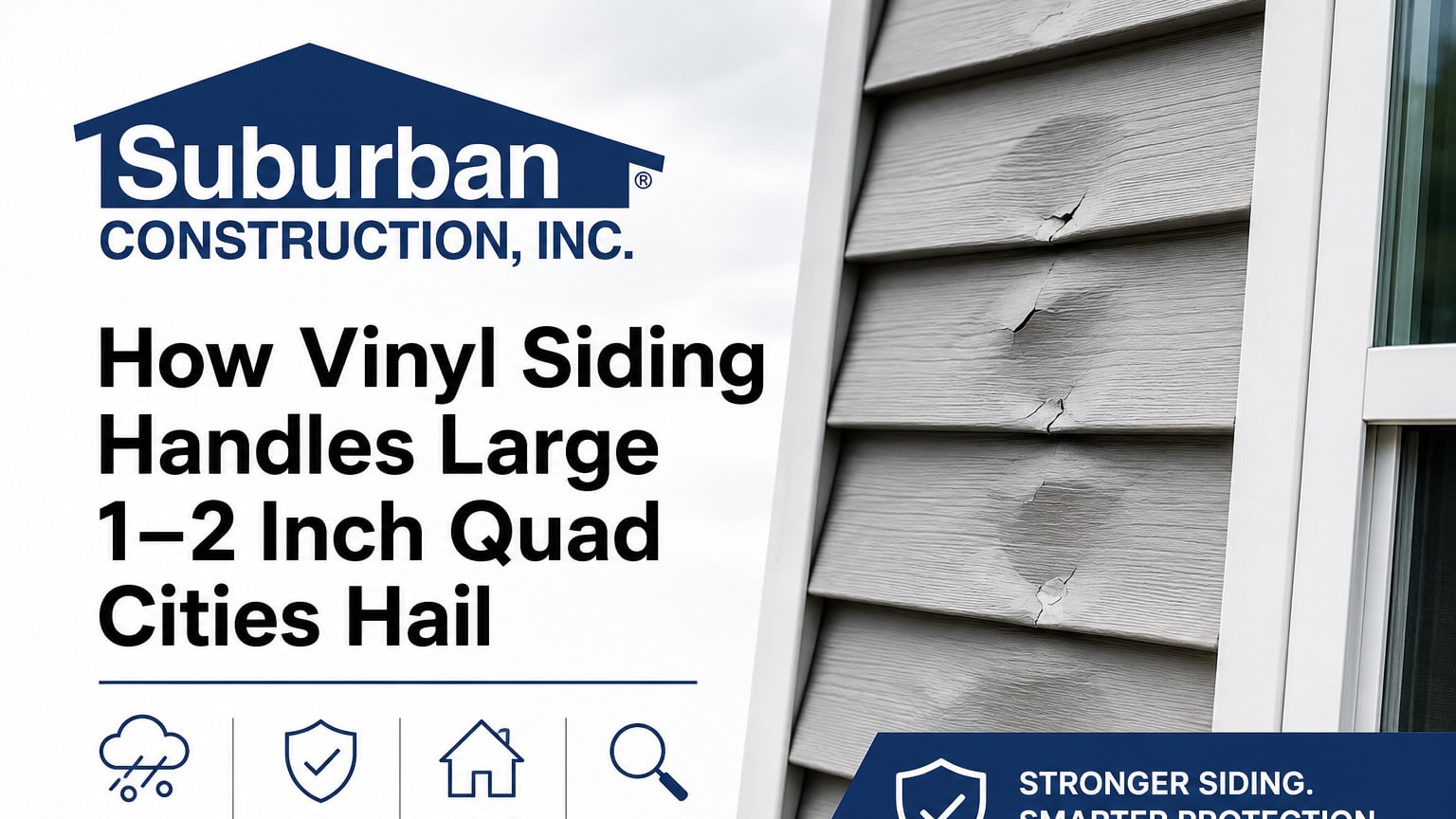
Vinyl siding can handle everyday weather well, but large 1–2 inch hail in the Quad Cities can be a serious test. Premium vinyl siding may resist smaller impacts better than basic siding, but hail in this size range can still crack, chip, dent, or loosen panels depending on the product, age, temperature, and installation quality.
Hail damage is not always simple. Two homes on the same street can experience the same storm and show very different results. One may only have minor marks, while another may have broken corners, cracked panels, or loosened siding. The difference often comes down to siding thickness, panel flexibility, wall exposure, age, and whether the siding was installed correctly.
What 1–2 Inch Hail Can Do to Vinyl Siding
- 1 inch hail: may cause dents, small cracks, chipped edges, or impact marks, especially on older siding.
- 1.5 inch hail: can crack panels, damage corners, and expose weak areas around trim or seams.
- 2 inch hail: can cause significant siding damage, especially when driven by strong winds.
- Cold-weather hail: may create more cracking because vinyl becomes less flexible in lower temperatures.
- Older siding: is usually more brittle and more likely to fail during large hail impact.
Why Some Vinyl Siding Performs Better
Not all vinyl siding is made the same. Premium siding usually has better panel thickness, stronger locks, improved flexibility, and a more rigid finished appearance. These features can help siding perform better during hail and wind events.
- Thicker panels: often resist impact better than thin builder-grade siding.
- Stronger lock design: helps panels stay attached during wind-driven storms.
- Better material quality: helps the panel flex instead of cracking immediately.
- Correct fastening: allows the siding to move without being pinned too tightly.
- Quality trim system: protects corners, edges, windows, and transitions.
Best Vinyl Siding Direction for Quad Cities Hail
For Quad Cities homeowners concerned about 1–2 inch hail, the stronger choice is a premium vinyl siding system rather than thin entry-level siding. Products like Gentek Sequoia Select, with a heavier .046 profile, are better suited for homeowners who want improved durability, clean curb appeal, and stronger performance in Midwest weather.
A stronger siding system should include:
- Premium vinyl siding with better panel thickness
- Proper house wrap and flashing behind the siding
- Quality corners, trim, starter strips, and accessories
- Professional fastening that allows expansion and contraction
- Careful installation around windows, doors, rooflines, and gables
How to Check Vinyl Siding After a Hailstorm
After a hailstorm, damage is not always obvious from the ground. Some cracks only show when light hits the siding at the right angle. Others appear around corners, laps, window trim, or lower wall sections.
- Walk around the home and look for cracks, chips, holes, or broken edges.
- Check corners, J-channel, window trim, and starter strips.
- Look for loose or rattling panels after high winds.
- Compare shaded walls and storm-facing walls for impact differences.
- Inspect gutters, downspouts, screens, and fascia for matching storm clues.
- Take photos before moving or replacing damaged pieces.
Can Vinyl Siding Be Repaired After Hail?
Sometimes, yes. If damage is limited to a few panels and matching material is available, targeted repair may be possible. But if the siding is older, faded, discontinued, brittle, or damaged across multiple elevations, full replacement may be the cleaner and more practical option.
The hard truth is simple: large hail exposes weak siding. If a home already has aging panels, poor installation, or thin siding, a 1–2 inch hailstorm can turn small exterior issues into a full replacement conversation.
The Bottom Line
Vinyl siding can perform well in Quad Cities weather, but 1–2 inch hail is a major impact event. Premium vinyl siding gives your home a better chance of resisting damage, but no siding should be treated as completely hail-proof. The smartest approach is to choose a stronger product, install it correctly, and inspect the home carefully after severe storms.
Need a Hail Damage Siding Inspection?
Suburban Construction helps Quad Cities homeowners inspect storm damage, compare premium vinyl siding options, and choose exterior systems built for Midwest hail, wind, humidity, and long-term curb appeal.
Share This Post
Share it on Facebook or X, or send it through your device share sheet for Instagram.
More Siding Guides
From the Siding Learning Center — Materials & Products