Iowa derechos and severe thunderstorms can tear off vinyl siding, break panel locks, damage flashing, and expose the wall to wind-driven rain. Learn what to inspect after a storm, when panels can be repaired, when replacement makes sense, and how to document damage for an Iowa insurance claim.
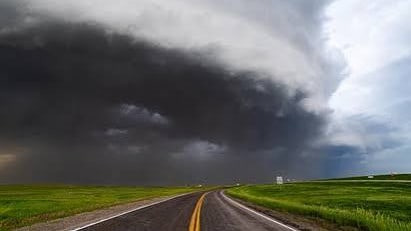
Iowa Derecho and Severe Storm Siding Repair Guide
```Vinyl Siding Repair After a Derecho or Severe Thunderstorm
Derecho and severe-thunderstorm winds can damage vinyl siding quickly, especially when gusts get behind a loose panel or strike an exposed corner, gable, or roofline. After a major Iowa storm, the most important step is to determine whether the damage is limited to a few panels or whether the wind exposed a larger fastening, flashing, or wall-system problem.
```Iowa homeowners are familiar with powerful straight-line wind events. The National Weather Service describes a derecho as a widespread, long-lived damaging thunderstorm wind event, and derecho winds can exceed 100 mph. Iowa has experienced several major derechos in recent years, including the historic August 10, 2020 event and the July 15, 2024 derecho that produced widespread damaging winds across eastern Iowa and Illinois.[1][2][3]
```Vinyl siding can perform well in demanding weather when the product is properly selected and installed, but even a strong siding system can be damaged during extreme winds, falling branches, airborne debris, hail, or embedded tornadoes.
```What Makes a Derecho Different?
```A derecho is not simply a strong thunderstorm. It is a large, organized wind event capable of producing a long corridor of damaging straight-line winds. The National Weather Service notes that downbursts within thunderstorms can exceed 100 mph, and tornadoes may also be embedded within some derecho-producing storm systems.[1][3]
The July 15, 2024 derecho, for example, moved from northern Iowa through the Quad Cities and into Illinois, producing widespread winds that reached approximately 100 mph in some locations. The Quad Cities National Weather Service office also documented multiple tornadoes with that event.[2]
That combination of sustained pressure, sudden gusts, wind-driven rain, debris, and rapid direction changes can expose siding weaknesses that may not have appeared during ordinary weather.
```Common Vinyl Siding Damage After a Derecho
```| Damage | What It Looks Like | Why It Matters |
|---|---|---|
| Loose panels | Siding remains on the wall but rattles, flaps, or separates from the course below. | Wind can continue working behind the panel and damage surrounding courses. |
| Missing panels | Complete sections are torn away, exposing housewrap or sheathing. | The wall becomes more directly exposed to wind-driven rain. |
| Broken locks | Lower panel edges are cracked, stretched, chipped, or unable to reconnect. | The panel may need replacement rather than simply being snapped back into place. |
| Cracks or holes | Impact fractures from hail, branches, roofing debris, or other airborne objects. | Damaged areas can spread and expose the drainage plane. |
| Damaged accessories | Loose corner posts, J-channel, soffit, fascia, mounting blocks, or starter strip. | The surrounding siding may no longer be securely supported or properly finished. |
Start With Safety
```After a derecho or severe thunderstorm, do not begin inspecting siding until the immediate hazards have passed.
- Stay away from downed or sagging power lines.
- Do not climb onto a wet or damaged roof.
- Watch for hanging branches and unstable trees.
- Keep away from damaged electrical service equipment.
- Do not use tall ladders while strong winds remain.
- Wear gloves and eye protection around broken siding or debris.
Many useful observations can be made safely from the ground and documented with photographs until a professional inspection can be completed.
```Inspect All Four Sides of the Home
```Derecho damage is often directional. One wall may appear heavily damaged while the opposite elevation looks almost untouched.
Walk around the entire home and look at each wall from several angles. Side lighting can make loose panels, buckles, open seams, and impact cracks easier to see.
Pay particular attention to outside corners, gables, garage walls, roof edges, upper stories, and elevations facing open fields or the direction from which the strongest winds arrived.
```Iowa Post-Storm Siding Inspection Checklist
```- Loose or rattling siding panels
- Missing sections of siding
- Cracked or broken locking edges
- Open horizontal seams
- Bent or loose corner posts
- Damaged J-channel around windows and doors
- Loose soffit or fascia panels
- Damaged mounting blocks around lights and vents
- Exposed housewrap or sheathing
- Water stains around windows, doors, or interior walls
- Gutter, downspout, roofing, or flashing damage
- Siding or trim fragments in the yard
Loose Siding May Be Repairable
```A loose panel does not automatically need replacement. If the upper and lower locking edges remain intact, the panel may be carefully re-engaged with the appropriate siding tool.
The important question is why the panel came loose. Severe derecho winds can exceed the conditions experienced during normal storms, but repeated failure in the same area may also point to incorrect fastening, damaged locks, poor starter-strip attachment, or insufficient receiving depth at the trim.
A lasting repair should correct those conditions rather than simply pushing the panel back together.
```Missing Panels Need Prompt Attention
```When a complete panel is torn away, the water-resistive barrier and possibly the sheathing become more exposed to wind-driven rain and ultraviolet light.
Save any detached siding you find. The back of the panel may contain manufacturer markings, production information, or other clues that help identify the original product.
Before the replacement is installed, the exposed housewrap, flashing, fasteners, and sheathing should be inspected for storm damage.
```Broken Locking Edges Usually Mean Replacement
```Vinyl siding depends on an interlocking connection between courses. Derecho winds can stretch or fracture those locking edges without completely tearing the panel off the wall.
A panel with a damaged lock may reconnect temporarily but release again during the next wind event.
Replacing the damaged panel is generally more reliable than repeatedly trying to reconnect a lock that no longer holds correctly.
```Do Not Overlook the Wall Behind the Siding
```Severe wind can damage the exterior without causing an obvious interior leak immediately. Once siding is removed, inspect the layers underneath before closing the wall.
- Water-resistive barrier or housewrap
- Window and door flashing
- Roof-to-wall flashing
- Wall sheathing
- Starter strip and fastening substrate
- Exterior insulation
- Trim around penetrations
- Signs of wet wood or previous leakage
Wind-Driven Rain Can Create Hidden Damage
```Derecho-producing thunderstorms can combine intense winds with heavy rainfall. The July 2024 Quad Cities derecho, for example, also produced heavy rain across portions of the region.[2]
When panels are missing or flashing is damaged, wind-driven rain can reach the drainage plane more aggressively than during ordinary weather.
Water stains, wet insulation, softened sheathing, or musty odors after the storm should be investigated before replacement siding covers the area.
```Temporary Repairs After the Storm
```Temporary protection may be appropriate when the storm has damaged a large area and permanent repairs cannot be completed immediately.
- Photograph the condition before temporary work begins.
- Protect exposed openings from additional rain when it can be done safely.
- Save damaged siding and trim pieces.
- Remove loose debris from the yard after electrical and tree hazards are cleared.
- Keep receipts for reasonable emergency materials.
- Avoid permanent face-nailing or excessive caulking as a quick fix.
The Iowa Insurance Division specifically recommends reasonable temporary measures to prevent additional storm damage and advises homeowners to keep receipts for those expenses.[4]
```Document Everything Before Repairs Begin
```Good documentation is important even when you are not yet certain whether you will file an insurance claim.
- Take wide photographs of every exterior elevation.
- Take close-up images of loose, missing, cracked, or damaged panels.
- Photograph roof, gutter, fascia, soffit, screen, and window damage.
- Save siding and trim fragments.
- Record the storm date and approximate time.
- Save receipts for emergency protection.
- Keep contractor inspections and estimates.
- Keep communications with the insurance company.
Iowa Insurance Claims After a Derecho
```Wind damage may be covered under a homeowners policy when the cause of loss is covered, but coverage depends on the individual policy, deductible, endorsements, exclusions, depreciation terms, and claim facts.
Iowa Insurance Division guidance recommends inspecting the property after storms, photographing affected areas, protecting the property from additional damage, reviewing coverage before filing, and obtaining estimates from registered contractors.[4]
If the expected damage appears to exceed the deductible, contact the insurer or agent promptly and follow the policy’s claim-notification requirements.
```Understand the Contractor's Role in an Insurance Claim
```A siding contractor can inspect storm damage, prepare an estimate, explain the construction scope, attend an adjuster inspection, and answer questions about the repair.
Iowa Insurance Division guidance specifically allows contractors to offer an opinion about whether damage may have been caused by wind, hail, or another storm event, prepare estimates, discuss the scope with the customer, and attend insurer inspections.[5]
Coverage decisions remain between the homeowner and the insurance company. A contractor should not guarantee that a loss will be covered.
```Repair or Replace After a Derecho?
```Isolated damage can often be repaired. Replacement becomes more practical as the number of damaged panels increases or when the original siding is brittle, faded, or discontinued.
| Repair May Make Sense | Replacement May Make Sense |
|---|---|
| Only a few panels were damaged. | Several walls have widespread damage. |
| Matching material is available. | The original profile or color is discontinued. |
| Surrounding siding remains flexible. | Existing panels are brittle or crack during removal. |
| The drainage plane remains sound. | Water or structural damage requires broad removal. |
Older Iowa Siding Can Make Storm Repairs Difficult
```Many Iowa homes have vinyl siding installed decades ago. After a derecho, the physical repair may be straightforward while finding a compatible replacement becomes difficult.
Manufacturers periodically discontinue profiles and colors, and the siding already on the home may have weathered differently from a new factory panel.
Save every usable original panel after storm damage. Existing material may be valuable for matching or for relocating to a more visible portion of the home.
```Why Proper Fastening Matters During Iowa Wind Events
```ASTM D5206 provides the standardized test method used to evaluate wind-load resistance of rigid plastic siding. The standard specifically notes that in-service performance depends on installation and the supporting construction, not simply on the siding panel itself.[6]
ASTM D3679 establishes performance requirements for rigid PVC siding, including wind-load resistance, impact strength, dimensional properties, and other characteristics. Siding covered by the specification is installed in accordance with ASTM D4756.[7]
This is why storm repairs should review the fasteners, locking system, starter strip, substrate, and manufacturer specifications—not only replace whatever panel is missing.
```Installation Problems a Derecho May Expose
```- Too few fasteners
- Improper fastener spacing
- Fasteners missing suitable substrate
- Starter strip that is loose or improperly attached
- Panels not fully locked together
- Broken locking tabs from previous damage
- Panel ends cut too short
- J-channel or corner posts that do not provide enough receiving depth
- Brittle older panels
- Previous repairs made with face nails or screws
Do Not Let a Storm Chaser Rush the Decision
```Widespread Iowa storm damage can attract large numbers of contractors from outside the region. Some are legitimate companies providing additional capacity, while others may disappear once storm-related work slows.
The Iowa Insurance Division recommends working with contractors you know and trust, reviewing references and online reviews, and obtaining estimates from registered contractors.[4]
Verify the contractor's local presence, state registration, insurance, written warranty, service process, and exact product being proposed before signing.
``````“After an Iowa derecho, we are looking for more than the panels that obviously blew off. We inspect the locks, fasteners, starter strip, flashing, housewrap, and wall underneath. Extreme wind may cause the visible damage, but a complete inspection tells us whether the repair can stay small or whether the storm exposed a larger problem.”
```
Quad Cities and Eastern Iowa Derecho Repairs
```Davenport, Bettendorf, Eldridge, LeClaire, Muscatine, Clinton, DeWitt, and other eastern Iowa communities sit in a region with a well-documented history of severe straight-line wind events.
The National Weather Service maintains a list of past Iowa derecho events and notes that, on average, a derecho affects some portion of Iowa about every one to two years.[8]
That history makes correct siding installation, wind-rated product selection, prompt storm inspection, and access to replacement materials especially important for Iowa homeowners.
```Schedule a Free Derecho and Storm-Damage Inspection
```If siding came loose, blew off, cracked, or was struck by debris during an Iowa derecho or severe thunderstorm, do not assume the visible damage is the full extent of the problem.
Schedule a free exterior inspection with Suburban Construction to evaluate the siding, flashing, housewrap, trim, and underlying wall and discuss repair or replacement options.
```Standards and Technical References
```- National Weather Service, Thunderstorm Winds and Derechos.
- National Weather Service Quad Cities, Derecho Summary: July 15, 2024.
- National Weather Service, August 10, 2020 Midwest Derecho.
- Iowa Insurance Division, Consumer Connection: Hail and Storm Claims.
- Iowa Insurance Division, Guidance for Contractors and Public Adjusters.
- ASTM International, ASTM D5206, Standard Test Method for Windload Resistance of Rigid Plastic Siding.
- ASTM International, ASTM D3679, Standard Specification for Rigid Poly(Vinyl Chloride) PVC Siding.
- National Weather Service Des Moines, Past Iowa Derechos.
- Current installation instructions, wind provisions, fastening requirements, technical specifications, and warranties published by the manufacturer of the installed siding.
Technical and insurance note: Storm damage varies by wind speed, direction, duration, debris impact, siding product, age, installation, wall construction, and site exposure. Insurance coverage depends on the individual policy, deductible, exclusions, endorsements, and claim determination. This article provides general educational information and does not replace an on-site inspection, manufacturer instructions, or insurance advice for a specific loss.
```Share This Post
Share it on Facebook or X, or send it through your device share sheet for Instagram.